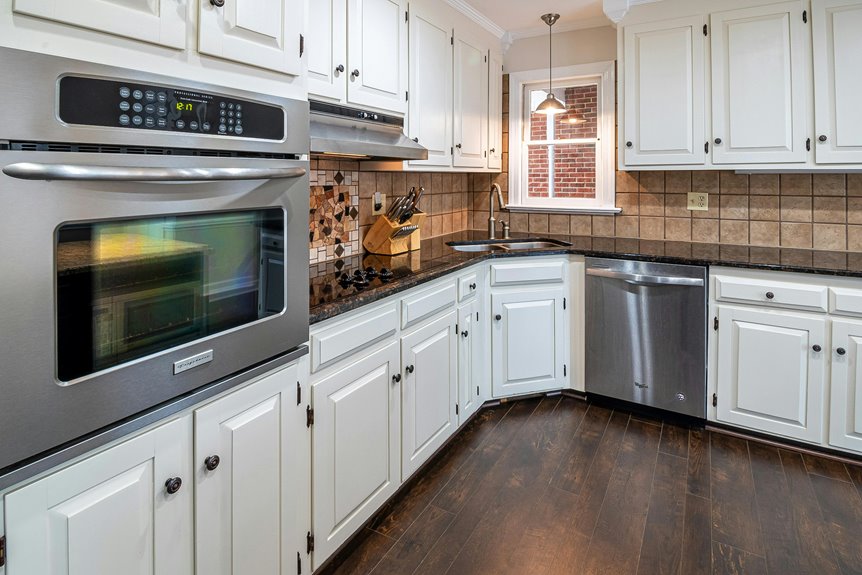
Kitchen cabinet refacing keeps your solid boxes intact while swapping out doors, hinges, and hardware for a fresh look. You’ll typically spend 30–70% less than you would on a full replacement, which makes a real difference when you’re working with a limited budget.
Before you start, inspect your cabinet boxes for water damage or warping. If the structure is solid, you’re ready to move forward. Remove the old doors carefully and label everything as you go—this step saves you from confusion later on.
Clean all surfaces with a degreaser to remove grease and grime buildup. This takes a little elbow grease, but it matters because new hardware and doors stick better to a clean surface.
Measure your cabinet openings twice before ordering anything. You can go with stock doors from big-box stores like Home Depot or Lowe’s, which typically run $50–$150 per door depending on style and material. Custom doors from specialty suppliers cost more but fit perfectly if your cabinets are oddly sized.
Install new hinges according to the manufacturer’s instructions, then hang your doors with consistent gaps of 1/16 to 1/8 inch between them. This small gap keeps doors from rubbing when they open and close. Attach your hardware—handles and knobs—and adjust the hinges until everything closes smoothly and sits flush with the cabinet frame.
The whole project usually takes a weekend or two, and you’ll end up with cabinets that look refreshed without the cost or hassle of ripping everything out and starting from scratch.
Kitchen Cabinet Refacing: Keep the Boxes, Replace the Doors
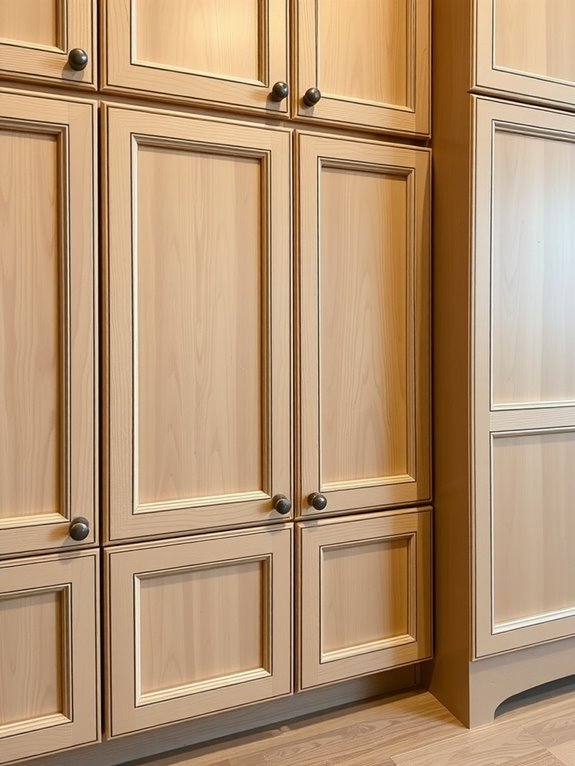
Ever wonder why your kitchen cabinets look tired when their boxes are actually pretty solid. You’re not alone in noticing this. Cabinet refacing lets you keep those sturdy cabinet boxes while swapping out the doors and drawer fronts for a completely refreshed look.
Your existing structure stays put, but you’ll replace the doors, hinges, and hardware with custom options. You can even add veneer to match your new style perfectly. Since you’re keeping the cabinet boxes intact, you won’t need to rearrange your kitchen layout or deal with major construction work.
The money part is where refacing really shines. You’ll typically spend 30% to 70% less than a full cabinet replacement, which adds up fast when you’re looking at kitchen updates. Once your new doors arrive, the whole project usually wraps up in just a few days. It’s a straightforward move when your cabinets are structurally sound and you simply need a style refresh.
Decide: Reface (Good Boxes) or Replace (Damaged Boxes)
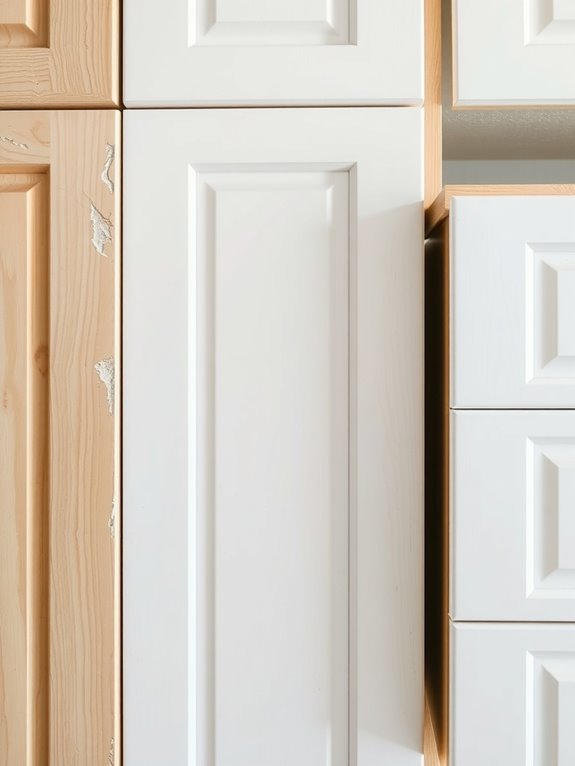
Before you decide between refacing and replacing, take time to look closely at your cabinet boxes. You’re checking for problems like warping, water stains, or boxes that have shifted out of square. These issues usually mean replacement is your better choice. If the boxes are in good shape and your kitchen layout works for how you cook and live, refacing makes sense and costs significantly less than new cabinets.
Water damage is the biggest thing to watch for since it weakens the wood structure and can spread to other areas. Run your hands along the sides and bottoms of the boxes, especially under the sink. Warping shows up as doors or drawers that don’t close smoothly or gaps where they used to fit tight. Minor surface scratches and dents don’t require replacement, but deep gouges or soft spots in the wood mean the material has started to break down.
Your cabinet layout also matters in this decision. If your current arrangement works well for your daily routine, refacing keeps everything in place and saves you from the hassle and expense of moving plumbing or electrical work. Expect refacing costs to run between $4,000 and $10,000 depending on your kitchen size, while full replacement typically starts around $15,000 and goes up from there. The money you save with refacing can go toward higher-quality door styles or countertops if you want to upgrade other parts of your kitchen.
Cabinet Box Assessment
Before you start any cabinet work, take time to look at what you’re actually working with. Your decision to reface or replace comes down to what you find during inspection. Warping, water damage, and structural problems tell you whether your boxes can handle a new look or need to come out entirely.
| Assessment Area | What to Look For | Good Sign | Red Flag |
|---|---|---|---|
| Cabinet Boxes | Overall structure | Square, solid wood | Warped, soft spots |
| Hardware | Hinges and handles | Functional, secure | Broken, stripped |
| Shelves | Interior support | Level, sturdy | Sagging, damaged |
| Stability | Movement and wobble | No movement | Rocks or shifts |
Start with the cabinet boxes themselves. Open doors and look at the frame. Does it feel solid when you press on it, or does it give way a little? Run your hand across the wood grain and feel for soft spots—those squishy areas mean water damage has gotten in. Check whether the box sits square or if it’s twisted and warped.
Next, test the hardware. Open and close each door a few times. Hinges should move smoothly without sticking or making noise. Handles should stay tight when you pull on them. If screws spin without tightening, the mounting holes are stripped and you’ll need new hardware anyway.
Pull out the shelves if you can. They should feel level and not bend under light pressure. Sagging shelves mean the wood has weakened or the supports underneath aren’t strong enough. That’s a problem whether you’re refacing or replacing.
Finally, give the whole cabinet a gentle push. It should sit still without rocking or shifting side to side. Movement means the frame has shifted out of square.
Stable boxes with good hardware and solid shelves. That’s your green light for refacing. Boxes that show warping, soft spots from water damage, broken hardware, or sagging shelves. That’s when replacement makes more sense than trying to salvage them.
Damage Evaluation Criteria
After you’ve looked over your cabinet boxes, it’s time to decide: should you reface them or buy new ones. Start by checking for warping, swelling, or obvious damage. These issues are your biggest red flags. Open up the doors and drawers and test the hardware. Sticky hinges or bent slides point to problems that go deeper than just the surface.
Look inside at the shelves and support structures. If they’re solid and level, you’re in good shape for refacing. The thing is, refacing only covers the outside. If your boxes are warped or damaged underneath, new doors and hardware won’t fix that wobbling foundation. A wobbly base will still look wrong even with a fresh exterior.
When you find significant structural problems or anything that feels unsafe, replacement is the smarter choice. Refacing works great for a budget-friendly update when the bones of your cabinets are strong. You get a cleaner look and less disruption to your kitchen. But if the cabinet boxes themselves are compromised, you’re just putting a nice cover over a problem waiting to happen.
Check Your Cabinet Boxes for Damage and Warping
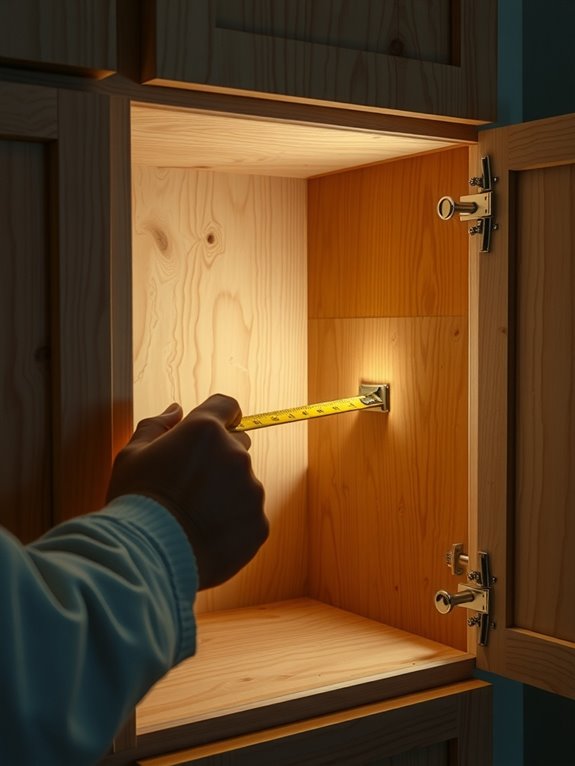
Why skip this step? You’d be setting yourself up for failure. Before you even think about new cabinet doors and finishes, take time to check your cabinet boxes for warping and damage. During your on-site assessment, open every door and drawer to get a real sense of what you’re working with.
Look for gaps between doors and the frame, misalignment, or bowing sides—these signal that the box structure has problems. Run your hand along the interior edges to feel for soft spots or water damage. Check if shelves sit level and hardware operates smoothly. This matters because warped or damaged boxes won’t straighten out just because you add new veneers or paint. They’ll create alignment issues that frustrate you later on.
If your box condition looks questionable, replacement is honestly your better bet than trying to fix structural problems. Taking time now to assess what you’re really dealing with prevents expensive mistakes that cost way more down the road.
Remove Old Doors, Drawers, and Hardware
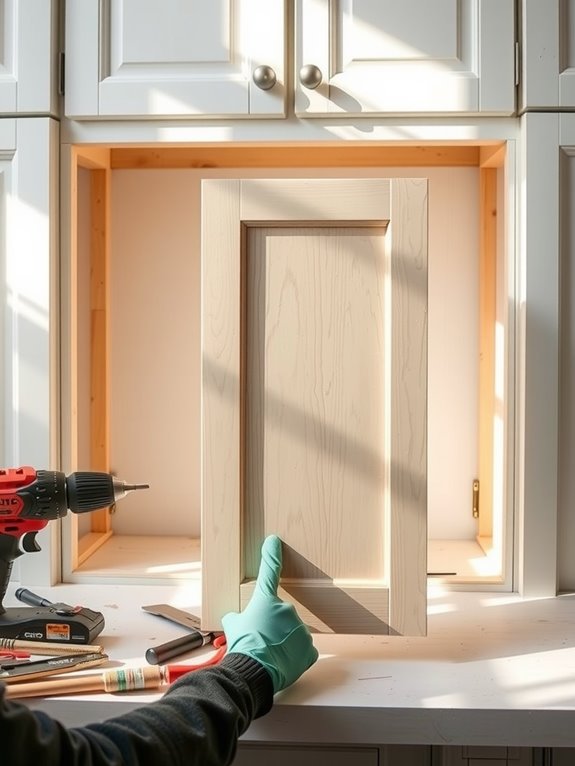
Before you start pulling things apart, set up a labeling system so reassembly doesn’t become a guessing game. Grab a roll of painter’s tape and a marker, then tag each door and drawer with its location—”upper left,” “bottom right,” and so on. This takes five minutes and saves you hours of confusion later.
As you remove hardware, keep all the screws, hinges, and knobs organized. A labeled container or ziplock bag works well, especially if you separate items by cabinet section. Small plastic organizers like the Akro-Mils 10164 (around $15) have dividers that work perfectly for this, though even a muffin tin will do in a pinch.
A cordless drill with a screwdriver bit removes fasteners quickly and cuts down on hand fatigue. Having someone nearby to help steady cabinet doors is helpful too—those heavy pieces are awkward to manage alone, and an extra set of hands prevents accidents and damage to your cabinets or walls.
Labeling and Organization System
Before you can install those shiny new cabinet fronts, you’ve got to clear the stage by removing all the old doors, drawer fronts, and hardware that’re currently in place. This is where a good labeling and organization system really pays off.
Grab a label maker or masking tape and marker—honestly, either works fine. Label each door and drawer front with its original location, like “Upper Left” or “Lower Right Sink.” A basic label maker runs around $20 to $50 and saves time if you’re doing a lot of labeling. Take photos of your cabinet boxes from different angles too. These visual reference guides save you serious headaches later when you’re trying to remember which hinge goes where.
Keep all hardware together in labeled bags. Note which doors use inset versus overlay hinges so you don’t mix them up during reassembly. This kind of organization turns what could be a confusing puzzle into a straightforward project. You’ll actually remember where everything goes without digging through piles of hardware or second-guessing yourself halfway through.
Hardware Removal Techniques
Now that your labeling system is ready, it’s time to remove those cabinet doors and drawer fronts. Start by carefully detaching the hinges from your cabinet frames. Keep matching screws with their corresponding hinges—mismatched hardware during reassembly creates alignment problems that are annoying to fix.
Store these small components in labeled bags or containers. Ziplock bags work well for this, or you can use small plastic bins from any hardware store (usually $2-5 for a pack). The point is keeping everything sorted so pieces don’t get lost or mixed up.
Next, remove all the knobs and pulls. Take a photo of each section before you disassemble it, or jot down notes about where things go. If you’re reassembling in a few weeks, you might forget whether that brass knob goes on the upper left or lower right door. A quick photo takes 10 seconds and saves real time later.
As you work through hinge removal, set each door and drawer front aside in your organized workspace. Your labeling from earlier actually pays off here. Keeping everything sorted and documented means you’ll know exactly what goes where when it’s time to put everything back together.
Prepare and Clean Cabinet Surfaces
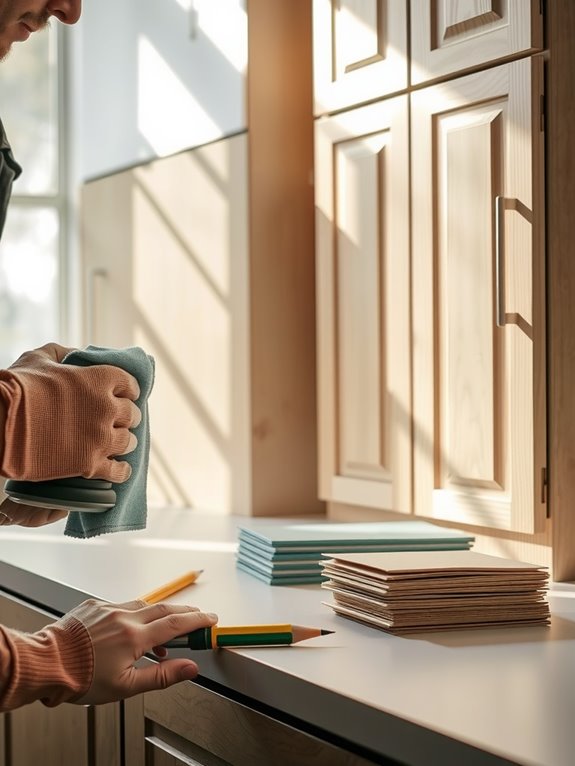
The foundation of a successful cabinet refacing project starts with stripping everything down to bare bones. Your cabinet surfaces need real attention before you apply new veneer or paint, and the prep work is where the difference actually happens.
Start by removing grease and dust completely. A degreaser like Zep Degrease-All (around $6-8 per bottle) cuts through kitchen grime that’s built up over years. You’d be surprised how much sticky residue hides on cabinet surfaces. Once you’ve degreased, follow up with a cleaner like TSP (trisodium phosphate), which costs about $4-6 for a box and works better than most alternatives. Skip this cleaning step and your new finish simply won’t stick.
Next, sand the surfaces lightly with 120-150 grit sandpaper to help new materials grip properly. You’re not trying to strip the wood down—just create some texture. Fill any dents or gaps with wood filler like Elmer’s Carpenter’s Wood Filler ($5-7 per container), which sands smooth once it dries.
Inspect each cabinet box carefully. Check that they’re square and level using a basic level tool. If your cabinet boxes aren’t sturdy or are tilted, your refacing won’t last long no matter how good your new finish looks. This prep phase takes patience, but it’s where quality refacing actually happens.
Measure Accurately for New Doors and Drawer Fronts
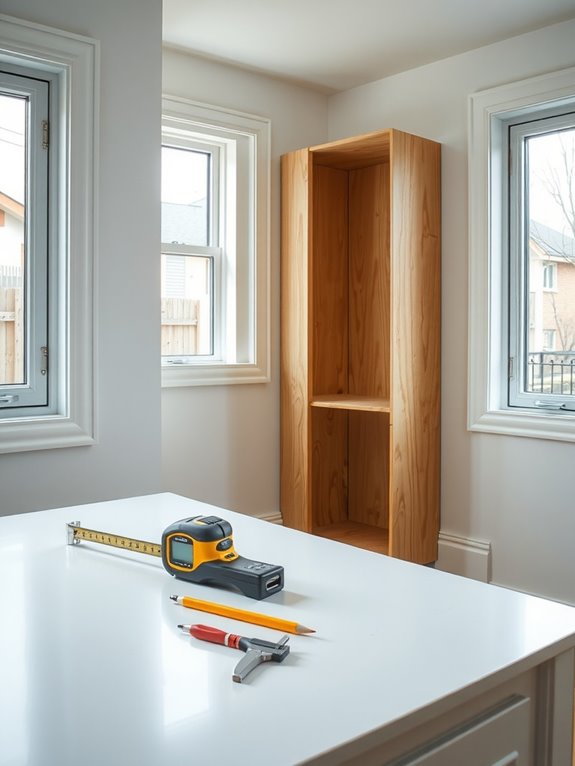
Once you’ve prepped your cabinet surfaces, grab your measuring tape and get down to specifics. Measure each cabinet position separately—uppers, lowers, and islands—since they rarely match exactly. Write down the precise height, width, and depth for every door and drawer front you’re replacing.
Next, figure out whether you’re dealing with inset or overlay doors. Inset doors sit flush inside the cabinet frame, while overlay doors sit on top of it. This matters because it changes how you measure. You’ll also need to account for hinge placement and hardware clearance so your new doors and drawers actually fit and operate smoothly.
Here’s the practical part: measure twice, then ask someone else to double-check your numbers before you order anything. A second set of eyes catches mistakes that are easy to miss when you’re focused on the tape measure. Spending an extra 20 minutes on accuracy now beats dealing with doors that don’t fit and having to reorder.
Choose Between Stock and Custom Cabinet Doors
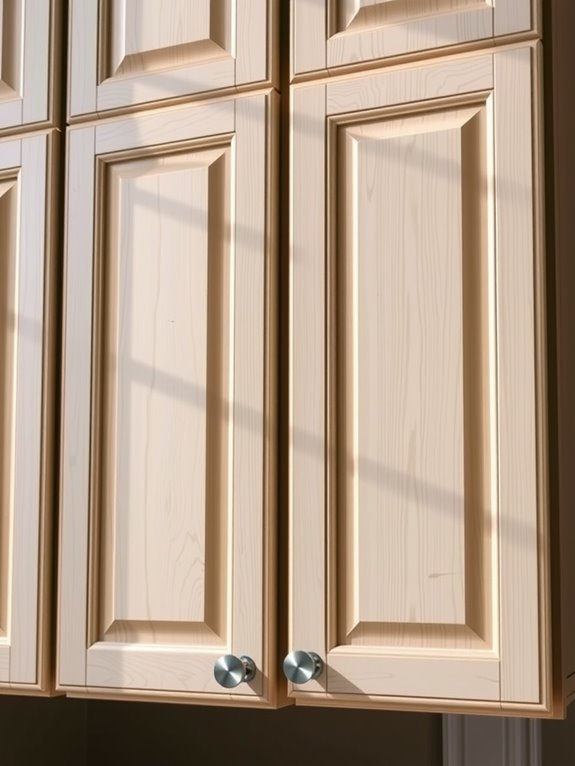
Now you need to pick between stock and custom doors. The choice really comes down to two things: your budget and what you want your cabinets to look like.
Stock doors are the budget option. They come in standard sizes that manufacturers make ahead of time, so they’re ready to install right away. You’ll spend less money and finish your project faster. Most stock doors run between $50 and $150 per door, depending on the material and finish.
Custom doors give you design freedom if you have unusual cabinet openings or a specific look in mind. Maybe your cabinets don’t fit standard dimensions, or you want a particular style that stock options don’t offer. The trade-off is real though. You’ll pay more (typically $200 to $500 per door) and wait several weeks for them to be made and delivered.
Think about your actual needs before deciding. If your cabinet openings are standard sizes and you like what’s available, stock doors make sense. If you’re working with tight spaces or really specific design ideas, custom doors might be worth the extra cost and time.
Stock Doors Budget-Friendly Option
Stock cabinet doors offer a practical way to update your kitchen on a modest budget. When you pick stock doors instead of custom ones, cabinet refacing costs significantly less.
Stock doors work well for several reasons. They cost less upfront than custom alternatives, arrive faster, and fit most standard kitchen layouts. You’ll find multiple finishes available at reasonable prices, typically ranging from $50 to $200 per door depending on the material and style you choose.
The tradeoff is straightforward. You get less design flexibility with stock doors—you’re picking from existing options rather than creating something from scratch. But if your kitchen has a fairly typical layout and you want results quickly without spending a lot, stock doors deliver real savings. Your final cost depends on how many doors you need, which style appeals to you, and what finish you select. Most homeowners see the value in this approach when they’re working within a tight budget and prefer speed over custom details.
Custom Doors Design Flexibility
Custom cabinet doors give you the freedom to design around your kitchen instead of squeezing your kitchen into standard sizes. You get to pick frame profiles, finishes, and exact dimensions that work for your space, which stock doors just can’t offer.
| Feature | Stock Doors | Custom Doors |
|---|---|---|
| Size Options | Limited | Unlimited |
| Finish Options | Basic | Extensive |
| Hinge Compatibility | Standard Only | Precise Fit |
| Cost | Budget-Friendly | Higher Investment |
The real advantage shows up during cabinet refacing. Custom doors are built to match your existing hinges and hardware perfectly, which cuts down on installation headaches. The upfront cost runs higher than stock options—you’re looking at a bigger initial investment—but you end up with doors that actually fit your space and style rather than forcing compromises.
Stock doors come in maybe five or six standard sizes and a handful of finishes. Custom doors skip that limitation. You can order exactly what your cabinets need, whether that’s an odd width, a specific wood grain, or a particular hardware style. Installation goes smoother because everything aligns properly the first time instead of requiring adjustments or workarounds.
Install New Doors, Hinges, and Hardware
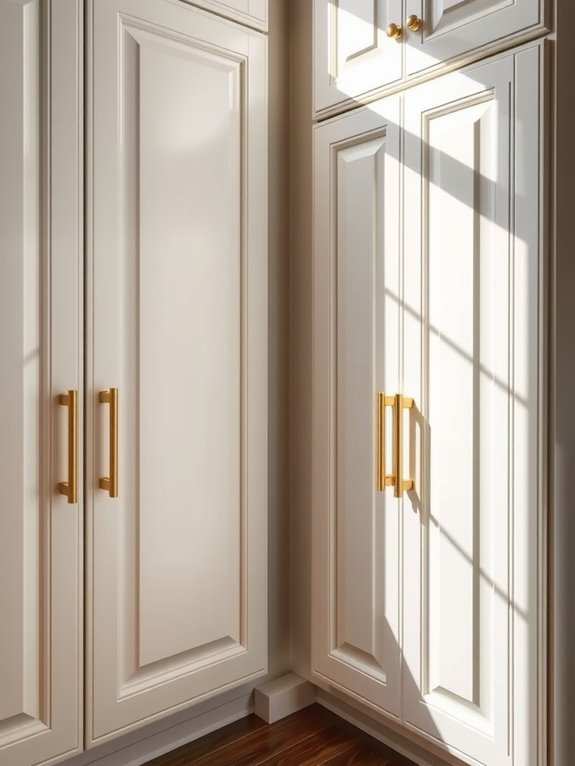
Once your cabinet boxes are ready, you can move on to swapping out the old doors and hardware for new ones. Here’s what to do:
Once your cabinet boxes are ready, it’s time to swap out the old doors and hardware for fresh, new ones.
- Remove old cabinet doors and hinges carefully
- Install new hinges on your fresh doors
- Hang doors using inset or overlay measurements
- Attach matching hardware like handles and knobs
Start by mounting hinges on your new doors. If you go with soft-close hinges (brands like Blum cost around $15-25 per pair), they’ll prevent that annoying slamming sound and feel noticeably smoother when you open and close them. Next, hang each door and adjust the alignment so the gaps between doors stay even all the way around.
When you’re ready to install drawer fronts and hardware, use a drilling jig. It’s a simple tool that helps you drill holes in exactly the right spots, keeping everything centered and looking neat. You can find basic jigs at hardware stores for $20-40. Taking your time with this step means your whole project will look like someone who knew what they were doing put it together, not rushed or crooked.
Adjust Alignment and Close Gaps
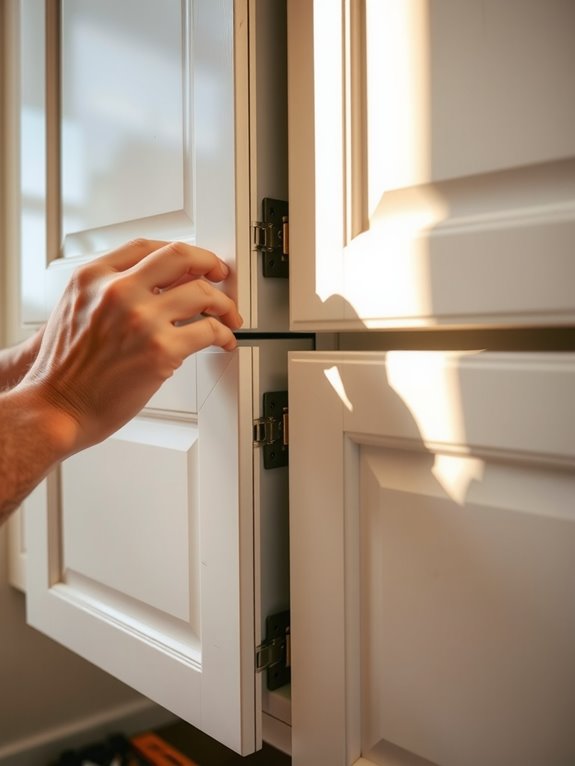
Now that your new doors and hardware are installed, the real precision work begins. Getting everything perfectly aligned means your cabinets will look polished and professional. You’ll want to measure and set consistent gaps around doors and drawers, aiming for uniform 1/16 to 1/8 inch spacing so all the panels look continuous.
| Adjustment Task | Tool Needed | Gap Target |
|---|---|---|
| Hinge alignment | Screwdriver | Even spacing |
| Door spacing | Level | 1/16–1/8 inch |
| Parallel alignment | Spacers/shims | Consistent |
| Fine-tuning | Small screwdriver | Seamless fit |
Use your screwdriver and level to adjust hinges carefully. Test the open-close action to make sure nothing binds or rubs against the frame. Deploy spacers or shims between adjacent doors, keeping them parallel along your entire cabinet run. This careful hinge adjustment eliminates visible gaps and creates that clean, professional look that separates a DIY job from one that looks like it came from a professional installer.
Troubleshoot Common Door Alignment Problems
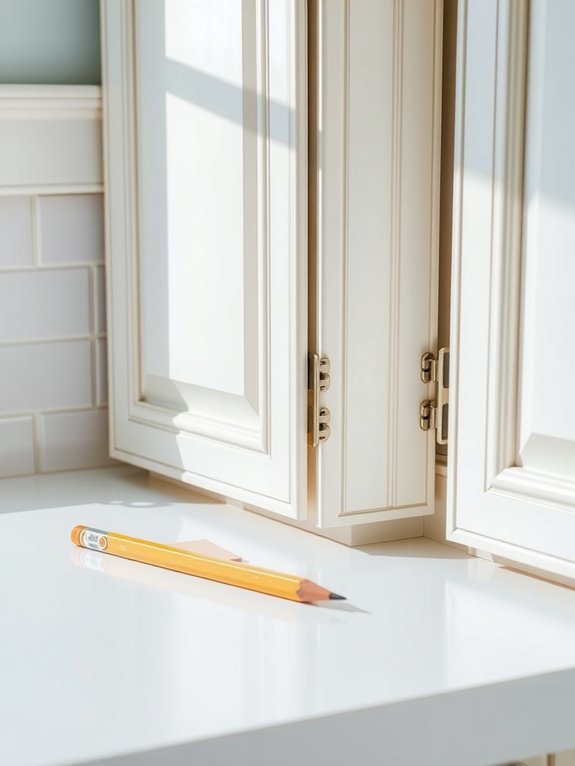
Even with your best efforts, misaligned doors can creep up on you—and they’re usually caused by something simple like loose hinge screws or hinges that weren’t mounted perfectly square.
Start by checking all hinge mounting screws with a screwdriver to make sure they’re tight. Use a ruler to measure the gaps between your door and frame, aiming for consistent spacing of 1/16 to 1/8 inch at the top and bottom. If doors are rubbing against the frame, loosen the screws slightly and shift the cabinet doors away. For cabinets that aren’t sitting square, adding shims or corner braces under the box can help level things out.
If doors sag no matter what you do, use a spirit level to check whether your cabinet box is actually square. The problem might be with hinge alignment rather than the screws themselves. You can adjust backplates and spacers to get the door spacing even again. Open and close the doors several times to test that everything moves smoothly without binding or gaps.
The whole process takes patience since you’re making small adjustments and checking your work repeatedly. But the good news is that most alignment problems come down to these basic fixes, and doing it yourself means you’ll know exactly how your cabinet is put together next time something needs tweaking.