

You’ll want to mount your bedroom detector on the ceiling or high on the wall—within 12 inches of the ceiling line. This placement works because smoke rises, so positioning it up high lets it catch the smoke before it spreads throughout your room.
Keep your detector at least 20 feet away from your kitchen. That distance helps prevent false alarms when you’re cooking dinner or making toast. You should also steer clear of vents, fans, and spots near windows or doors where drafts might push smoke away from the detector.
Position it so smoke can actually reach you while you’re sleeping. A detector in a corner or tucked behind furniture won’t do much good if it can’t sense the smoke around you. Think about the air flow in your room and where smoke would naturally travel if a fire started.
Test your detector monthly by pressing the test button. Mark it on your calendar if that helps you remember. It only takes 10 seconds, and you’ll know right away if the battery is still working or if something’s wrong.
Keep your bedroom door open at night so smoke can enter the room and reach the detector. If your door stays closed, the detector won’t pick up smoke from other parts of your house until it’s too late.
Step 1: Pick a Spot on the Ceiling or High on the Wall
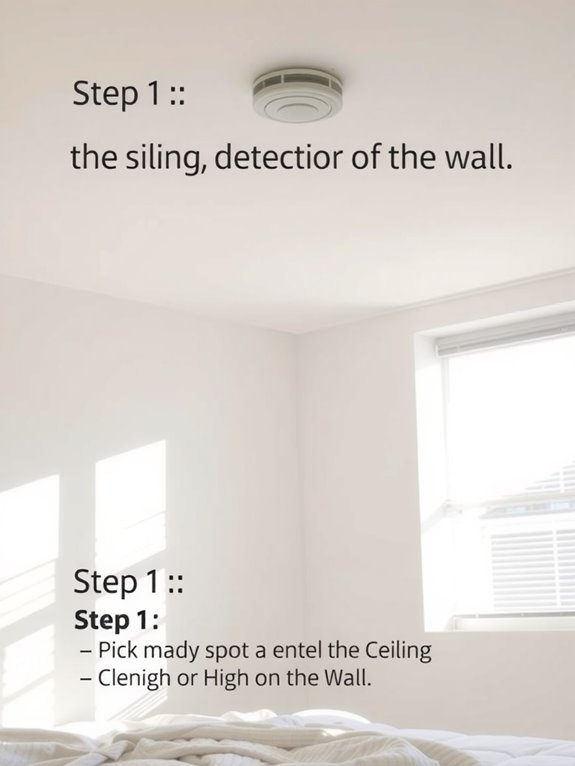
Where should you actually put that smoke detector? Your best bet is mounting it on the ceiling or high on the wall. Smoke rises naturally, so placing your detector up high lets it catch danger before it reaches you.
If you’re going the ceiling installation route, keep the unit within 12 inches of the ceiling line. Choosing wall mounting instead? Position the top edge 4 to 12 inches below the ceiling. This setup makes sense because smoke has to travel upward before spreading through a room, and you want to catch it early.
For bedrooms specifically, place the detector inside your sleeping area or directly outside on the same level. This positioning gives you that early warning when you need it most. Following NFPA guidelines—the National Fire Protection Association standards—means your smoke detector will work the way it’s supposed to, protecting your safety and your family’s.
Step 2: Keep It Away From Vents and Fans
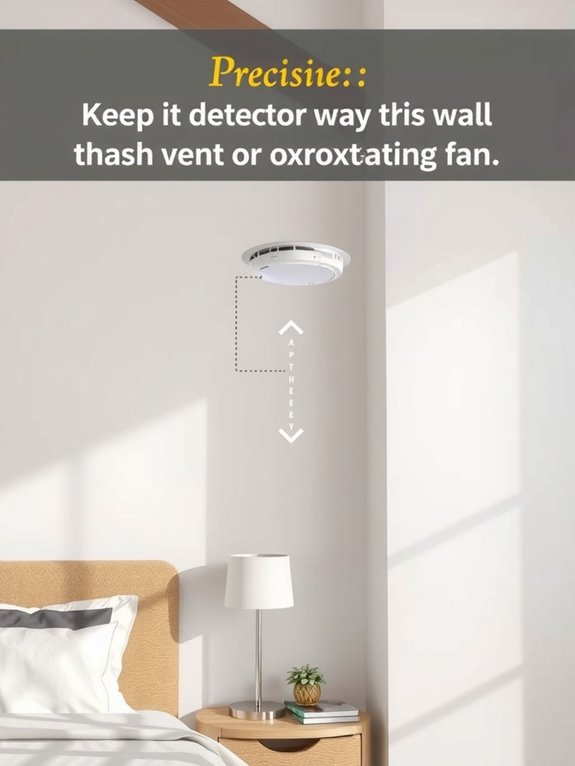
You’ll want to keep your detector at least 3 feet away from ceiling fans and air vents. Moving air can mess with how the sensor picks up smoke, so positioning it near an HVAC duct, bathroom exhaust fan, or window where drafts flow means dust and moisture get blown right at the detector. This either triggers false alarms or creates buildup that makes it stop working properly.
Think of it this way—your smoke detector needs calm, still air to do its job right. Choose a spot that’s sheltered from the bedroom’s air currents, away from places where air is moving around constantly. That quiet corner or central wall spot works much better than anywhere near a vent or fan.
Air Flow Interference Issues
Smoke detectors need to actually catch smoke, which sounds obvious but gets tricky fast. Air movement is the culprit behind most detector placement fails. When vents, fans, or drafts push smoke away from your sensor, the device sits there doing nothing while a fire develops.
NFPA 72 sets a clear standard: keep detectors at least 36 inches away from supply and return vents. Ceiling fans should also get three feet of clearance. The reason is straightforward—fast-moving air diverts smoke before it reaches the sensor. Windows and doors create similar draft problems, though these usually cause false alarms instead of missed detection.
If your bedroom has air turbulence near the ceiling, mounting your detector on a high wall works better than the ceiling itself. This positioning gets smoke to your device when it actually starts. That’s not exciting stuff, but it’s the difference between protection that works and protection that doesn’t.
Dust and Debris Accumulation
Now that you understand airflow, let’s talk about dust. It’s sneakier than most people realize because it can pack into your smoke detector’s sensing chamber—the part that actually detects smoke. When that happens, your detector might miss a real fire when you need it most. That’s why the manufacturer’s cleaning instructions matter.
Start by keeping your bedroom detector away from air vents, fans, and dusty corners of the room. Those spots pull particles right into your device. During routine maintenance, gently wipe down the exterior and vents to stop buildup, which often causes false alarms that make people ignore their detectors.
If your bedroom tends to collect dust—maybe you have carpet, or the room doesn’t get much air circulation—check your detector more often. Think of frequent cleaning as giving your detector the best shot at actually working when you need it. That maintenance routine is what keeps your family safe.
False Alarm Prevention Strategies
Air movement is one of the biggest culprits behind false alarms, and it’s easier to prevent than you’d think. When you’re installing your smoke detector near sleeping areas, positioning matters tremendously for reducing bedroom false alarms.
A few smart placement choices will help keep nuisance alarms at bay. Position your detector at least 3 feet away from ceiling fans to prevent airflow interference from triggering false alerts. Keep it away from drafts near windows, doors, and air ducts that cause constant air circulation. Also avoid placing detectors directly in heating or cooling vent airflow, which follows NFPA 72 standards anyway.
Mounting your detector properly on the ceiling or high on walls prevents turbulence from affecting how it works. When your detector sits in the right spot, it stays focused on real fires instead of getting distracted by phantom air currents. That’s the kind of peace of mind that actually comes from smart placement, not just from hoping everything works out.
Step 3: Don’t Mount It Right Above the Door
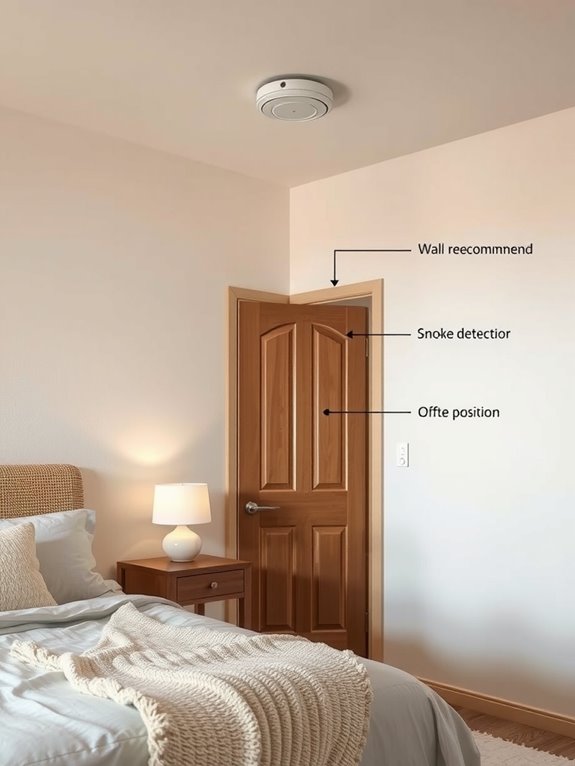
You’ll want to skip placing your smoke detector directly above your bedroom door. When people open and close the door, the air movement pushes smoke away from the sensor right when you need it to work. That space at the top of the doorframe becomes a dead zone where the detector can’t pick up smoke properly.
If you have a bathroom nearby, steam from showers can also drift up and set off false alarms. Nothing’s worse than waving a dish towel at your ceiling at 7 a.m. because someone took a hot shower. It trains you to ignore your detector’s alert, which defeats the whole purpose of having one.
Mount your detector on a wall or ceiling away from doorways and air vents instead. A spot in the center of a hallway or bedroom ceiling works much better for catching smoke early.
Drafts Interfere With Detection
Why does placement matter so much when you’re installing a smoke detector? Drafts interfere with how well your bedroom smoke alarm actually works. When you mount it directly above your door, airflow from the hallway pushes smoke away from your sensor before it can trigger an alert.
Smoke naturally rises, but moving air fights against that movement. Think of it like trying to walk upstairs while someone’s pushing you backward. The air current wins, and your detector doesn’t get the signal it needs to sound the alarm.
Here’s what actually works:
- Position your unit away from doors and windows where air currents can deflect rising smoke
- Mount it on the ceiling or high on a wall, at least 4 to 12 inches away from corners and ceiling edges where smoke can get trapped
- Keep it away from kitchens and bathrooms where steam and cooking fumes cause false alarms
The basic rule is simple: put your detector where smoke will naturally reach it without interference. A standard battery-powered detector like the First Alert SA320CN costs around $20 and works fine in the right spot. Even the best detector becomes useless if drafts keep the smoke from reaching the sensor. Your bedroom protection depends on getting the location right first.
Steam Triggers False Alarms
Bathroom steam is a smoke detector’s worst enemy. You’ve probably experienced this yourself—your bedroom detector screams while you’re just taking a shower. Here’s why: steam triggers false alarms because moisture mimics smoke particles in the sensing chamber.
To prevent this frustration, follow smart smoke detector placement strategies. Position your bedroom smoke alarm at least 3 feet away from any door opening. This distance minimizes door drafts and bathroom humidity that drift toward your unit. Better yet, place the detector on the opposite wall entirely if your bedroom connects to a bathroom.
Consider ceiling installation or higher wall placement, positioning it 4–12 inches below the ceiling. This elevated spot keeps your detector away from steam rising near doorways. You’ll maintain reliable detection while enjoying uninterrupted showers—a practical solution that works for most homes.
Step 4: Stay at Least 20 Feet From Your Kitchen
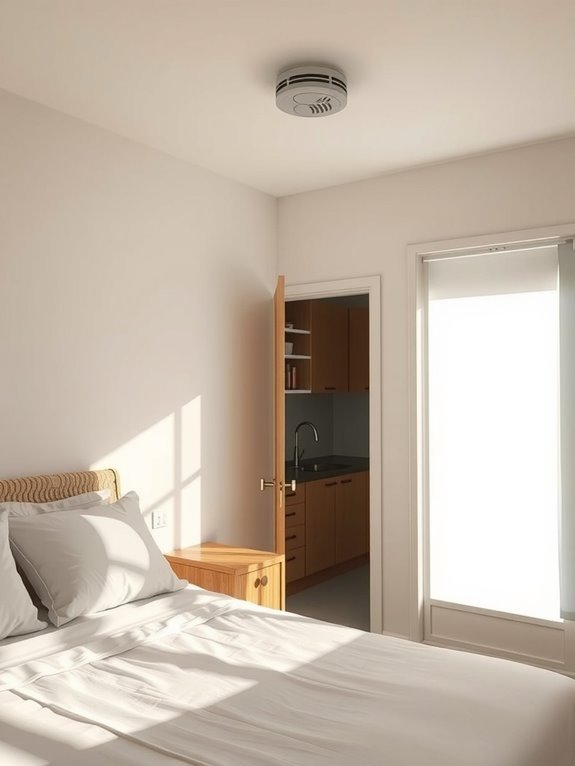
How far should your bedroom smoke detector actually sit from the kitchen? You’ll want to keep at least 20 feet of distance between your detector and cooking appliances. This separation stops nuisance alarms while keeping you safe.
Keep bedroom smoke detectors at least 20 feet from cooking appliances to prevent false alarms while maintaining fire safety.
Why this spacing works:
- Reduces false alerts – Steam and cooking smoke won’t trigger constant alarms that you’d ignore
- Maintains fire safety – You’ll still get timely warning if an actual fire starts
- Improves detector clearance – Distance prevents airflow interference from range hoods
In open-concept spaces, position your bedroom detector to cover entry points while respecting the 20-foot kitchen boundary. Avoid placing detectors directly above or next to cooking surfaces. This balanced approach gives you the fire safety you need without constant frustration from false alarms.
Step 5: Install It Within 12 Inches of the Ceiling (Walls) or 4 Inches From Peak (Ceilings)
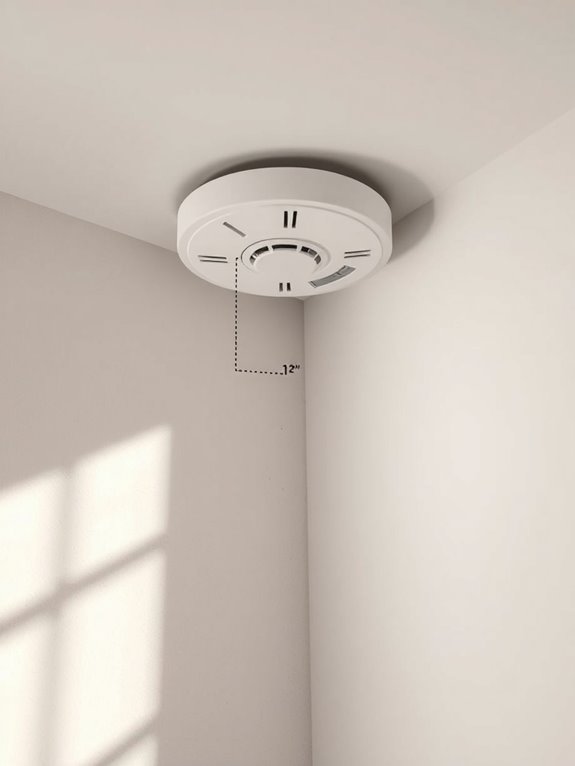
Once you’ve found the right spot away from your kitchen, it’s time to mount that detector where it can actually catch smoke. For wall mounting, position your bedroom smoke alarm so its top edge sits between 4 and 12 inches below the ceiling line. This placement works because smoke naturally rises, so you want the detector high enough to catch it quickly but not so close to the ceiling that it gets stuck in dead air pockets.
If you’re mounting on the ceiling instead, place it as close to the center of the room as possible. With pitched ceilings, stay within 3 feet horizontally from the highest peak and keep at least 4 inches of clearance from the peak itself. This spacing matters because smoke behavior changes near angles and corners.
One thing worth noting: avoid installing detectors near windows, doors, or vents. Air movement in those spots can push smoke away from the sensor, causing false alarms or delays in detection. Most fire safety experts recommend this high placement near sleeping areas because you want the alarm to wake you up fast if there’s ever a problem. Getting the height right takes maybe five minutes and a tape measure, but it makes a real difference in how well your detector performs.
Step 6: Test It Before You’re Done
Now that your detector is mounted at the right height, it’s time to check that it actually works.
Start by pressing the test button once a month. This tells you the alarm is functioning and gives you a sense of how loud it sounds. Most detectors have a test button right on the face—just press and hold it for a few seconds. You’ll hear the alarm go off, which is exactly what you want. If nothing happens, the battery might be dead or the unit itself could be faulty.
Press your smoke detector’s test button monthly to confirm it’s working and learn how loud the alarm sounds.
Speaking of batteries, check yours once a year and swap it out according to what the manufacturer recommends. Many smoke detectors use a 9-volt battery, which costs a few dollars at any hardware store. If you hear a low-battery chirp—that annoying single beep every 30 seconds or so—replace the battery right away. Some newer models, like those from First Alert and Kidde, have 10-year batteries built in, so you replace the whole unit instead.
Make sure everyone living with you knows what the alarm actually sounds like and what they should do when it goes off. A smoke detector does nothing for your safety if people sleep through it or don’t recognize the sound as a warning. Walk through your emergency plan with your family at least once a year.
While you’re at it, follow the manufacturer’s cleaning tips. Most detectors just need a gentle vacuum with the brush attachment or a wipe with a dry cloth every few months. Dust buildup can trigger false alarms or make the detector less sensitive, which defeats the whole purpose.
Step 7: Keep Your Bedroom Door Open at Night for It to Work
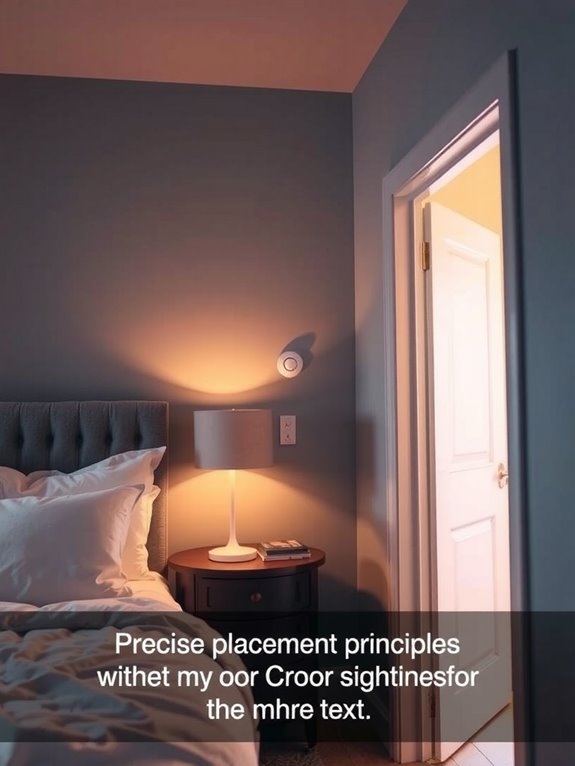
One last thing—and honestly, a lot of people forget about this—keep your bedroom door open at night. When your door stays closed, smoke takes longer to reach your detector, which means you lose precious seconds of warning time. NFPA 72 guidelines recommend keeping doors open so smoke can flow freely to your alarm and the signal can spread throughout your sleeping areas.
Think of it like this: your bedroom smoke detector is sitting there ready to help you out, but it can’t do much if you shut it out. An open door lets smoke reach the alarm faster and helps interconnected alarms talk to each other properly. It’s a small habit that makes a real difference in how quickly you’d get that warning if something went wrong.