
You can tuck a slim tree into a corner to use two walls for support, or position it near a window where natural light makes it shine both inside and outside.
Wall-mounting offers a floating feel that saves floor space and works especially well for renters—removable Command hooks (around $1-3 per pack) let you skip drilling holes.
Spots behind your sofa, on staircase landings, or between rooms work nicely as dividers too.
Battery-powered lights keep cords hidden and safe, which matters when space is tight.
Stick with lightweight ornaments and sturdy bases to keep things stable.
You’ll want to check that whatever base you choose can handle your tree’s weight without tipping—this is one area where cutting corners backfires fast.
Corner Cozy : Diagonal Corner Placement
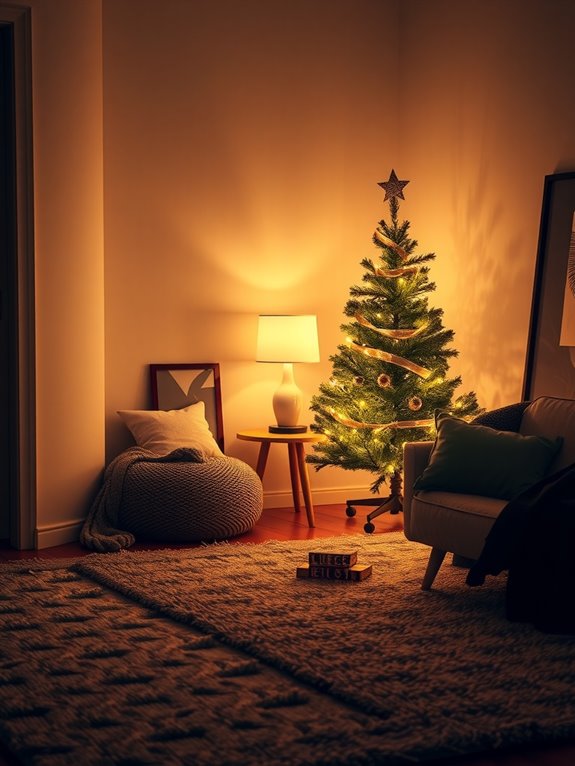
Why waste precious floor space when you can tuck your tree into a corner and let two walls support it. A diagonal setup takes that awkward dead space and makes it the center of attention in your room. This arrangement keeps your pathways open while making your tree feel like it belongs exactly where it is.
Start with a slim tree stand—something like the Balsam Hill Slim Profile Stand ($40-60) works well for most trees. String your lights before you position the tree, since reaching around branches later is about as fun as untangling last year’s light strands. If you have a floating shelf nearby, drape garlands across it at different heights for added interest without making things look crowded.
Corner placement uses those angles that usually just sit empty. Your foot traffic stays clear, and your tree doesn’t take up valuable room in the middle of everything. Everyone can move around freely while your tree gets the spotlight it deserves. For smaller living rooms, this diagonal approach is the practical choice that actually works.
Window Nook : Near the Window Approach
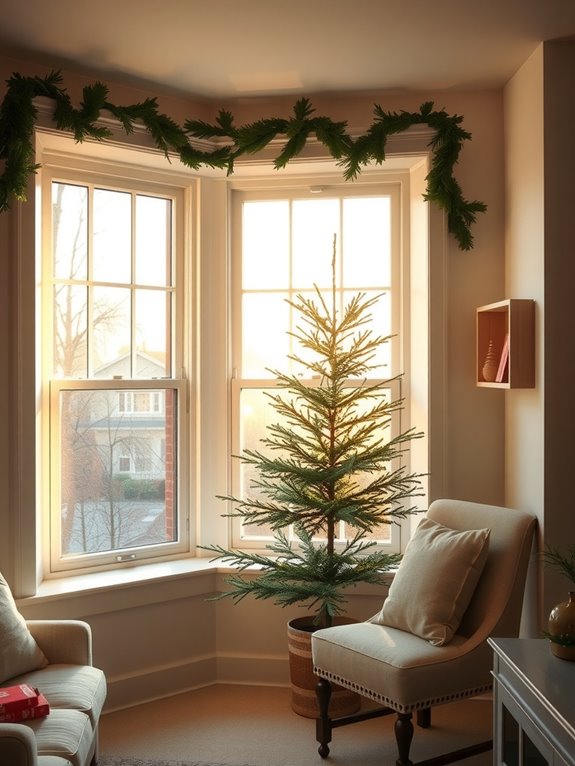
While corner placement keeps your tree tucked away and out of traffic, positioning it near a window does something different. It lets people see your tree from both inside and outside your home.
Window placement transforms your tree into a dual-purpose focal point—visible from both inside your home and the street outside.
A slender tree works best in a window nook. Near-window placement maximizes daylight exposure and creates depth without eating up floor space. You’ll notice how natural light changes your tree’s appearance throughout the day, making it look different in morning sun than it does in afternoon shade.
There are real perks to this setup. You get more natural light indoors, which brightens your whole room. Neighbors can see your festive display from the street. Your living room stays open and doesn’t feel cramped. Plus, the tree stays visible and becomes a natural focal point that people actually notice.
The tradeoff is maintenance. Live trees need care in window spots. Rotate them occasionally so they grow evenly. Water them regularly, especially since indoor heating dries them out fast. Sheer curtains help prevent direct sunlight from drying out the needles over time.
A window nook works best with slender varieties like columnar evergreens or pencil-thin fir trees. These typically cost $40 to $100 depending on height and quality, and they fit the space without blocking your view outside. Your window nook becomes a focal point that works hard for your home.
Bay Window or Balcony : Extending Your Festive Display
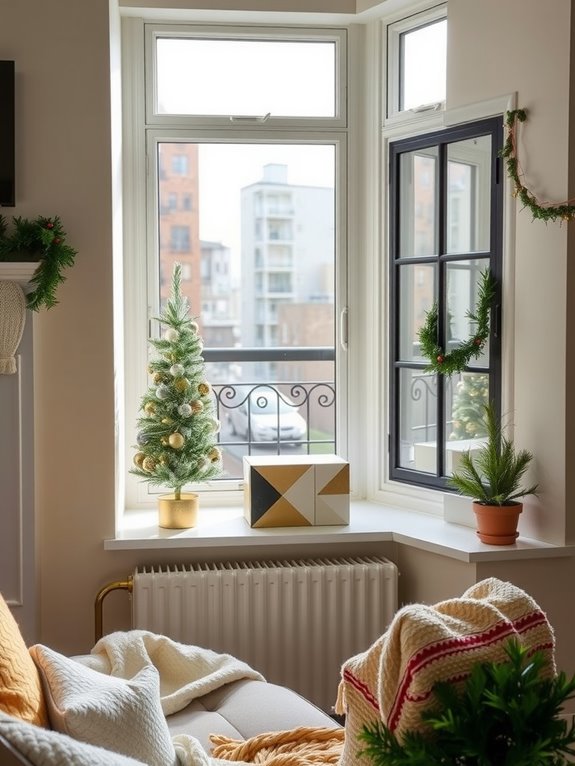
You can make your bay window or balcony work as a display area by placing your tree where it catches sunlight during the day and looks nice with string lights after dark. Think about what people see when they look from inside your home and from the street—you want your decorations visible, not hidden behind curtains or a couch.
If you’re putting a real tree on a balcony, you’ll need to protect it from wind and weather. Water it regularly and check your building’s rules about balcony decorations before you set anything up. A potted evergreen in a 10-15 gallon container (usually $30-60 at garden centers) works well because you can bring it inside during harsh storms, and the container makes watering easier than dealing with a tree in soil that dries out fast on an exposed balcony.
Creating Visual Depth Outdoors
Because bay windows and balconies sit right at the edge of your living space, they’re perfect spots to showcase your Christmas tree where it’ll look great from both inside and outside your home.
When you position your tree in a bay window of your compact living room, something neat happens. The natural light hits the branches and bounces off the ornaments, making everything sparkle and creating visual depth that actually makes your small space feel bigger. Your neighbors get to see your festive display too, which spreads a little holiday cheer around the block.
This setup works because natural light does most of the heavy lifting for you. The glow makes your tree a focal point that catches attention from both sides of the window. Since your tree stays protected from harsh weather while remaining visible from inside, you get the best of both situations.
When you’re picking a tree for your bay window, go with a slender variety. Something like a pre-lit slim spruce (usually $60 to $150 depending on height) fits snugly without crowding your furniture. The shape means you maximize that gorgeous natural glow everyone loves while keeping your living room feeling open.
Weather Protection Essentials
Once you’ve claimed that prime bay window or balcony spot for your tree, the next step is keeping it safe from wind and weather. Live trees dry out quickly when exposed to direct drafts and harsh conditions, so position your tree away from windy spots if you can. If your tree is on a balcony, set up a simple windbreak using a patio screen or lean it against a wall. Secure your tree with sturdy brackets or guy-wires so it won’t tip over when gusts hit—and trust me, a falling tree is nobody’s idea of holiday fun.
For outdoor placement, skip the traditional string lights and grab battery-powered, low-profile options instead. This keeps you from dealing with extension cords draped everywhere and reduces safety hazards. Look for weather-resistant decorations made to handle rain, snow, and temperature changes without fading or breaking down. Materials like plastic ornaments, metal accents, and synthetic garland hold up much better outside than paper or fabric alternatives. Your indoor tree stays stable and protected, your bay windows keep their view, and your holiday setup lasts through the whole season without falling apart.
Viewing Angles and Sightlines
How’s your tree looking from the street? Your bay window is a natural spot for sharing holiday decorations with your whole neighborhood. When you position your tree here, people inside and outside both get a good view of it.
Bay windows work well for this because they stick out from the house, which means your tree becomes a focal point without blocking the view through your living room. The room depth also makes your space feel bigger while giving your tree plenty of space to shine.
To make sure neighbors can see your display, keep furniture away from the window so nothing gets in the way. Swap heavy drapes for clear glass or light fabrics like sheer curtains—something like IKEA’s RÄCKA sheer curtains ($10-15) let light through while keeping your privacy. This setup lets people outside see your seasonal display while you still feel comfortable inside.
The goal here is practical: good sightlines work both directions. You get to enjoy looking at your decorated tree from inside your home, and the people walking by get to see what you’ve put together. It’s a simple way to add a little festive feeling to your neighborhood without much fuss.
Wall-Mounted Tree : Floating Feel for Floor Space
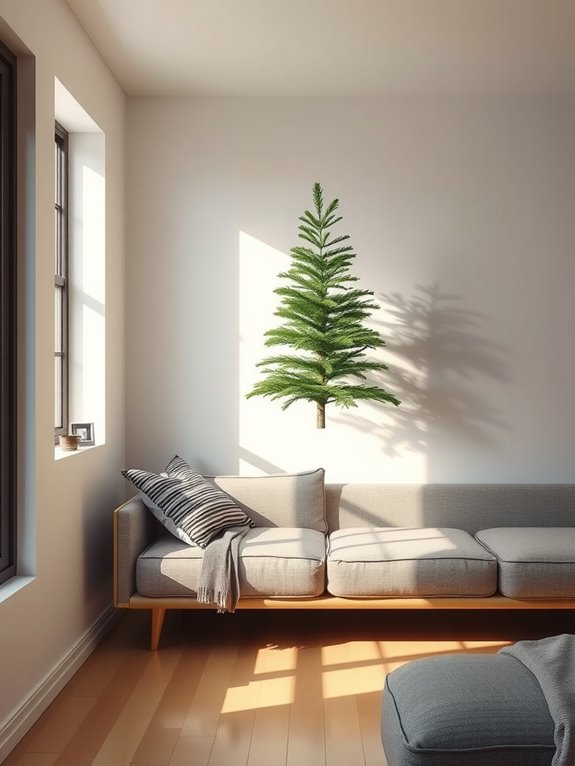
When you mount a tree directly on your wall, you’re freeing up precious floor space while creating a focal point that won’t collect dust underneath. This setup works especially well if you live in an apartment or have limited room to work with.
Safety comes first, though. You’ll want heavy-duty wall anchors rated for your tree’s actual weight—not just the estimate. Keep lightweight ornaments within reach of kids and pets, and test your setup with painter’s tape before drilling any holes. This takes maybe ten minutes and saves you from patching drywall later.
The best part is that removable adhesive strips and damage-free hardware let you create this floating effect without losing your security deposit. Command strips and similar products run around $5 to $15 per pack and hold surprisingly well. If you’re renting, this approach means you can decorate without landlord drama. Even if you own your place, you still get the flexibility to change things up next season.
Safety and Mounting Essentials
Ready to reclaim your living room floor without sacrificing that festive tree magic? Wall mounting your tree requires serious safety planning. You’ll want to invest in proper installation before decorating.
Test your wall’s capacity – Use painter’s tape to outline your tree’s footprint and weight distribution before installing permanent mounts. This simple step prevents surprises when you’re halfway through hanging ornaments.
Choose sturdy anchors – Select mounts rated for your tree’s height and weight to prevent accidental detachment from kids or pets. Heavy-duty toggle bolts or stud-mounted brackets work well for most artificial trees. If your tree weighs 50 pounds or more, aim for mounts rated at least 75 pounds to give yourself a safety cushion.
Use battery-powered lighting – Skip corded LEDs to minimize cord exposure and reduce overheating risks behind mounted setups. Battery-operated string lights from brands like Balsam Hill or Target’s Threshold Collection typically cost between $20 and $40 and last through several holiday seasons on standard AAs or AAAs.
For renters, removable mounting solutions let you enjoy the floating feel without wall damage. Command brand wall hooks designed for heavy items run about $8 to $12 per pack and leave no holes when removed. Your living room deserves that spacious, welcoming atmosphere you’re craving, and smart wall mounting delivers it safely.
Lightweight Decoration Strategies
Why does a wall-mounted tree sometimes look sparse compared to a traditional floor tree? You’re working with less visual weight, so you need to be intentional about what you hang. Battery-powered LED string lights are your best friend here. Brands like Warm White LED String Lights (around $15-25) drape beautifully along your wall setup and weigh almost nothing, so your wall anchors won’t strain under the load.
Swap out heavy ceramic or glass ornaments for fabric garlands, felt ornaments, and paper decorations. These choices keep your tree looking full without the weight problem. Thin ribbon bows add visual interest in a way that’s both budget-friendly and practical. A basic spool of silk ribbon runs about $3-8 and goes a long way.
The goal is making your small room feel welcoming rather than cramped. When you stick with lightweight materials, your tree gets to be the focus while your walls stay safe and your mounting hardware stays happy.
Renter-Friendly Installation Options
Now that you’ve got your lightweight decorations sorted, it’s time to tackle the installation itself—and here’s the good news for renters: you don’t need to drill holes or commit to permanent changes.
A wall-mount tree gives you that festive floating feel without sacrificing your security deposit. Removable adhesive strips like Command hooks (around $3-5 per strip) and safety-tested anchors hold your tree securely without wall damage. Since lightweight designs minimize stress on the mounting hardware, everything stays stable even with kids and pets moving around. Most setups take under an hour to install, so you’re ready to celebrate pretty quickly.
The real benefit here is seasonal flexibility. You claim your small space during the holidays, and when January rolls around, you simply remove everything cleanly without leaving marks or holes. Your landlord stays happy, you stay merry, and your room feels intentionally decorated rather than cramped.
Slim Vertical Trees : Narrow Options for Tight Spaces
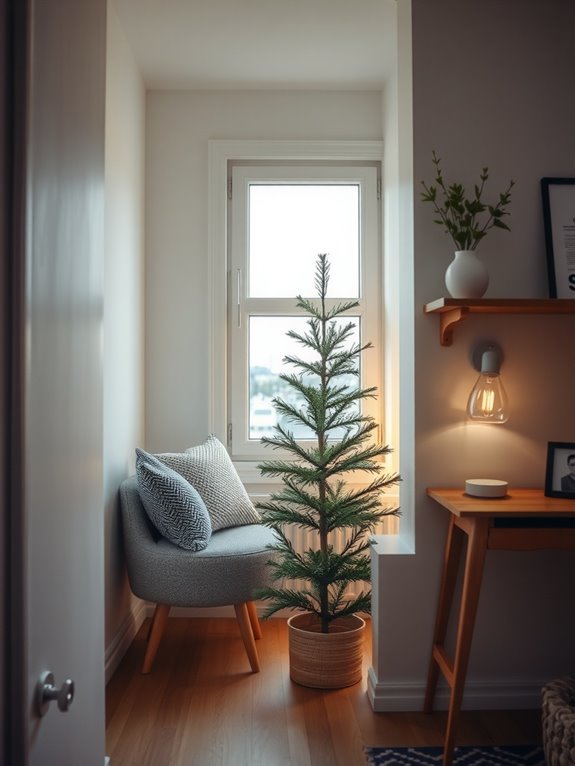
When you’ve got limited square footage, a slim vertical tree lets you enjoy a full-sized Christmas tree without giving up floor space. These narrow options work well in small living rooms because you can tuck them into corners or push them against walls, keeping your walkways clear while still getting that festive feeling.
The challenge with slim trees is they can look thin and empty if you’re not careful. Layer your lighting with wraps or vertical nets to fill in the gaps and make the tree feel fuller. Stick with one ornament color scheme—it keeps things looking organized and polished rather than chaotic. A generous tree skirt underneath does the heavy work here, creating visual balance and making your whole setup feel complete and intentional.
These trees are also budget-friendly since they cost less than standard full-width models. That makes them a smart choice for renters who don’t want to invest heavily in seasonal decor or for anyone staging a home for sale.
Tabletop Cluster : Multiple Small Trees on a Tray
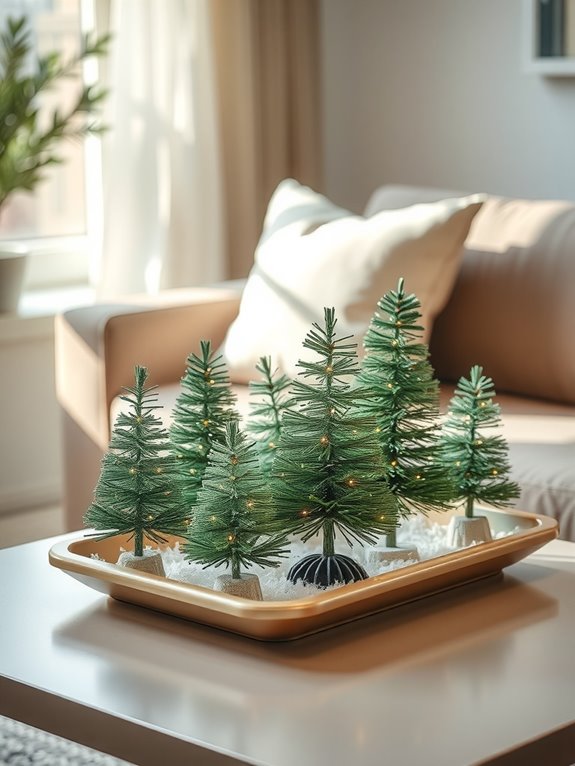
If you’re short on floor space but don’t want to skip holiday decorating, a tabletop cluster might work for you. This approach combines two or three mini trees on a single tray, creating a complete holiday display without taking up much room.
Why this setup works well:
Tabletop clusters give you flexibility. You can move them from a console table to your dining table to a shelf whenever you want a change. Since you’re stacking different-sized trees together, you build visual depth and interest without needing a lot of square footage. Battery-powered lights keep cords out of sight while adding warm lighting to the arrangement.
Planning your layout:
Before you buy anything, test your setup using digital mockups on apps like Homestyler. You can experiment with different tree heights and positions to see how the cluster looks from various angles in your room. This saves you from setting everything up only to realize the sightlines don’t work or the arrangement feels awkward from your favorite seat.
Behind the Sofa : Glowing Backdrop Tree
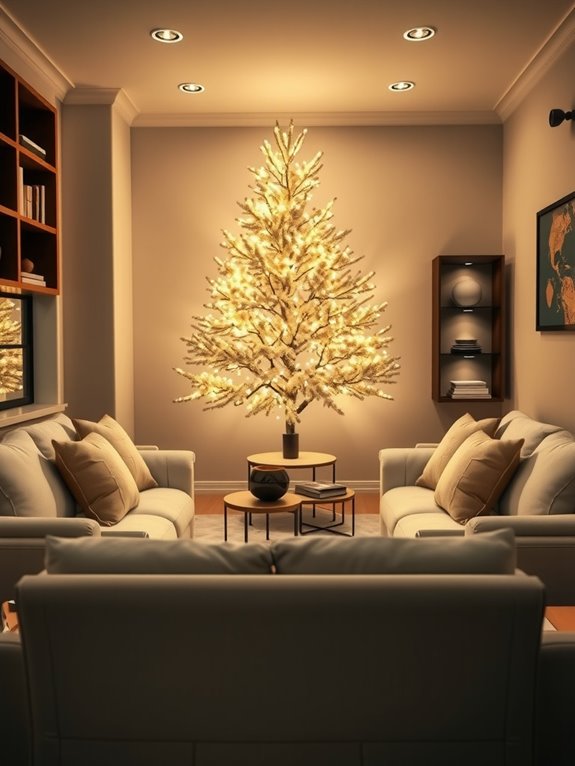
A tall, slim tree positioned behind your sofa works well for small living rooms because it fills vertical space without crowding the floor or blocking your TV. The glowing lights create a cozy atmosphere when people are sitting and talking, and the sofa itself becomes part of the backdrop rather than something the tree competes with.
Start with a narrow weighted stand—look for options in the $20-40 range that are specifically designed for artificial trees. Pair this with a low console table (around $50-150) to tuck away cables and cords so they don’t dangle visibly. Battery-powered LED lights are your best bet here since they eliminate the need for nearby outlets and reduce clutter behind the sofa. Most battery-operated string lights run $15-30 and last about 40-50 hours on fresh batteries.
Keep the tree at least a foot away from any curtains or upholstered furniture to avoid heat buildup, even with cool LEDs. You might need to shift your sofa a few inches to make room for cables running along the wall, but this setup usually only requires minor furniture shuffling rather than a complete rearrangement.
Choose ornament colors that work together—metallics with jewel tones, or all warm golds and whites, for example. Layer your lighting by combining multiple strands of lights (usually 2-3 sets per 6-foot tree) so the tree looks full and glowy rather than sparse. This approach works especially well in rooms where you’re already tight on space.
Staircase Landing : Accent Tree Between Floors
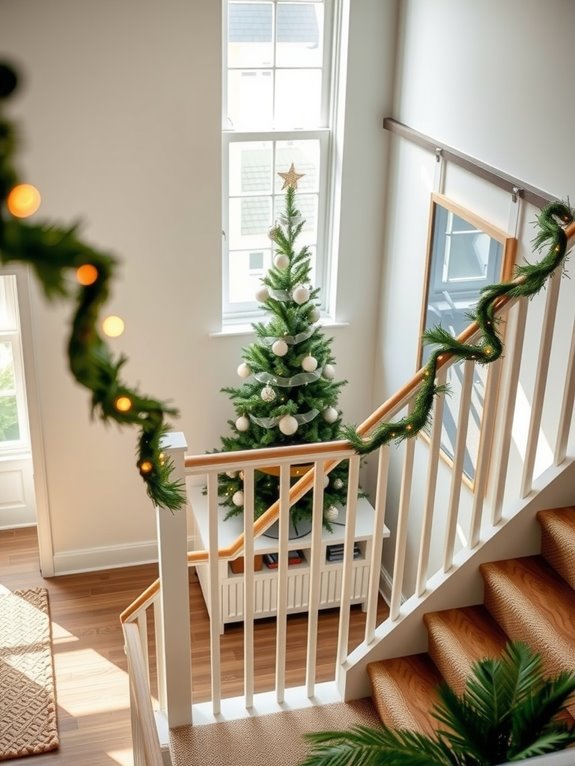
A slim, festive tree on your staircase landing can work well if you plan it carefully. Pick a lightweight stand and secure it firmly so it won’t tip over as people move past. Battery-powered LED strings are your best bet here—they eliminate the hassle of finding outlets and keep cords away from wooden banisters and fabrics where heat from traditional plug-in lights could be a problem.
Before you bring a tree upstairs, measure your headroom clearance. You don’t want anyone bumping their head or having to duck awkwardly between floors. Anchor everything tight so branches or decorations won’t catch someone’s sleeve or create a tripping hazard. The goal is festive without getting in the way of how people actually use that space. A 4- to 5-foot tree with a compact base usually works better than a full-size version, and it takes up less visual real estate while still looking seasonal.
Safety and Traffic Flow
Why not use that staircase landing for holiday decorations? A narrow tree on your landing gives you a festive focal point while keeping your living room open and spacious. You’ll keep clear traffic flow between floors, which matters when you’re going up and down stairs every day.
A few things make this spot work well:
- Pick a stable tree – Look for a slim tree with a weighted base so it won’t rock back and forth as people walk past. The National Tree Company SlimLine options (around $80–$150) are designed specifically for tight spaces and have sturdy bases that don’t tip easily.
- Use battery-powered lights – Skip extension cords draped down the steps. They’re tripping hazards that nobody needs. Battery LED string lights like the Brightech Ambience Pro ($20–$30) last for hours and come in warm white tones that feel cozy.
- Go with shatterproof ornaments – Stairs mean bumps and jostles happen. Plastic or foam ornaments won’t break if they get knocked around, unlike glass ones that shatter and create a mess to clean up.
Position your tree away from doors and air vents so it stays upright. Make sure you have enough headroom above it and keep handrails completely clear and easy to grab. With careful placement, you get holiday cheer without creating safety problems or blocking the way through your home.
Lighting and Cord Management
When you’ve got a tree sitting on your landing, cords draped everywhere can be a real hassle. Battery-powered LED string lights are the practical choice here because they skip the cord problem entirely while keeping your small living room neat. Look for options with low-profile battery packs that tuck behind branches instead of hanging loose.
If you do need cords for any lights, use cord clips or cable management channels along your bannister to keep everything secure and out of the way. Nobody wants to trip over cables going up and down the stairs. Layer your lighting with wrap lights and net lights to fill out your tree without cramping your landing space. This approach gives you control over how bright and cozy things feel while making sure pathways stay clear for people using the stairs.
Multi-Functional Tree : Use as Room Divider
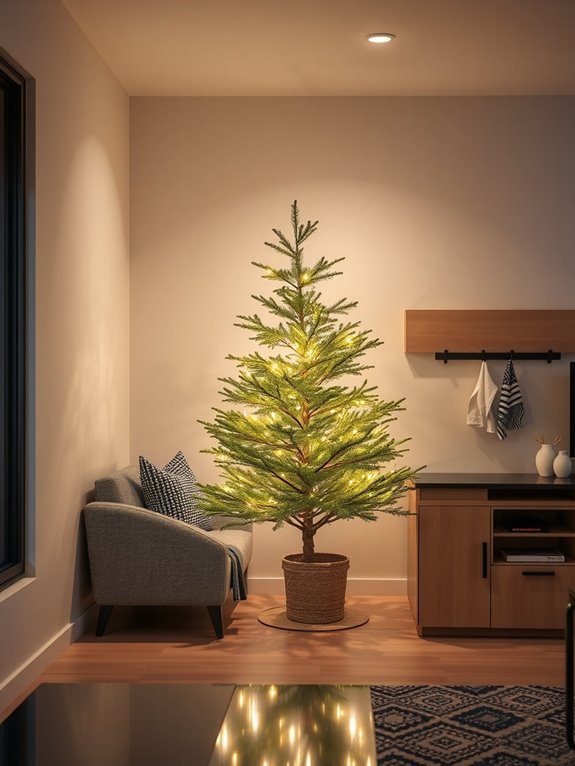
A slim Christmas tree can pull double duty in your small living room. Instead of building walls to separate your living and dining areas, position a decorated tree between them. It creates visual zones while keeping your walkways open and clear.
To make this work, you’ll need to think through a few practical details. First, check your sightlines so the tree doesn’t block your TV or any doorways you use regularly. Then, stabilize it properly—a low console table beside the tree adds function and prevents it from tipping. The console can hold holiday décor while anchoring your divider in place.
When you choose decorations, pick ornaments and garland that look good from multiple angles. Since people will see your tree from both sides, you want it to look intentional from the living room and the dining room. Warm wood tones on the tree and console help tie your whole space together visually.
The beauty of this approach is that it gives you defined spaces without eating up square footage. Your small room feels more organized, and you’ve added both decoration and function at the same time.
Secure Your Tree : Stability, Cords, and Safe Placement Tips
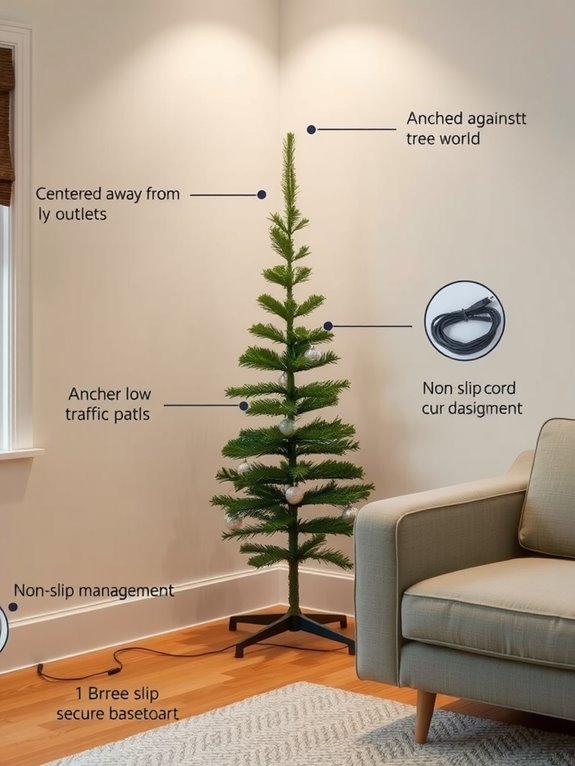
How you secure your tree matters just as much as where you put it, especially in a small living room where space is tight and people are moving around constantly. Start by anchoring your base firmly to the floor or platform. A weighted stand does the job, but if your floor is slippery or you have kids and pets running around, securing the stand to a stair rail or wall with sturdy brackets adds real peace of mind.
For lighting, battery-operated LED strings like the Philips Hue ($30-50 range) or basic battery-operated strands ($10-20) eliminate the fire hazard that comes with traditional electric cords and save you from the inevitable tangled mess. If you do use electric lights, route any cords behind furniture or along baseboards. Never run them across walkways—someone will trip over them, and it only takes one accident to ruin the holidays.
Choose lightweight ornaments made from plastic or thin glass rather than heavy ceramic ones. This reduces the strain on branches and means less stress about ornaments crashing down if the tree shifts. Smaller branches can handle only so much weight before they start drooping or breaking.
Put your tree somewhere sturdy and away from high traffic areas. A corner works better than the center of a room, and keeping it away from heat sources like fireplaces and radiators keeps it fresher longer. The combination of smart placement, a solid anchor, and careful attention to weight distribution keeps your tree standing safely throughout the season.