

Start by measuring your living room’s square footage—multiply the length by the width. This number tells you what size fan will work best. Rooms under 144 square feet do well with 36–42 inch fans, while spaces between 225–400 square feet need the bigger 50–54 inch models. Everything in between? Go with a 44–48 inch fan.
Ceiling height matters just as much as room size. If your ceiling sits at 8 feet or lower, a flush-mount fan attaches directly to the ceiling. For anything higher than that, you’ll want to add a downrod—basically a metal rod that hangs the fan down a bit. This gives the blades room to spin without hitting your head, which is both safer and more comfortable.
Where you place the fan changes everything. Put it above the area where you actually spend time—your couch, bed, or reading chair—rather than in an empty corner. That way, you’ll actually feel the breeze when you’re sitting down. A fan pushing air across empty space is just wasting electricity.
Start With Your Living Room’s Square Footage
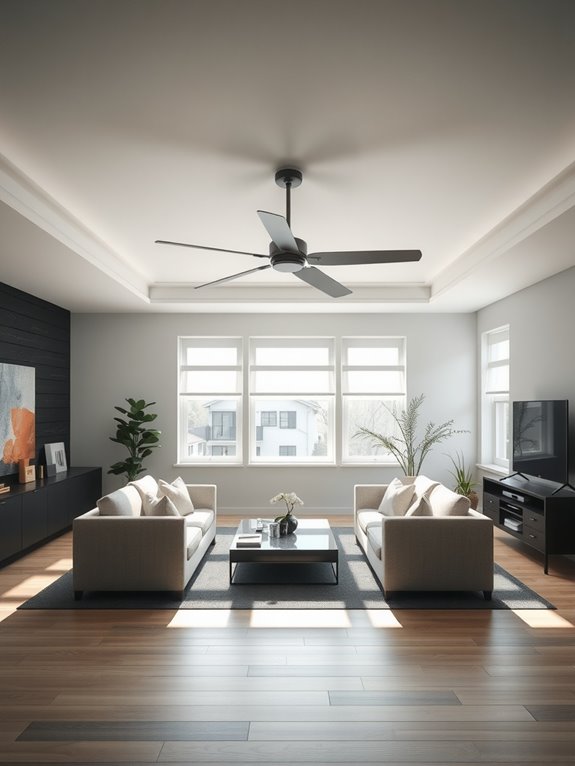
How do you figure out what size ceiling fan you actually need? Start by measuring your living room’s square footage. This number is your baseline for everything else.
Rooms up to 144 square feet work best with a smaller 36–42 inch fan. A fan this size gives you decent air circulation without making the room feel crowded or uncomfortable. If your space is between 144–225 square feet, you’re in that middle zone where things get a bit trickier. Before you decide, think about your ceiling height and how the room is laid out. Those details matter more than you might think.
Got more than 225 square feet? That’s when you need a bigger 50–54 inch fan. Larger rooms need that extra airflow to actually move air around the whole space. Grab a measuring tape and spend two minutes taking measurements. It beats spending money on a fan that doesn’t fit your space right.
Use Square Footage to Find Your Fan Diameter Range
Once you’ve calculated your square footage, you’ll match it against a standard sizing chart to find the right fan diameter. It works kind of like shoe sizes—a 75 square-foot bedroom needs a smaller 29–36 inch fan, while a 300 square-foot living room calls for a 50–54 inch model that can actually move the air around.
The reason this matters is straightforward: undersized fans look out of place and won’t do much of anything. A tiny 36-inch fan in a huge room just spins there without getting the job done. On the flip side, cramming a massive 60-inch fan into a small bedroom wastes energy and looks awkward above your bed. Pick a fan that fits your space, and it’ll handle airflow without being the weird focal point of the room.
Measuring Your Living Room
Your room’s square footage directly determines the blade span you’ll need for proper air circulation. When you measure your living room’s length and width, you’re gathering the essential data to find the right fan for your space.
Grab a tape measure and jot down both dimensions. Multiply them together to calculate your total square footage. This number becomes your starting point for selecting the right blade span.
| Room Size | Square Footage | Recommended Blade Span |
|---|---|---|
| Small | Up to 75 sq ft | 29–36 inches |
| Medium | 76–144 sq ft | 36–42 inches |
| Large | 144–225 sq ft | 44 inches |
| Extra Large | 225–400 sq ft | 50–54 inches |
| Spacious | Over 400 sq ft | Multiple fans |
A small bedroom measuring about 10 by 7 feet, for example, comes to 70 square feet. That means you’d want a fan with blades in the 29–36 inch range. A larger living room at 15 by 15 feet equals 225 square feet, which calls for a 50–54 inch blade span or possibly two fans working together. Finding the right size keeps air moving efficiently without wasting energy or creating uncomfortable drafts.
Standard Sizing Chart Guide
Once you know your square footage, the sizing chart helps you pick the right blade span for your room. Rooms up to 75 square feet work well with 29–36 inch fans. If your space falls between 76–144 square feet, look at 36–42 inches. That 144–225 square foot range typically calls for a 44-inch fan. Larger spaces from 225–400 square feet usually need 50–54 inches.
The chart gives you a solid starting point, but it’s not the whole story. Ceiling height and how your room is laid out matter just as much as the numbers. An open-concept living room might perform better with the next size up because air needs to travel farther. Think of the chart as your foundation, then adjust based on what your actual space looks like and how the air moves through it.
Square Footage to Diameter
How do you actually match your room’s square footage to a fan size that’ll work? It’s simpler than you’d think. Start by measuring your living room’s length and width, then multiply them together. That square footage number becomes your guide.
For rooms up to 144 square feet, grab a 29–42 inch ceiling fan diameter. Between 144 and 225 square feet, you’ll want a mid-sized 44–52 inch fan. Spaces ranging from 225–400 square feet need something bigger—aim for 50–54 inches to distribute air effectively. Got a sprawling open-plan room? Consider multiple fans or one massive 56+ inch option instead.
Square footage is your starting point, but it’s not the whole story. Ceiling height and furniture placement matter too, so adjust your choice based on what your actual room looks like. A 10-foot ceiling might call for a different fan than a room with 8-foot ceilings, even if they’re the same size on the floor.
How Ceiling Height Affects the Right Fan Size
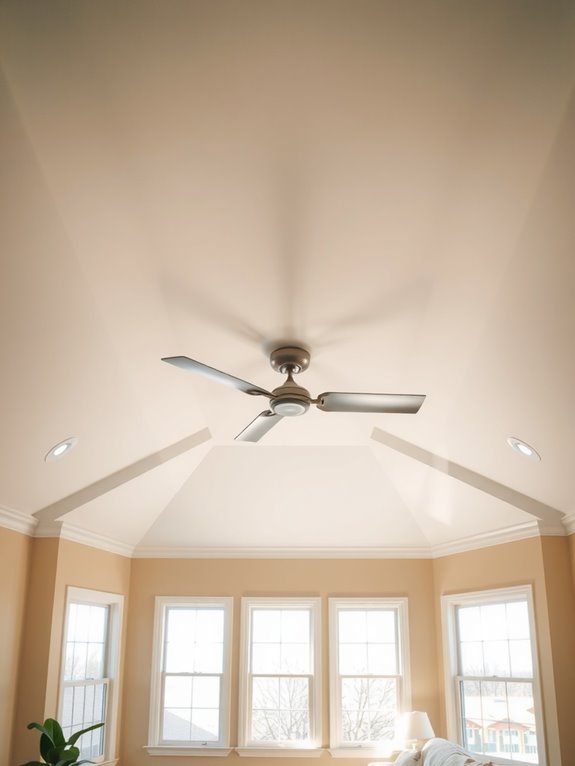
Your ceiling height matters just as much as your room size when picking a fan. Low ceilings under 8 feet call for a flush-mount or low-profile model that sits tight against the ceiling. This keeps the blades from becoming a head hazard as you walk around the room.
Ceilings that stretch beyond 9 feet benefit from a downrod, which extends the fan lower. The ideal height for air circulation is 8–9 feet above the floor, and a downrod helps you hit that target. Without one, a ceiling fan on high ceilings ends up too far away to circulate air where you actually spend your time.
Low Ceilings Require Flush Mounts
When your ceiling sits at eight feet or lower, a standard ceiling fan with a long downrod becomes a problem. That extra rod takes up headroom and makes rooms feel boxed in. Flush-mount and low-profile fans work better because they attach directly to the ceiling, keeping fan blades about seven to eight feet above the floor where they operate safely.
| Mount Type | Best Ceiling Height | Blade Clearance | Space Saved | Room Feel |
|---|---|---|---|---|
| Flush Mount | 8 feet or lower | 7-8 feet | Maximum | Spacious |
| Low-Profile | Under 9 feet | 7-8 feet | High | Open |
| Standard | 9+ feet | 7-8 feet | Minimal | Cramped |
| Downrod | 10+ feet | 7-8 feet | None | Balanced |
| Adjustable | Variable | 7-8 feet | Medium | Flexible |
Flush-mount fans sit completely flat against the ceiling, which means you lose almost no vertical space. Low-profile models hang down slightly but still preserve way more clearance than traditional fans. Both options keep air moving around your room while letting you walk underneath without ducking or feeling squeezed. The trade-off is that flush mounts and low-profile fans work best in smaller to medium rooms, since their compact designs cover less floor area than ceiling fans with longer downrods.
Higher Ceilings Need Downrods
Moving up from low ceilings, you’ll find that taller spaces call for a completely different approach. When your ceiling height exceeds 9 feet, you’ll want to install a downrod fixture to position the blades properly. The math is simple: subtract 9 from your ceiling height to determine your downrod size. A 12-foot ceiling, for example, needs a 3-foot downrod.
A downrod brings your high-ceiling fan into the room’s active air circulation zone, so it actually works for you. Without one, blades sit too high and push air uselessly toward the ceiling instead of moving it around the room where you need it. The right downrod keeps your fan effective while maintaining a balanced look, so you get both performance and appearance working together.
Downrods come in standard lengths ranging from 6 inches to 72 inches, with prices typically between $20 and $80 depending on material and finish. You’ll find options in brushed nickel, bronze, and white to match your fan. Installation takes about 15 minutes if you’re comfortable with basic tools, though hiring a handyman runs around $75 to $150 if you’d rather skip that part.
Does Your Room Layout Require a Larger Fan?

How’s your living room actually shaped—is it a cozy square, a sprawling rectangle, or one of those open-concept spaces that seems to stretch forever. Your room layout matters more than you’d think when picking a ceiling fan.
In compact, square rooms, a standard 52-inch fan moves air around pretty well. But if you’ve got a long rectangular space or cathedral ceilings, you’ll want to bump up to 56 inches or larger. Open-concept great rooms need 72 inches or more to fill all that vertical and horizontal space effectively.
Sometimes one fan isn’t enough, though. Two or three fans positioned strategically work better than a single oversized unit that leaves dead zones where the air barely moves. Think about where people actually gather in your room—your fan should push air toward seating areas and pathways. When you match your fan size and placement to your room’s actual shape, you’ll hit that sweet spot between function and looking good on the ceiling.
Getting the Downrod and Mounting Height Right
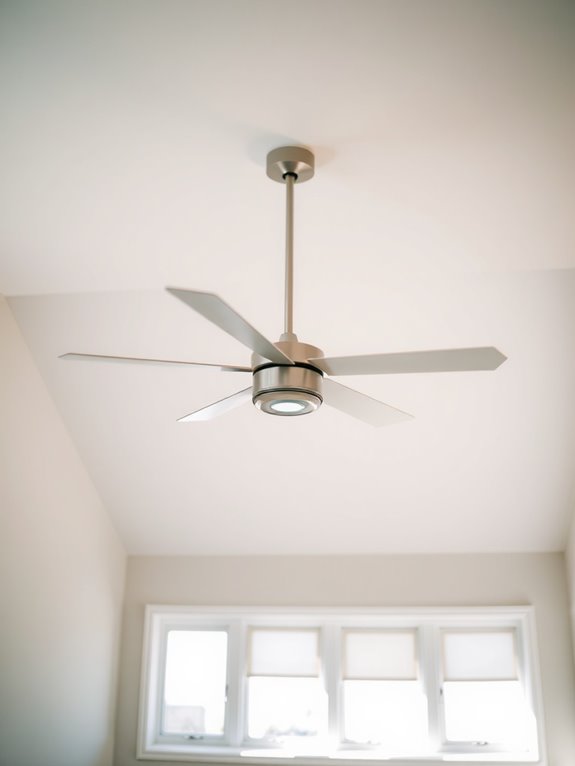
Once you’ve figured out your room’s shape and fan placement, the next step is getting the height right. Even the perfect fan size won’t help much if it’s spinning too close to your head or too far away to move air effectively.
You want those blades sitting about 8–9 feet above the floor. This height gives you enough clearance so people won’t bump their heads, and it lets air move around your room the way it should.
Finding the right downrod length depends on your ceiling height. Here’s how it breaks down:
| Ceiling Height | Downrod Length | Best For |
|---|---|---|
| 8–9 feet | None (flush mount) | Standard rooms |
| 10–12 feet | 1–3 feet | Vaulted spaces |
| 13+ feet | 4+ feet | High ceilings |
To figure out what you need, subtract 9 from your ceiling height. So if your ceiling is 12 feet tall, you’d use a 3-foot downrod. Longer downrods are also helpful in rooms with sloped or angled ceilings because they position the fan where it can actually circulate air instead of just spinning in place.
When a Smaller Fan Size Is Right for Your Living Room
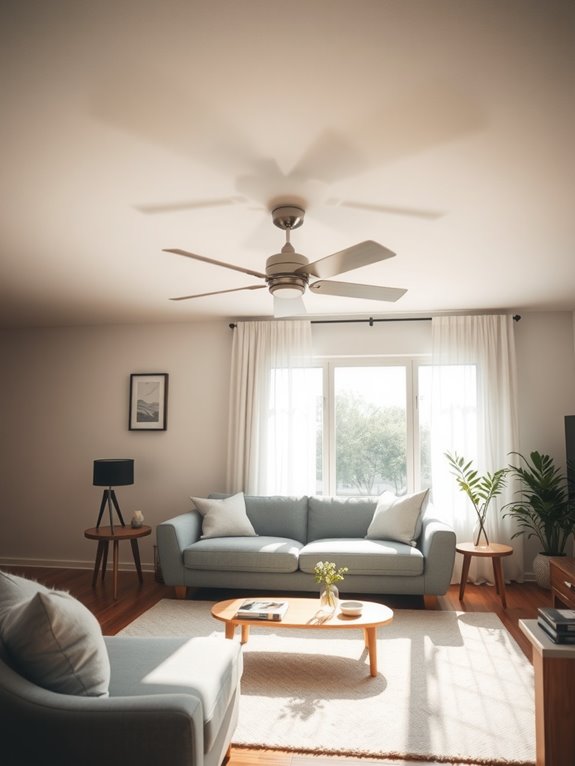
Why would you want a smaller ceiling fan when bigger ones exist? Sometimes less really is more. If you’ve got a small living room or low ceilings, cramming in an oversized fan actually works against you. A ceiling fan size between 29–42 inches fits snugly in rooms up to 144 square feet, preserving the visual breathing room your space needs.
Low ceilings especially benefit from compact, flush-mount models that won’t make your room feel crowded. Even in medium spaces up to 225 square feet, you can lean toward the smaller end—particularly if your layout feels intimate. The difference comes down to proper placement and airflow planning. Smaller fans can move air just as effectively as their bulkier cousins when you position them right, which means you’ll maintain comfort without sacrificing style or making your furniture feel overpowered by hardware.
Let Your Climate and Season Guide Airflow Needs
Your climate and season dramatically shape how you’ll actually use your ceiling fan, so it’s worth thinking about what you need before you buy. In summer, you’ll want higher speeds that create a real cooling breeze across your seating areas. Winter is different—a slower clockwise spin gently pushes warm air down from the ceiling, which helps keep heat from rising and getting wasted.
Switching between these modes gets pretty easy with smart controls or a basic remote. You can adjust your fan’s speed and direction as seasons shift, keeping your comfort and energy bills right where you want them. A simple remote might run you $15 to $30, while smart-enabled models that work with your phone typically cost a bit more but give you flexibility when you’re not home.
Summer Cooling Strategy
How can you make your living room feel noticeably cooler without cranking up the air conditioner and watching your energy bill skyrocket? Your ceiling fan size and airflow strategy matter more than you’d think.
On warm, humid days, run your fan on high speed to maximize air circulation across your skin, which evaporates sweat and makes the room feel 6–8 degrees cooler. Position your fan to push air toward seating areas and walkways where you actually spend time, rather than blowing it toward empty corners.
Choose an energy-efficient DC motor fan that delivers strong airflow without wasting electricity. Models like the Minka-Aire Concept II or the Westinghouse Havoc run around $150–250 and pull about 50% less power than standard AC motor fans. For summer months, you can skip the reversible blade feature since that’s really just for pushing warm air down during winter.
This cooling approach keeps you comfortable while being kind to your wallet and the planet. You’ll notice the difference on your next electric bill.
Winter Heat Circulation
When temperatures drop and you’re cranking up the heat, your ceiling fan becomes a silent helper instead of a cooling tool. You’ll want to reverse your fan’s direction to clockwise and run it on low speed. This gentle setting creates air circulation that pushes warm air down from your ceiling into the spaces where you’re actually living.
Heat naturally rises, so your fan’s winter mode recirculates that trapped warmth efficiently. If you’ve got high ceilings, install a downrod to position the blades closer to your occupied zones. This setup prevents cool air from pooling while distributing heat evenly throughout your room, and you’ll potentially reduce heating costs by making your existing warmth work harder for you.
Year-Round Climate Adaptation
Your ceiling fan works differently depending on the season, and knowing how to adjust it can help with your heating and cooling bills. It’s not complicated, but it does require paying attention to which direction the blades spin.
When it’s cold outside, run your fan clockwise on a low setting. This pushes the warm air that collects near your ceiling back down into the room where you actually feel it. You’ll notice your heating system doesn’t have to work as hard, which means lower energy costs and no annoying drafts that make you shiver.
During summer, flip the direction to counterclockwise and crank up the speed. The moving air creates that cooling effect that makes a hot day feel more bearable, even when your air conditioning is already running.
Getting the most out of your fan also means thinking about the bigger picture. Pair it with decent window coverings to block out summer sun, and make sure your home is reasonably insulated so temperature control actually sticks around. Larger fans with wider blade spans handle these seasonal adjustments more effectively than smaller models because they move more air with each rotation. That means fewer thermostat changes throughout the year and rooms that stay at a comfortable temperature without constant tweaking.
Does the Fan Actually Look Right in Your Space?
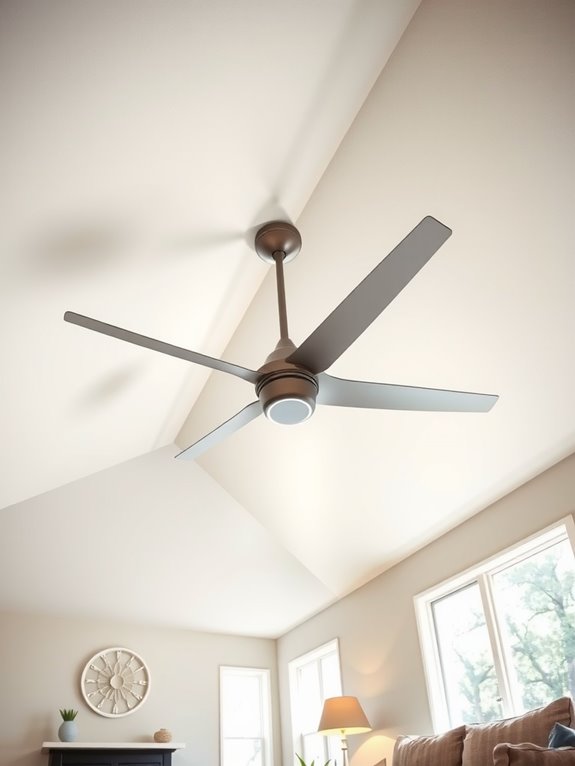
Your ceiling fan needs to look like it belongs in your room, which comes down to picking the right size and style. A fan that’s too small disappears into a big space, while one that’s too large can make a cozy room feel cramped.
Room size matters most when choosing blade span. Go for 52–72 inch fans in larger spaces where they have room to breathe. Smaller bedrooms and offices do better with 29–42 inch models. The fan should feel proportional to the walls around it—nothing more, nothing less.
How high your ceiling is also shapes what works. Low ceilings need flush mounts that sit tight against the ceiling and keep blades close. If you’ve got higher ceilings, a downrod mount lets blades hang lower for better balance and airflow. The extra distance just looks more natural in those spaces.
Then there’s the finish and style, which should match the hardware and furniture already in your room. Shiny chrome paired with brushed nickel fixtures looks mismatched. A bulky, ornate fan surrounded by modern furniture creates visual chaos. When metals and styles clash, your whole room’s flow gets disrupted. Sticking with finishes that echo what’s already there keeps everything feeling connected.
Common Ceiling Fan Sizing Mistakes to Avoid
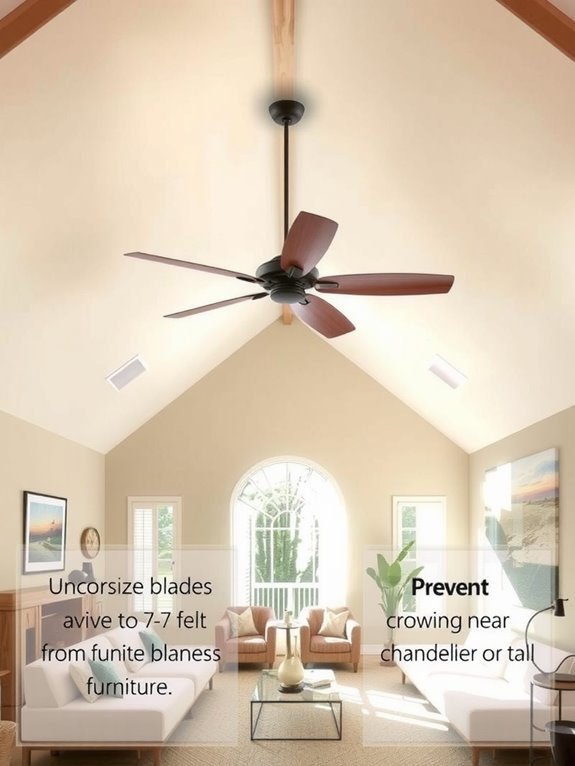
How’d you like to spend money on a ceiling fan only to find it doesn’t cool your room properly? You’re not alone. Most people make ceiling fan sizing mistakes that tank airflow effectiveness.
Choosing by looks first. You pick a gorgeous 52-inch fan for your 144 sq ft bedroom, then wonder why it’s overkill. The fan looks great on the wall, but it’s way too big for the space. Match aesthetics to your room size instead of the other way around.
Ignoring ceiling height. Flush mounts work great under 8 feet, but higher ceilings need downrods. Models like the Emerson CF205ORB (around $150) come with adjustable rods specifically for this reason. Skip this step, and your fan won’t circulate air where you actually sit.
Skipping the calculator. Use actual guidelines rather than guessing. Small rooms need 36–42 inches, medium rooms need 44–52 inches, and large rooms need 54 inches or more. A basic tape measure takes two minutes and saves you from buying the wrong size.
Getting these details right means your fan actually works for you instead of just taking up space.
Visualizing the Fan Before You Buy
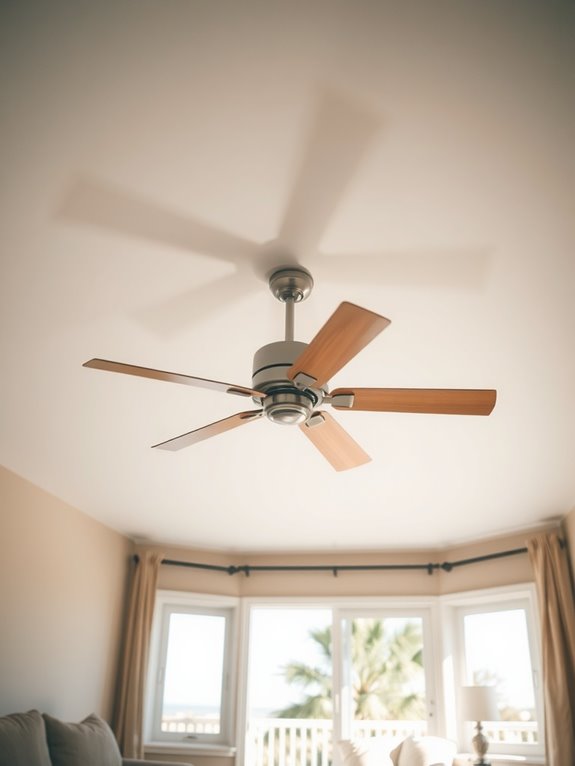
Before you hit “buy now,” picture that ceiling fan actually spinning above your couch—not floating awkwardly in a corner or taking up half the room like some industrial prop. Where you place it matters way more than most people realize.
Position your fan over your main seating area. That way, the airflow hits where you actually sit instead of spinning uselessly over empty space. Room size matters too. A 36–42 inch fan works well in smaller living rooms under 144 square feet. If your space is medium-sized around 225–400 square feet, a 50–54 inch model fits better. For larger great rooms, go with 56 inches or bigger.
Stand in your living room and imagine those blades rotating. Does it feel right for the space, or does it seem too cramped or too small. That gut feeling is worth paying attention to, because you’re the one who has to live with it every day.
Coordinate Fan Size With Ceiling Fixture Weight and Spacing
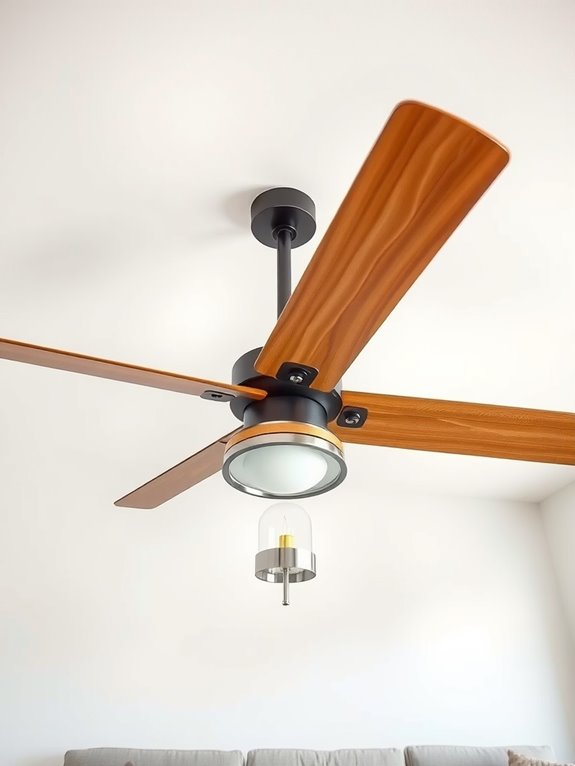
Once you’ve picked your fan size, think about the other fixtures hanging from your ceiling. A 56-inch fan spinning right next to a delicate pendant light looks off, kind of like wearing hiking boots to a dinner party.
When you’re placing ceiling fans and other fixtures, balance matters. The weight and blade span of your fan should work with nearby chandeliers or pendants so one doesn’t overshadow the other. Picture your ceiling like a room you’re furnishing—you wouldn’t put a giant couch right next to a tiny side table.
Here’s what helps:
- Match your fan’s size to nearby lighting fixtures so they feel like they belong together rather than competing for attention
- In large rooms like Great Rooms, choose bigger fans that pair well with proportionally scaled dining fixtures to keep everything feeling connected
- Use downrods on high-ceiling fans to lower the blades and align them with your fixed fixtures for a cleaner look
The goal is creating balance overhead. When your fan and other fixtures sit at similar heights and sizes, your room feels planned and put together rather than crowded or mismatched.
Calculate Your Ideal Fan Size (3 Steps)

Now that you’ve thought about how your fan plays with other ceiling fixtures, it’s time to figure out the actual size you need. Start by measuring your room in square feet—just multiply the length times the width. Rooms under 144 square feet work best with 36–42 inch fans, while spaces between 225–400 square feet need 50–54 inches for proper airflow.
Next, check your ceiling height. If you’ve got more than 8 feet of clearance, you’ll want a downrod to position the blades at that sweet spot of 8–9 feet above the floor. Without enough space, a ceiling hugger model keeps things tidy.
Finally, think about how air moves through your room. Does it flow freely from one end to the other, or do walls and furniture block the circulation. Your gut feeling here actually matters. The best fan size usually comes from balancing what the measurements tell you with what actually works when the fan is running.