Start by deciding what you actually want to use the room for. Is it a place to watch TV, read, entertain guests, or some combination of those things. Once you know the purpose, you can arrange everything else around that goal.
Long narrow rooms work best when you break them into separate zones instead of pushing all the furniture against the walls. Float your pieces 12–24 inches away from the walls, and anchor each zone with an area rug. This creates the illusion that your seating areas are their own little spaces rather than just chairs scattered in a hallway.
Point your seating toward something strong—a fireplace, TV, or even a nice window. Having a focal point gives people a reason to sit and linger instead of just walking through.
Add layers of light by using multiple lamps and fixtures rather than relying on one overhead light. Dark corners in narrow rooms tend to feel especially gloomy, so addressing them makes the whole space feel bigger and more welcoming.
Round or curved furniture softens the hard lines that narrow rooms naturally have. A curved sofa or ottoman takes up similar space as a rectangular piece but feels less blocky and aggressive in a tight layout.
Mirrors placed across from windows bounce natural light throughout the room and make the space feel wider than it actually is. You don’t need anything expensive—a basic wall mirror in the $30–$80 range does the job just fine.
Start With Your Room’s Purpose
Why does your long, narrow living room feel so awkward? The answer often lies in skipping a crucial first step: figuring out what you actually want to do there.
The key to fixing an awkward living room is simple: decide what you actually want to do there first.
Before you arrange a single piece of furniture, decide what activities matter most in this space. Will you watch TV, read, or chat with friends? Maybe you’ll do all three. Knowing your main activities helps you figure out where your focal point should be—whether that’s a television, fireplace, or window view.
Once you’ve identified what you’ll use the room for, you can create effective zones. This means organizing different areas for different activities without messing up how people walk through the space. A room that does multiple things needs clear boundaries, so each zone feels planned rather than crammed together.
When you figure out your room’s purpose first, the rest of the decorating puzzle gets a lot easier.
Create Distinct Zones to Break Up Length
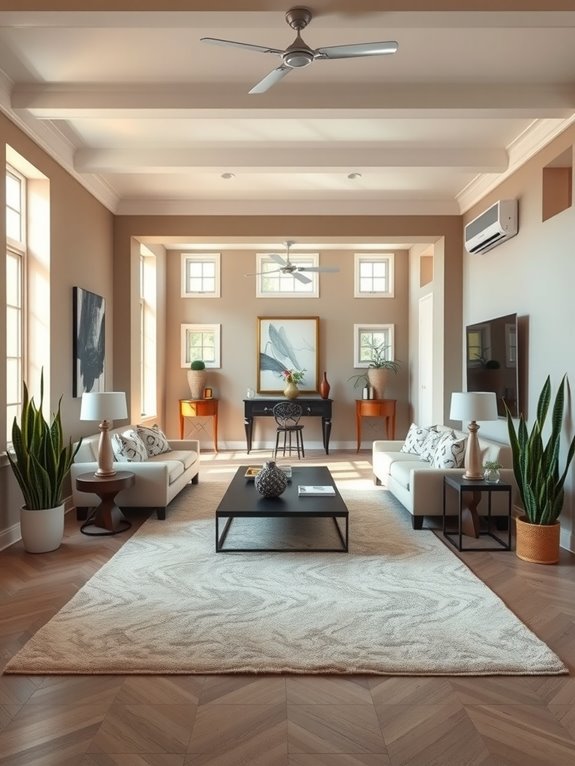
How can you transform a long, narrow room from feeling like a hallway into a welcoming space? The trick is breaking it into distinct zones. Float your furniture away from walls by 12–24 inches, creating micro-areas that invite people in rather than pushing them along a straight path.
Use area rugs to anchor each zone. Place the front legs of your seating on the rug to define boundaries naturally—this works better than you’d expect for making a room feel intentional. A 5×8 rug runs about $150–400 depending on material, and it does the heavy work of visually separating spaces.
Try a two-zone setup: a conversation area near one focal point, then a viewing or reading space further back. Position your primary seating toward a fireplace, TV, or window to orient traffic flow and encourage gathering instead of just passing through. When furniture floats thoughtfully with intentional focal points, your long room becomes multiple intimate spaces where people actually want to spend time together.
Position a Strong Focal Point
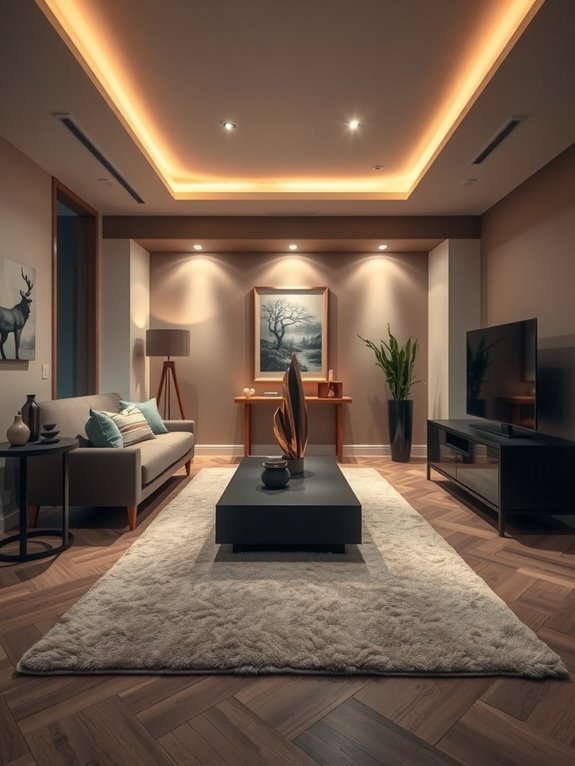
Pick one standout feature in your long narrow living room—a fireplace, TV, or built-in shelving—and let it anchor the space. The trick is placing it on a short wall rather than a long one. When your eye stops at that focal point instead of traveling the entire length of the room, the space actually feels wider. It’s a simple visual trick that works.
Arrange your seating to face that focal point, whether it’s a fireplace mantel or a TV mounted on a feature wall. This setup pulls everyone together naturally instead of spreading furniture in a single line down the room. People naturally want to sit facing something interesting, so you’re working with how folks actually use a space rather than against it.
Fireplace As Primary Anchor
When you’re working with a long, narrow living room, placing a fireplace on one of the short walls is your best bet. It gives your space a focal point that actually breaks up that tunnel feeling. The key is positioning your seating to face it directly, which naturally creates that comfortable spot where people want to sit and talk.
Try arranging matching chairs on either side of a centered sofa. This symmetrical setup feels balanced and intentional without requiring a lot of fussing. An area rug underneath anchors the whole arrangement and defines the space. Just make sure you leave clear paths around the rug so people can move through the room without bumping into furniture.
| Strategy | Purpose | Result |
|---|---|---|
| Short wall placement | Visual shortening | Balanced proportions |
| Symmetrical seating | Balanced arrangement | Harmonious feel |
| Area rugs | Zone definition | Anchored focal point |
| Clear circulation | Movement flow | Functional beauty |
A standard 8×10 area rug (typically $150-$400 depending on material) works well for most living rooms and helps define the seating zone. Look for rugs made from wool or a wool blend if you want something durable. This whole approach—short wall fireplace, matched seating, and a good rug—handles the awkward proportions and creates a room that actually feels comfortable to spend time in.
Television Sightline Alignment
Why’s your TV placement just as important as your fireplace? Because good television sightlines make your long narrow room feel purposeful and connected. Position your TV on a short wall to visually shorten the space, then arrange seating to face it directly. You’ll want clear sight lines from every seat—no neck craning required.
A quality rug anchoring your seating arrangement beneath and around the TV creates natural boundaries without blocking views. Look for something like a 5×8 wool blend rug (typically $200-400) that’s large enough to ground your furniture. The rug’s edges should extend at least two feet beyond your seating on all sides.
Consider a symmetrical layout with matching chairs on either side of your focal point. This balanced approach helps your long narrow room feel intentional rather than awkward. When everyone can actually see and hear comfortably, your space becomes somewhere people genuinely want to gather.
Float Furniture Away From Walls
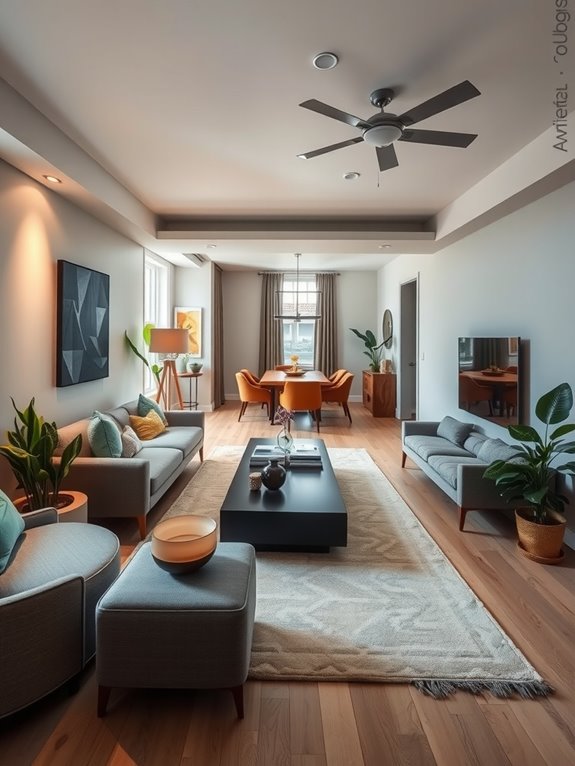
Instead of pushing all your furniture against the walls, pull your seating pieces out about 12–24 inches. This small shift opens up the room and creates natural spots where people can actually talk to each other, which matters a lot in a long, narrow space. When furniture floats away from walls, it breaks up that tunnel-like feeling and gives your eyes something more interesting to look at than just one flat surface.
A rug underneath your floating furniture group anchors everything visually and marks off different areas without blocking sightlines across the room. You’ll notice the space feels less cramped once you try this, and you don’t need anything expensive to make it work.
Create Visual Breathing Room
Pull your furniture away from the walls by at least 12–24 inches. This simple shift works because it breaks up that corridor feeling that long narrow rooms naturally have. When you float your furniture—meaning it doesn’t touch the walls—you create actual breathing room that makes the space feel less cramped.
| Design Element | Benefit |
|---|---|
| Floating furniture | Forms natural conversation clusters |
| Area rugs | Defines zones without blocking pathways |
| Rounded pieces | Enhances movement around the room |
Seating layouts become more inviting when positioned away from walls. You’re carving out intimate gathering spots within your larger room. Pair floating furniture with area rugs to anchor each zone and define where people naturally sit. Add rounded coffee tables and soft, curved pieces to encourage easy movement around your seating.
This arrangement also improves sightlines across your entire room. When you can actually see across the space instead of having furniture blocking the view, you stop feeling boxed in. People naturally gravitate toward these floating clusters and end up chatting more comfortably than they would with furniture shoved against walls.
Define Functional Zones Naturally
Now that you’ve created breathing room by floating your furniture, it’s time to use that space strategically by defining distinct zones throughout your long narrow living room.
Think of your space as separate neighborhoods, each with its own purpose. A few practical ways to create zones that actually work:
Anchor with area rugs. Place rugs under each seating cluster to visually separate zones without blocking traffic flow. A 5×8 rug typically costs between $150 and $400 depending on material, and it does the job of marking boundaries without making the room feel chopped up.
Position furniture backs strategically. Use sofas and chairs to create natural dividing lines between zones. When you angle a sofa back toward the middle of the room rather than against a wall, it signals to visitors that there’s a distinct area on either side.
Align seating toward focal points. Point each cluster toward windows, fireplaces, or entertainment centers so people naturally gather in the right spots instead of feeling scattered.
Plan multiple zones for longer rooms. If your living room is really stretched out, consider creating one TV-viewing area and another for conversation. Each zone gets its own furniture arrangement and rug, so they feel intentional and separate.
Your traffic flow naturally guides visitors through these clusters. Instead of one long awkward hallway, you’ve created several smaller gathering spots where people actually want to sit down and stay awhile.
Manage Traffic Flow in Your Long Narrow Room
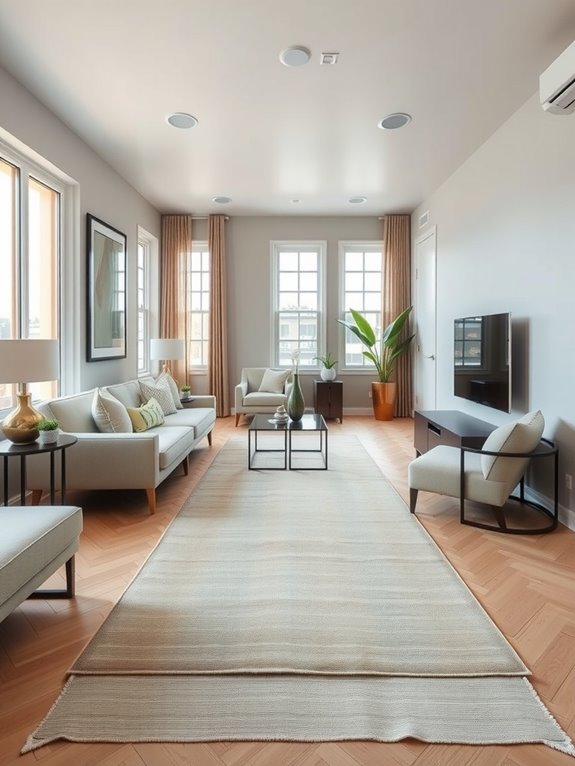
How do you keep a long, narrow living room from feeling like a hallway? The answer lies in smart traffic patterns and strategic furniture placement. Float your furniture 12–24 inches away from walls to break up that corridor effect. This creates natural pathways that guide people through your space instead of down it.
The key strategies work together. Maintain 30–36 inch walkways so people can move around seating easily, and position your main seating toward a focal point—fireplace, TV, or feature wall—so zones feel intentional rather than accidental. This approach creates clear walkways while keeping your zones connected and inviting for everyone.
When you float furniture from walls instead of pushing everything to the perimeter, you improve conversation flow and break up that long, tunnel-like feeling. A linear arrangement of pieces works better than clustering everything in one corner. Using one main focal point orients your seating naturally, which means less rearranging later when you realize something doesn’t quite work.
The practical part: measure your room first. If your space is less than 10 feet wide, you’ll need to be more selective about what you place in it. A sectional sofa in the 72–84 inch range costs around $400–$800 at retailers like Article or West Elm, and floating it away from the wall gives you better sightlines and more flexible seating options. Pair it with a simple coffee table—something in the 36–42 inch range—and you’ll have room to walk around without squeezing past furniture. Add an armchair or two on the opposite side, and you’ve created distinct conversation areas that actually feel separate, not just different spots in the same hallway.
Anchor Seating Areas With Area Rugs
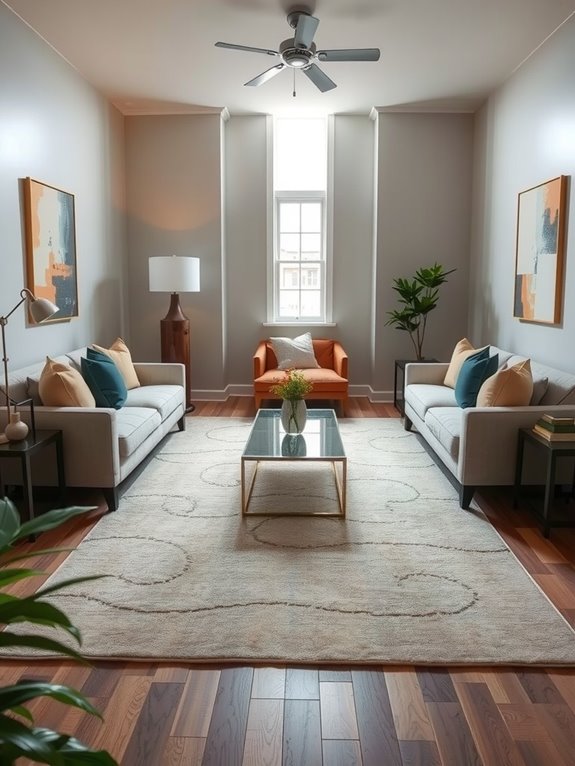
Area rugs do something furniture alone can’t—they visually anchor your seating and create invisible boundaries that break up that corridor feeling.
Think of rugs as your room’s practical tool for smart zoning. Here’s how to make them work:
Place your main rug strategically so the front legs of your sofa or chairs rest on it while the back legs stay off. This simple placement anchors your seating area visually without needing to cover the entire floor.
Use different rugs for multiple zones when your room layout calls for separate conversation spaces. A 5×8-foot rug works well for a main seating area, while a smaller 3×5-foot rug works perfectly for a reading nook or secondary seating spot.
Layer rugs thoughtfully to add warmth without blocking traffic flow. A smaller rug near a reading corner creates coziness, while keeping pathways clear keeps your room feeling open.
Pair rugs with furniture backs or consoles to reinforce boundaries. Position a low console table or bookshelf at the edge of your rug to signal where one zone ends and another begins.
This approach breaks up long floor expanses and turns your narrow room into distinct, welcoming zones where different activities can happen at the same time. Budget around $100-$300 for a quality main rug and $50-$150 for accent rugs, depending on material and size.
Layer Your Lighting to Avoid Dark Spots
Layer Your Lighting to Avoid Dark Spots
The biggest lighting mistake in narrow rooms is pretty simple: people flip on one overhead light and call it done. This leaves dark corners at both ends of the room and creates harsh shadows that make the space feel smaller than it actually is.
Lighting layering fixes this problem. Instead of relying on a single source, you combine different types of lighting to cover the whole room evenly. Think of it like building a sandwich—each layer does something different, and together they create something better.
Start with ambient lighting from your ceiling fixture for overall brightness. Add task lighting near seating areas so people can read or chat comfortably without straining their eyes. Wall sconces along the sides brighten those far corners that usually stay dark. Floor lamps placed near furniture groupings give you flexible coverage you can adjust as needed. Accent lighting in corner areas adds depth and makes the room feel less flat.
| Lighting Type | Best Location | Purpose |
|---|---|---|
| Ambient | Ceiling center | Overall brightness |
| Task | Near seating | Reading, conversation |
| Wall Sconces | Side walls | Illuminate length |
| Accent | Corner areas | Add depth |
| Floor Lamps | Furniture groupings | Flexible coverage |
Choose diffuse lamp shades and glossy surfaces that bounce light around rather than absorb it. When light bounces evenly throughout the room, you avoid those shadow problems that make narrow spaces feel cramped. A well-lit space where everyone can see comfortably and clearly makes guests feel welcome.
Pull the Eye Upward With Height
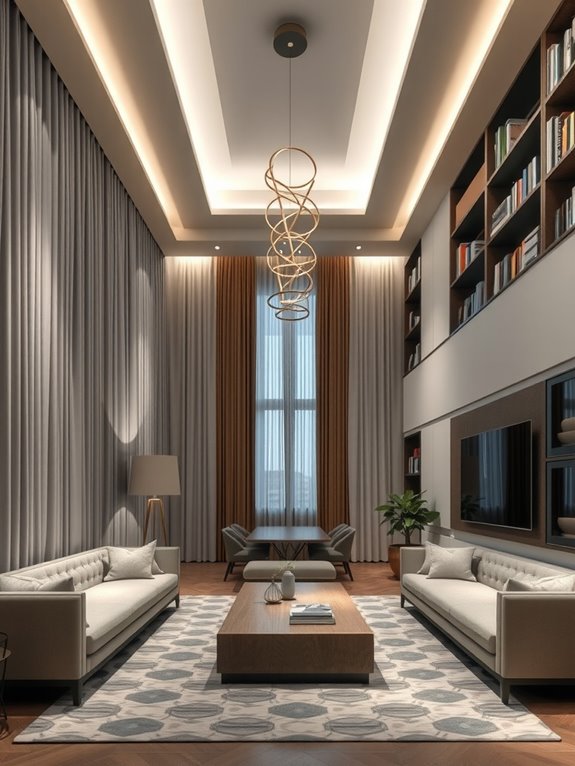
Why does a long, narrow room sometimes feel like you’re stuck in a hallway? The answer is pretty straightforward—draw your eye upward. When you focus on height instead of length, you’ll change how that cramped feeling works in the space.
Draw your eye upward to transform a long, narrow room from feeling like a hallway into an open, breathable space.
- Use vertical storage and tall furniture to guide your gaze naturally upward. Think floor-to-ceiling bookcases or a tall dresser. These pieces create balance without taking up much floor space, which is especially helpful when square footage is limited.
- Add tall lighting like arc lamps or floor lamps with elongated profiles to emphasize vertical lines throughout your room. An arc lamp like the Brightech Sky Arc (usually $60-$90) reaches high and adds style while taking up minimal floor space.
- Choose window treatments with vertical orientation that stretch toward the ceiling, helping extend your room’s visual proportions. Curtain rods mounted close to the ceiling make windows appear taller, which pulls your attention upward naturally.
- Place mirrors higher on walls to reflect light and create the illusion of taller ceilings. A mirror positioned at eye level or slightly higher bounces light around and makes the room feel less boxed in.
These strategies work together because they all point your attention upward rather than along the length of the room. The result is a space that feels more open and less claustrophobic, even if the actual dimensions stay the same.
Use Curves and Rounded Shapes to Soften Lines
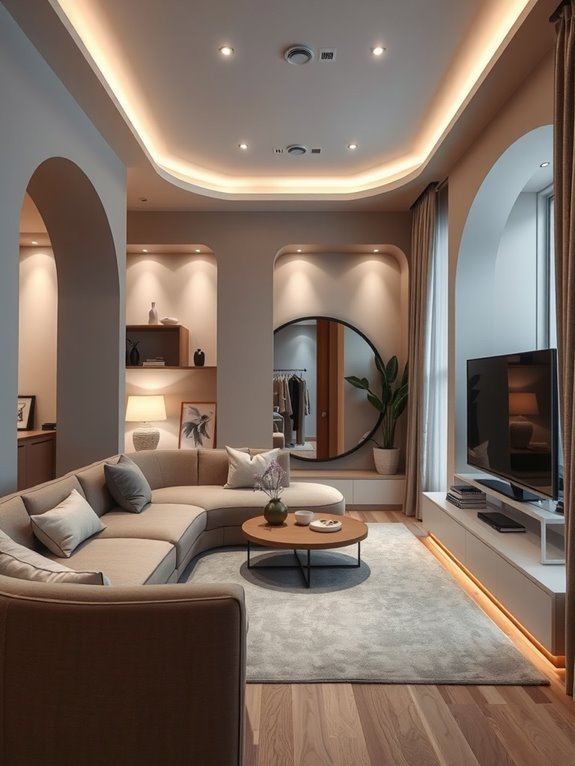
Straight lines in narrow spaces tend to make rooms feel even more boxed in. You can fix this by bringing in curved furniture and rounded shapes. An oval coffee table, chairs with soft edges, and circular ottomans work against all those straight angles and actually make your room feel bigger than it is.
When you swap out boxy pieces for rounded ones, you’re softening the hard geometry. Your eye moves smoothly through the space instead of bumping into sharp corners and edges. The result is a room that feels more welcoming and less like you’re walking down a hallway.
Circular Furniture Breaks Linearity
How’d you like to transform that tunnel-like hallway into a space that actually feels inviting?
Long, narrow hallways can feel like corridors if you’re not careful about your furniture choices. Round and curved pieces help break up that straight-line feeling by creating natural spots where people want to gather instead of just walk through.
Oval coffee tables work as anchors for your seating without the sharp corners that make tight spaces feel even tighter. A round rug underneath defines the area nicely—your eye travels around it naturally instead of being pushed down the length of the room. Look for options in the $150–$400 range for decent quality.
Curved seating like a Womb chair (typically $400–$800 depending on the version) or a semi-circular sofa gets people facing toward each other instead of staring down a long stretch. These pieces actually invite conversation and make movement through the space feel easier.
Arrange your curved furniture around something central—a fireplace, a piece of art, or even a console table with good lighting. This creates little pockets where people naturally want to sit and stay awhile. Balance the curves with a few straight-edged pieces like rectangular shelving or linear lighting fixtures so it doesn’t start looking random. That mix between rounded and straight lines is what keeps a room feeling thoughtful rather than chaotic.
Soft Edges Balance Geometry
Curved furniture helps, but the soft edges are what actually matter in a narrow room. When you pick rounded shapes for your seating, you’re breaking up those stiff lines that make spaces feel tight. An oval coffee table or a chair with a curved back creates visual movement that keeps your eyes from getting stuck in that tunnel feeling.
Pair these rounded pieces with area rugs that have soft, flowing edges. You’ll notice your room feels less cramped when you pull curved seating away from the walls instead of tucking everything into corners. The mix of curved furniture and gentle edges creates gathering spots that feel more welcoming.
Hard walls need soft counterparts to feel inviting. That’s really the balance you’re after. Consider options like the Article Ceni Round Coffee Table (around $250), which has smooth edges without sharp corners, or a curved-back accent chair like the West Elm Slope Petite Chair (roughly $400). Even a simple area rug with irregular edges—something like the Rugs USA Natura collection (ranging from $100 to $400 depending on size)—helps tie everything together and adds that softer feel throughout your space.
Expand the Space With Mirrors and Light Colors
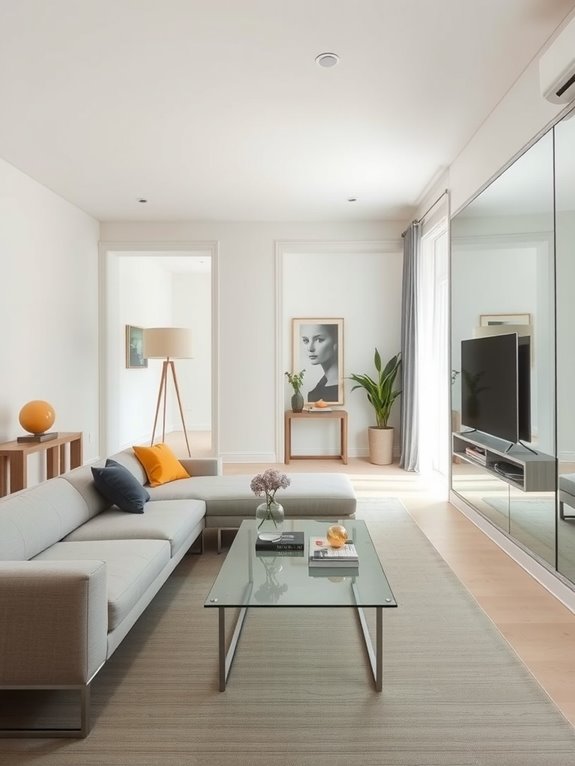
Why do narrow rooms feel so cramped? They trap light and make the space feel smaller than it actually is. The good news is that mirrors and light colors can help fix this problem.
Narrow rooms trap light and feel cramped, but mirrors and light colors can transform the space into something open and inviting.
Mirrors work well in narrow living rooms because they bounce light around. Here’s what you can do:
- Place a tall mirror on a side wall opposite your window so natural light spreads deeper into the room
- Choose light wall colors and pale furniture to make the space feel wider and brighter
- Layer your lighting with different types—ambient, task, and accent lights—to get rid of shadows and make the room feel bigger
- Position mirrors away from doorways so you’re not constantly seeing your own reflection, which can be distracting
Light colors on walls, ceilings, and furniture create an airy feeling. When you combine these lighter tones with mirrors and soft layered lighting, your narrow living room feels more open and inviting. You’ll actually want to spend time there instead of feeling boxed in.