
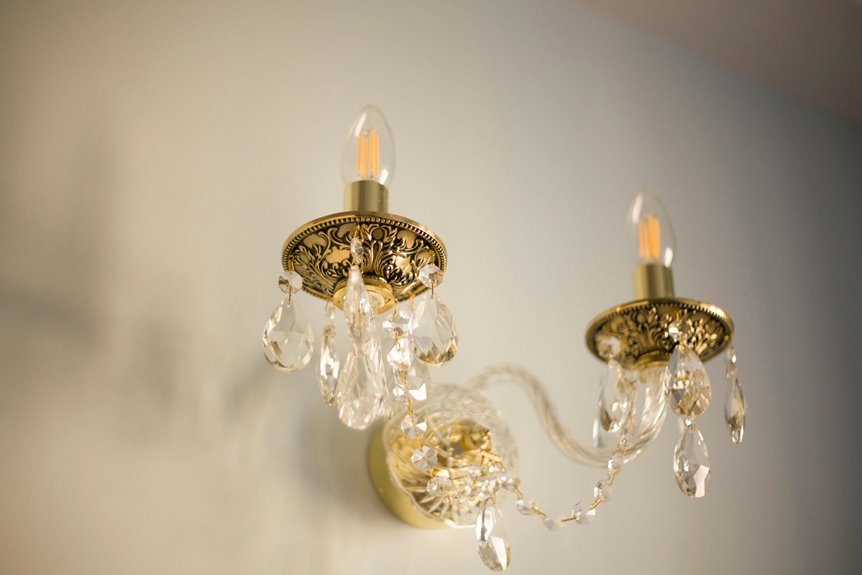
Mount your sconces between 60–66 inches high so they’re at eye level when you’re seated. This positioning reduces glare and keeps you from straining your neck—something you’ll notice right away if you’ve ever had a light mounted too high or too low.
Space them 8–10 feet apart to create smooth, even lighting without dark gaps between fixtures. This distance works well in most living rooms and prevents that awkward situation where one section feels bright while another fades into shadow.
Pair sconces on either side of your fireplace or artwork for a balanced, polished look. This symmetrical arrangement naturally draws the eye to whatever’s in the center, whether that’s a mantel or a piece you really like.
Dark corners and alcoves are perfect spots for a single sconce or a paired set. Adding light to these spaces opens up your room without requiring a floor lamp that takes up valuable real estate.
A dimmable reading light next to your favorite chair lets you adjust brightness throughout the day. Look for options around the $40–$100 range if you want solid quality without spending too much. The ability to dim the light means you can brighten things up for reading or dial it back when you just want ambient glow.
Mount Sconces Between 60–66 Inches for Eye-Level Light
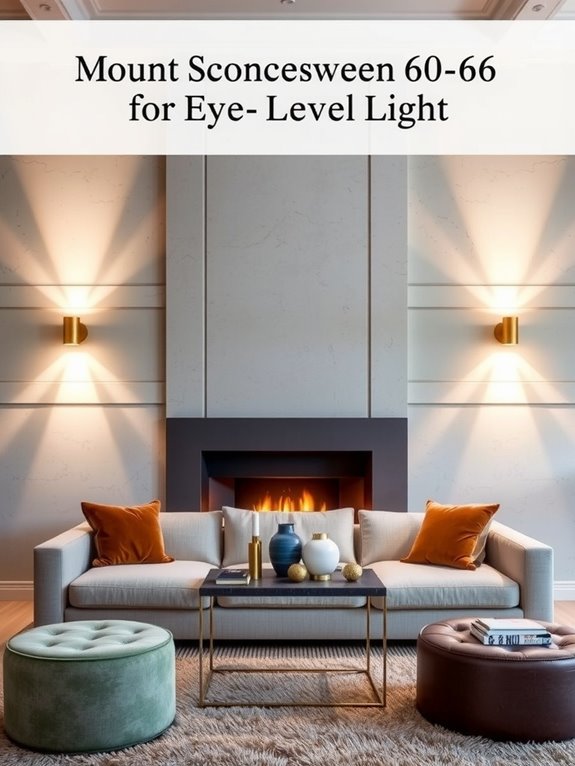
Ever notice how a lamp that’s too high or too low can make you squint or strain your neck? That’s because where you place your wall sconces really matters for how comfortable your space feels.
Mount your fixtures between 60–66 inches above the floor. This range puts the light right at eye level when you’re sitting on the couch or in your favorite chair. If your furniture is taller or shorter than average, you can adjust within that range to match how you actually sit and relax.
When sconces are at the right height, you get rid of glare and neck strain without having to think about it. The light hits your space evenly, and everything feels balanced. Your living room lighting works best when it fits the way you use the room, not the other way around.
Space Sconces 8–10 Feet Apart to Guide Movement
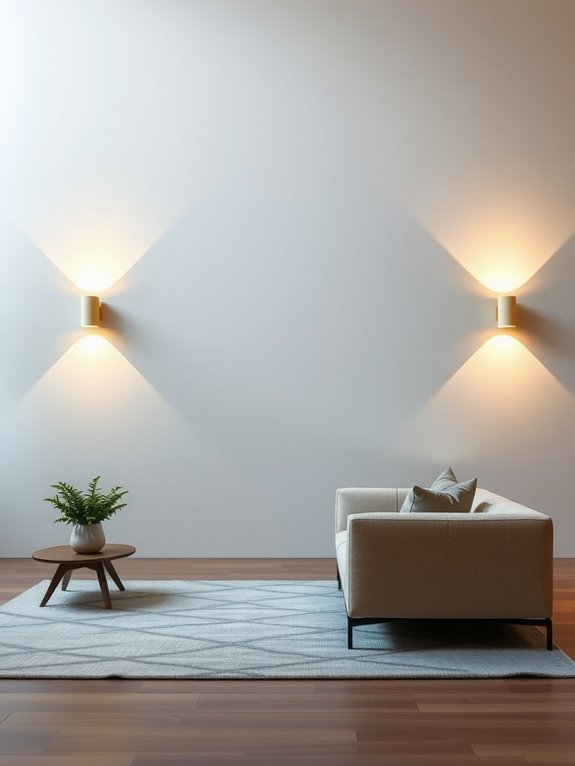
How do you keep a hallway from looking like a dark tunnel with bright spots? You need to get your sconces spacing right. Wall-mounted lights spaced every 8 to 10 feet along hallways create a smooth, continuous wall-wash effect instead of those awkward dark gaps that make spaces feel disconnected.
When you stick to this spacing pattern, something practical happens: your eye naturally follows the rhythm of light, making it easier to walk through your home without thinking about it. Mount your sconces around 60 to 66 inches high—roughly at eye level—so the ambient light feels welcoming instead of harsh or glaring.
Think of it like breadcrumbs of light guiding you through your rooms. The spacing and height work together to make navigation feel intuitive and comfortable, which means you and your family can move through hallways without stumbling around in shadows or squinting at bright spots.
Frame Fireplaces and Artwork With Paired Sconces
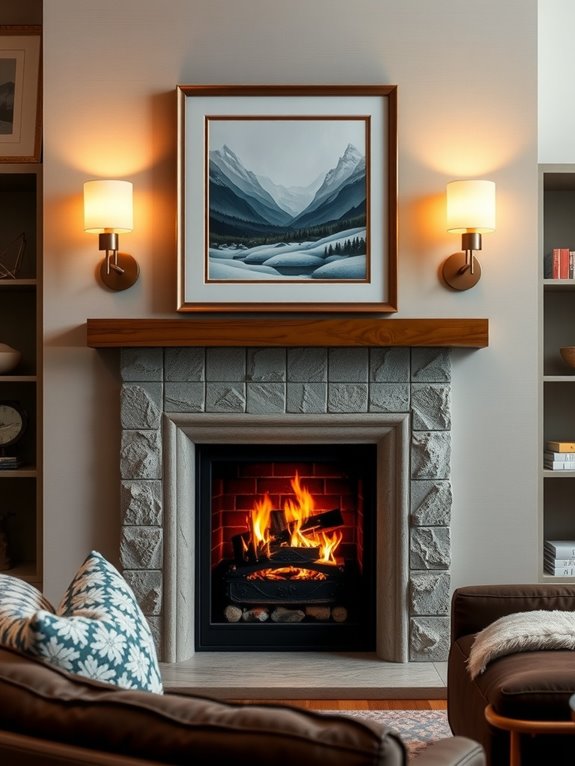
Your fireplace or artwork needs proper lighting, and paired sconces do the job well. Position them on either side of your mantel, centering each one with your fireplace. Space them roughly 6–12 inches from the mantel edge—close enough to frame the space, but far enough to let it breathe.
Mount your wall sconces at 60–66 inches high so the light hits eye level when you’re sitting down. This creates balanced ambient lighting that actually flatters your focal point instead of washing it out or leaving it dim.
If artwork hangs above the mantel, align your sconces with its center and keep them 5–10 inches away. This paired approach anchors your fireplace lighting nicely and turns an ordinary wall into a welcoming gathering spot that pulls your living room together.
Light Up Dark Alcoves and Corners
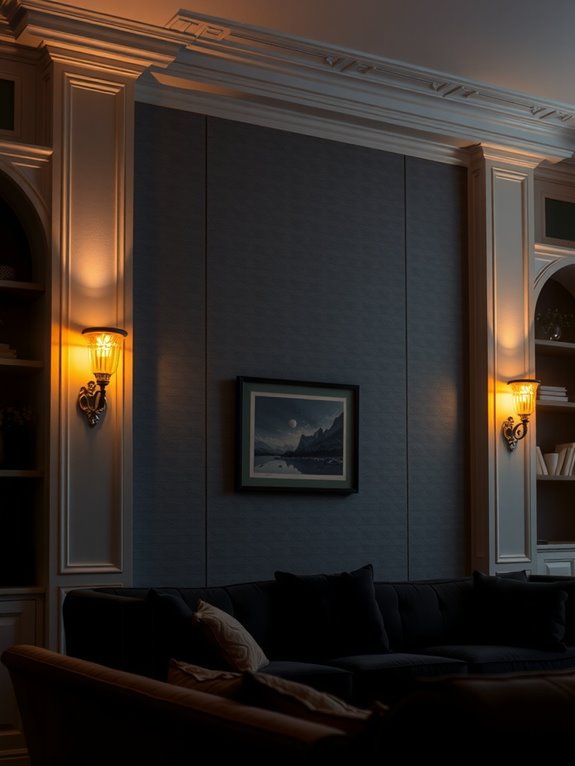
Those shadowy nooks and crannies in your living room don’t have to stay dark. Wall sconces tucked into alcoves do real work—they brighten corners without taking up floor space, which keeps your room feeling roomy.
The placement matters. Two sconces flanking the alcove opening give balanced light, or you can center one inside if space is tight. This layering approach works well alongside your main ceiling fixtures and avoids that harsh, flat lighting that makes rooms feel smaller.
When picking sconces, look for styles that fit your alcove’s look. The Schoolhouse Electric Minimal Sconce ($189) has clean lines that work almost anywhere, while the Rejuvenation Dorchester Wall Sconce ($249) suits more traditional spaces. Position them near the center or along the edges to wash the walls evenly and show off any architectural details your alcove might have.
You’re doing more than just adding lights—you’re highlighting the bones of your room while fixing a real problem. That’s practical thinking.
Add a Reading Light Beside Your Armchair
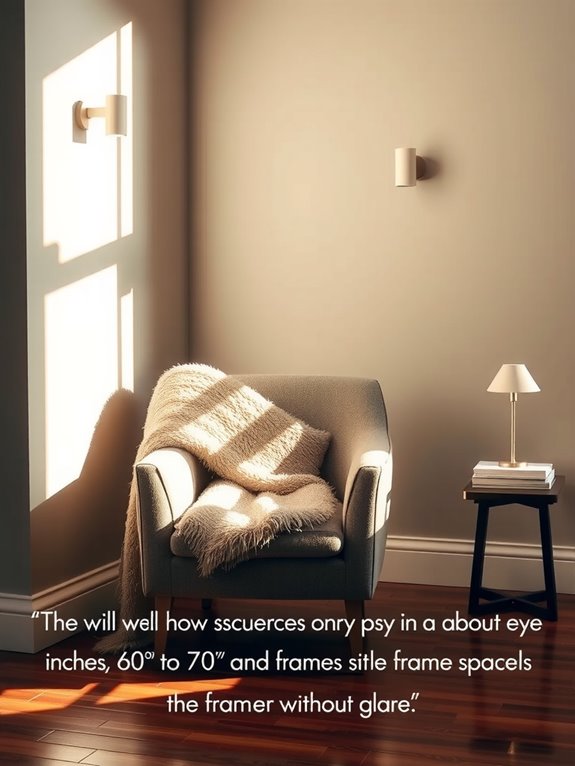
Where’s the best spot to settle in with a good book? Your armchair deserves a reading light that works as hard as you do. A wall light positioned at eye level—around 60 to 66 inches from the floor—eliminates glare and keeps you comfortable for hours of reading without strain.
A wall light positioned at eye level—around 60 to 66 inches from the floor—eliminates glare and keeps you comfortable for hours of reading.
When you’re shopping for a reading light, look for a few key features. Swing-arm designs like the Schoolhouse Electric Span Arm (around $200-$300) direct light precisely onto your pages without creating shadows that make you squint. Dimmable options let you adjust brightness depending on the time of day or your mood. You might want something bright for afternoon reading and softer for evening relaxation.
One thing worth considering: position your reading light separately from your room’s general lighting. This focused zone means you can keep the rest of your space dimly lit while your book is well-lit. It prevents the harsh contrast that tires your eyes when you switch between bright and dark areas.
Pair your reading light with a sconce or two on other walls to keep the overall lighting balanced. This approach avoids that tunnel-vision feeling where only your chair gets light. Your eyes stay comfortable because there’s no jarring difference between your reading zone and the rest of the room. The result is a cozy corner where you actually want to spend your evenings.
Combine Sconces With Dimmers for Flexible Moods
Pair your sconces with dimmer switches to control your room’s lighting throughout the day. During afternoon hours, you can brighten things up to feel more awake and focused. As evening approaches, dial down the brightness for a calmer atmosphere that’s better for winding down. The flexibility means you’re not stuck choosing between full brightness or turning lights off completely.
Dimmers also reduce glare and create a softer light that’s gentler on the eyes. You’ll notice this especially when you’re reading or relaxing—harsh shadows disappear, and the overall feel becomes more comfortable. Everyone tends to look better under dimmed light too, which is a nice side benefit of the setup.
Look for dimmer switches that work with your specific sconces. Basic models range from $15 to $40 at most hardware stores. If your sconces use LED bulbs, check that the dimmer is compatible since not all dimmers work smoothly with LED technology. Some dimmers like the GE Enbrighten ($25-$35) are specifically designed for LED bulbs and offer steady dimming without flickering. Installation usually takes less than an hour if you’re comfortable with basic wiring, though hiring an electrician is a solid choice if you’re unsure about the work.
Dimmer Switch Installation Benefits
Why stick with sconces that only offer one brightness level when you can adjust them to fit your mood. Installing dimmer switches with your sconces gives you real control over your space.
Flexible lighting for every moment – You can adjust from bright task lighting to soft ambient lighting depending on what you’re doing. Watching a movie feels better with dimmed lights, and reading requires something brighter.
Reduced eye strain – Dimmed sconces cut glare when you’re watching TV or unwinding after work. Your eyes won’t have to work as hard, especially in the evening.
Balanced brightness – If you have multiple sconces in a room, dimmers help keep them balanced as you change lighting levels throughout the day.
One thing to check before you buy: your dimmer switch needs to match your bulbs. LEDs need trailing-edge dimmers, while incandescent bulbs work with leading-edge versions. If you’re unsure which bulbs you have, most dimmers under $20 to $40 will tell you on the box what they’re compatible with. In rooms with high ceilings or lots of natural light from windows, dimmers help you counteract how bright things get during the day versus evening.
Adjusting Light for Time of Day
Now that your dimmer switches are installed, you can adjust how your sconces look throughout the day. Each time of day calls for different lighting.
In the morning, set your sconces to full brightness at eye level. This energizes your space and highlights focal points like your sofa or artwork. As afternoon arrives, dial back the intensity to create comfortable, layered lighting that won’t tire your eyes.
When evening comes, dim those sconces to create a cozy mood. The real advantage of dimmers is their flexibility—you’re not stuck with one setting. Adjust based on what you’re actually doing. Reading requires different light than entertaining or just relaxing. Your sconces become tools that shift with your needs and your schedule, which means your living room works better for you throughout the day.
Creating Ambiance Through Light Control
How do you want your living room to feel at different times of day? Installing dimmers with your sconces gives you total control over the atmosphere you create. When you combine dimmers with sconces at eye level, you get flexibility that lets you adjust your space throughout the day.
Dimmers make several things possible. In the morning, you can start with ambient lighting at full power to energize the room. When evening comes around, dial down to softer levels that promote comfort and connection. If you want to highlight a focal point like artwork or a fireplace, use targeted dimmed light to draw attention without overwhelming the space.
Space your wall lighting 8 to 10 feet apart, then use dimmers to adjust intensity. This balanced illumination approach means you’re not stuck with one mood. You’ll create the exact atmosphere your living room needs, whenever you need it. Basic dimmer switches run between $15 and $40 each, and most sconces work well with standard dimming systems. Just check that your sconce is dimmable before purchasing, since some LED models have restrictions.
Prevent Glare and Shadows With Proper Placement
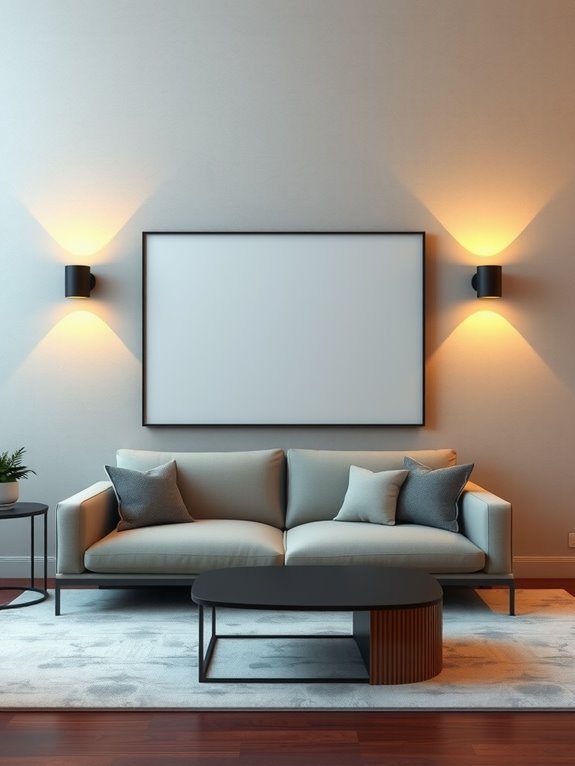
Getting your sconce placement right keeps you comfortable while watching your favorite show instead of squinting at annoying glare. The trick is positioning fixtures at eye level, which runs about 60 to 66 inches up from the floor. This height puts light exactly where you need it without bouncing glare straight into your eyes.
Spacing matters when you’re hanging multiple sconces. Placing them 8 to 10 feet apart gives you even light across the room without dark gaps between fixtures. It’s like creating a steady rhythm of brightness that flows naturally through your space.
For alcoves or architectural features you want to highlight, flank them with sconces positioned so the fixture tops line up at eye level. This setup cuts down on both shadows and glare at the same time, so you can actually relax in your living room without dealing with harsh lighting or dark spots.