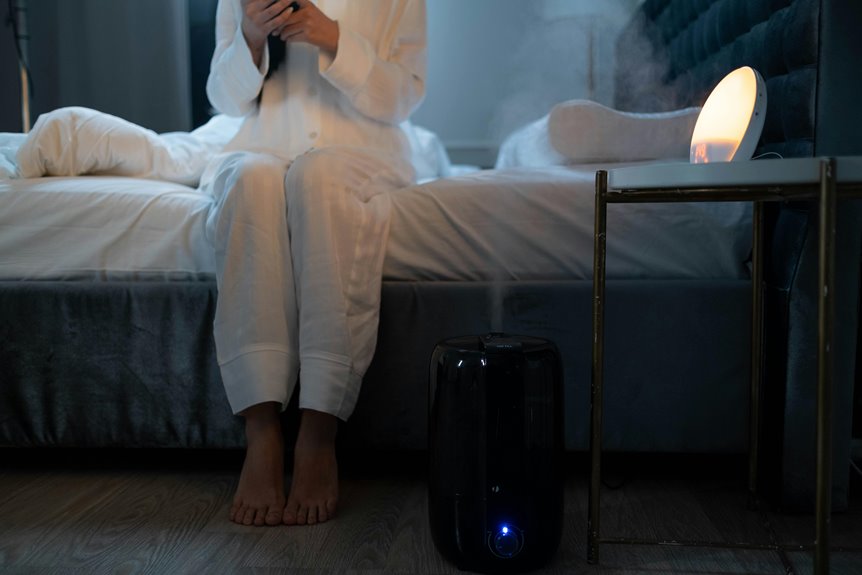
Place your humidifier on a sturdy nightstand or dresser that’s about two feet high. This keeps it at a good level where it won’t make your sheets damp, especially if you position it a few feet away from your bed. The goal is spreading moisture evenly throughout your room, so find a spot near the center rather than tucking it in a corner. Leave about one foot of space around the unit on all sides so air can flow properly, and keep it away from electronics, walls, and anything that could get damaged by moisture.
Put a protective mat underneath your humidifier to shield your furniture from water damage. You might think this is overkill, but a little moisture creeping onto a wooden dresser over time can cause real problems.
A hygrometer (which costs between $10 and $25) is worth picking up if you’re serious about finding the best spot. This simple device measures humidity levels in your room, which helps you figure out whether your humidifier is actually doing its job or if you need to move it somewhere else. Once you test out a few different locations and check your humidity readings, you’ll quickly learn what works best in your particular bedroom.
How the Right Spot Improves Sleep and Prevents Moisture Damage
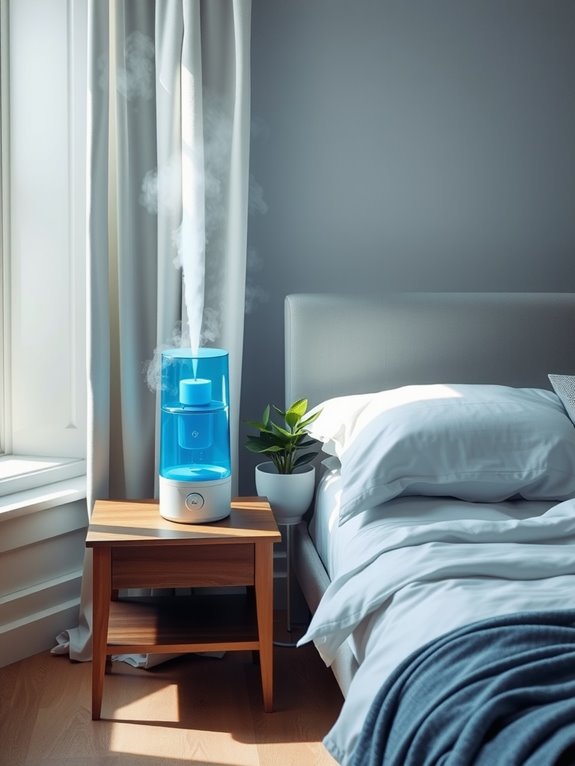
Ever wonder why your humidifier doesn’t seem to be doing much, even though it’s running all night? Where you place it matters more than you might think. Positioning your unit near the room center—elevated on a dresser about 2 feet high—creates even mist dispersion throughout your space. This setup keeps moisture from pooling directly on your bedding, which actually improves sleep comfort by preventing that clammy feeling.
When you maintain proper room humidity around 30–50% with smart placement, you’re also protecting your bedroom from damage. Central positioning stops localized damp spots on walls and furniture where mold loves to grow. Keeping 2–3 feet of clearance from your bed reduces condensation risk on windows during cooler nights. You’ll notice better sleep quality while keeping your room from developing costly water damage problems.
Elevate Your Humidifier on a Nightstand or Dresser
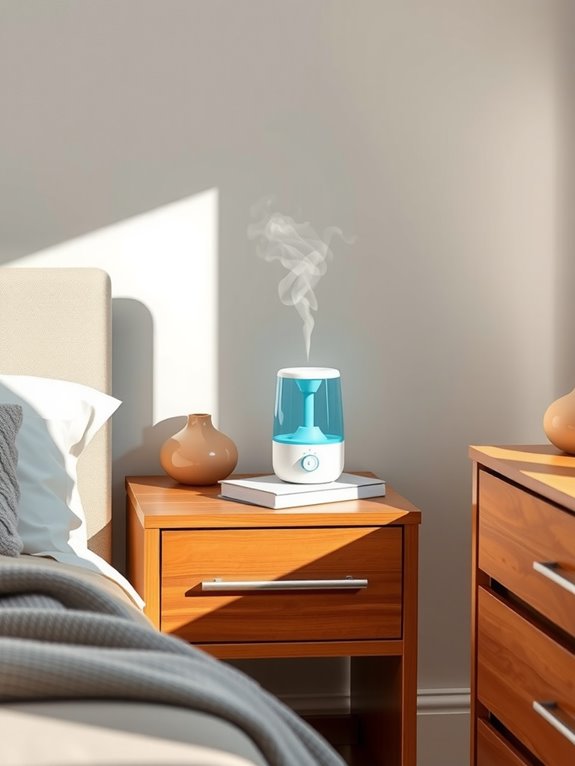
Why does height matter for your humidifier? When you place it on a nightstand or dresser about 2 feet off the ground, the mist spreads more evenly across your bedroom instead of just settling on surfaces near the floor. This position keeps moisture away from your electronics and furniture while reaching the middle of the room where you actually need it.
| Surface Type | Height | Best For |
|---|---|---|
| Nightstand | 2-3 feet | Corner placement |
| Dresser | 2-3 feet | Room center |
| Shelf | 3+ feet | Maximum airflow |
| Desk | 2-3 feet | Side positioning |
| Table | 2-3 feet | Flexibility |
A stable, water-resistant surface with a protective mat underneath keeps your furniture from getting water damage. Most people don’t think about this until they notice a ring stain on their nightstand, so putting down a rubber mat or coaster takes about two seconds and saves a lot of regret later. The goal is getting that moisture where it belongs—in the air around your room—rather than pooling on your pillow or creeping toward your laptop.
Position Your Humidifier a Few Feet From Your Bed
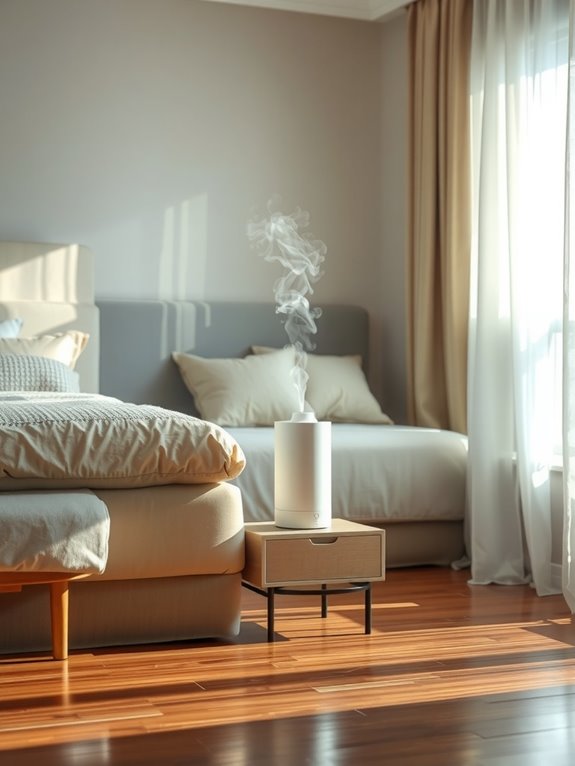
You’ll want to place your humidifier a few feet away from your bed so the moist air spreads evenly throughout your room instead of soaking your pillows and sheets. Putting it on a dresser or nightstand across the room lets the humidity reach you without concentrating all that moisture directly over where you sleep. This distance works well because you get added moisture in the air without waking up to damp bedding.
The closer a humidifier sits to your bed, the more moisture pools in that one spot. A unit like the Levoit LV600S (around $50-60) works nicely from across the room since it has a decent output that carries moisture further. If your bedroom is small, even placing it five or six feet away makes a real difference in how evenly the humidity spreads instead of creating a soggy microclimate right above your head.
Optimal Distance From Bed
How far should your humidifier sit from where you’re sleeping? About 2–3 feet from your bed’s head is the sweet spot. This distance lets your bedroom get the moisture it needs without turning your pillowcase into a damp mess.
A nightstand or dresser works perfectly for placement, especially if you can set the unit about 2 feet high. When a humidifier sits higher up, the mist spreads across the room instead of settling directly on you. You’ll also want roughly 1 foot of clear space around the unit so air can flow freely. That airflow matters more than people realize—it prevents condensation from gathering on surfaces nearby and keeps your humidity levels balanced throughout the bedroom.
Preventing Mist Exposure Risk
While it’s tempting to plop your humidifier right next to your bed for maximum convenience, keeping it a few feet away actually works better. Position your unit 2–3 feet from where you sleep. This distance prevents mist from dampening your pillows and creating uncomfortable moisture on your skin.
Place the humidifier on a nightstand or table about 2 feet high. This elevation improves airflow and lets mist spread evenly throughout your bedroom instead of blasting directly at you. You’ll also notice less condensation buildup on your sheets and windows, which means you won’t wake up to that sticky feeling on your bedding.
The benefit of this setup is that you get proper humidity balance across your entire sleeping space without the discomfort of being directly in the mist path. If you see dampness creeping up on nearby walls, just shift the humidifier a little farther away. This kind of thoughtful placement gives you the moisture control you want without turning your sleep area into a swamp.
Elevation on Bedroom Furniture
Now that you’ve got the distance right, let’s talk about getting your humidifier off the ground. Placing it on bedroom furniture like a nightstand or dresser works really well for how the mist spreads around your room. When your humidifier sits 2–3 feet high, the moisture travels much better throughout your space instead of staying near the floor where it pools up and wastes.
A stable, flat surface matters here. You want something sturdy that won’t wobble or tip over when the humidifier is running. Most dressers and nightstands work fine, but make sure there’s enough room around it so nothing blocks the mist output.
One practical step: put a waterproof mat underneath to protect your furniture from spills and water damage. Rubber or silicone mats are cheap (usually $5–15) and do the job well. This keeps your bedroom furniture safe while your humidifier does its work, and moisture reaches every corner of your room more evenly.
Space Your Bedroom Humidifier One Foot From Walls
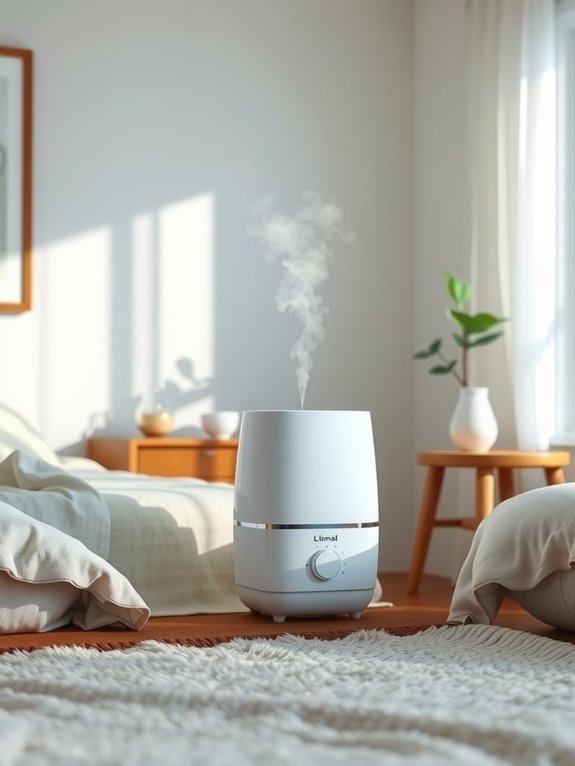
Why does placement matter so much when you’ve got a humidifier? Because where you position it directly affects how well it works and whether you’ll actually enjoy the benefits. You’ll want to space your bedroom humidifier one foot away from walls.
This distance prevents moisture from accumulating on your paint, wallpaper, and furniture—nobody wants damp spots creeping across their bedroom décor. That one-foot buffer zone promotes better airflow and allows the mist to disperse evenly throughout your room instead of concentrating in one spot.
You’re also creating a safety zone where cords can stretch safely to your power source without creating hazards. Think of this spacing as giving your humidifier room to breathe, which ultimately means you get more consistent humidity control and better results.
Choose a Hard, Elevated Surface: Avoid Carpet and Hardwood Floors
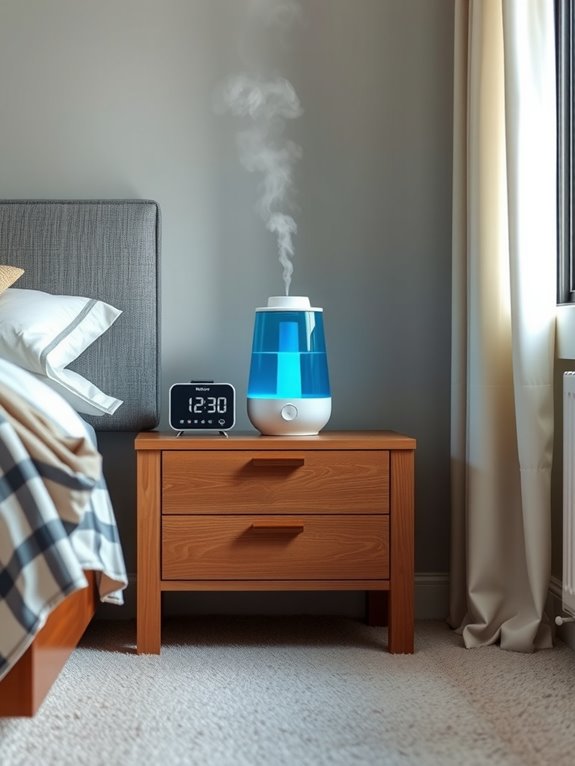
You’ll want to place your humidifier on a sturdy, hard surface like a nightstand or dresser instead of carpet or bare hardwood floors. Carpet and hardwood can absorb moisture, which makes your unit wobble and puts your floors at risk of water damage.
Position your humidifier about 2 feet off the ground for the best mist coverage. This height keeps the moisture spreading evenly across your room while protecting your flooring. A smooth, dry surface also reduces vibration noise, so you’re not listening to a rattling machine all night long. If you don’t have a suitable furniture piece, a small plastic or metal stand works fine and usually costs between $15 and $40.
Stable Surface Prevents Tipping
Because a humidifier can hold several pounds of water, picking the right spot for it really matters. You want to place it on a flat, stable surface where it won’t tip over or wobble, and your bedroom setup deserves this kind of careful thought to keep your space safe and comfortable.
Hard surfaces like wood tables, glass shelves, or metal stands work better than carpet. If you’ve ever seen water seep into carpet fibers, you know why avoiding that situation is smart. A nightstand or dresser works perfectly if you want some height, and positioning your humidifier about 2 feet off the ground also helps moisture spread more evenly around the room.
Before you set things up, check that your chosen surface is actually level and doesn’t have any cracks. If you move your humidifier around, give it another look to make sure it still sits flat. A sturdy tray underneath the unit catches spills and protects your floors from water damage, which is a practical touch that prevents headaches later. Even with the best placement, a little water splash is normal, so having that tray there means you’re covered.
The bottom line is simple: a stable surface prevents accidents and lets your humidifier run safely through the night without wobbling or tipping.
Moisture Protection For Floors
Now that you’ve found a sturdy surface to keep your humidifier from tipping, it’s time to think about what that surface should actually be made of. You’ll want to place your humidifier on a hard surface like a table or dresser—never directly on carpet or hardwood floors. Moisture from your humidifier can seep into fibers and cause damage that’s annoying to fix later.
To protect your floors better, elevate your humidifier about 2–3 feet off the ground. This height improves mist dispersion and keeps moisture from pooling at floor level. You can use a simple plant stand, small shelf, or even a sturdy stool to get the job done. Add a protective mat or towel underneath for extra spill prevention—something like a basic rubber-backed mat (usually around $10–$20) works well and keeps any drips contained.
Finally, maintain at least 1 foot of clearance around your unit so air can move freely. This placement approach keeps your floors safe while you enjoy better air quality.
Skip Electronics and Electrical Outlets for Safety

Ever wonder why your smartphone keeps acting glitchy after you’ve had a humidifier running nearby? Moisture and electronics don’t mix well. Water vapor can seep into circuits and cause permanent damage, so keeping your device away from phones, laptops, and TVs matters more than you might think.
Position your humidifier at least 1 foot away from all electronics to prevent water damage. This distance gives you enough buffer zone so that mist won’t reach sensitive components. Since electrical outlets and power strips can create shock hazards when they get wet, avoid placing your humidifier near them. Even a small splash or buildup of condensation can be problematic.
Set the unit on an elevated surface like a nightstand or shelf instead of the floor. This keeps it away from foot traffic and reduces the chance that someone will accidentally knock it over near electronics. If your room layout forces the humidifier to stay closer to devices than you’d like, use a protective tray underneath to catch any leaks or splashes before they reach anything important.
Keep Your Humidifier Out of Reach of Children and Pets
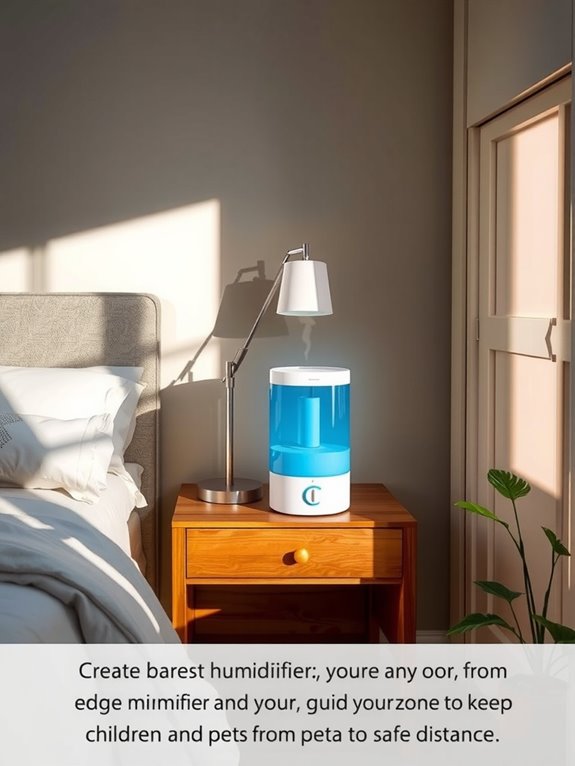
You’ll want to place your humidifier on an elevated surface like a nightstand or dresser—at least 2 feet off the ground. This simple setup keeps curious kids and pets from easily knocking it over or spilling water on themselves. If you’re using a warm-mist model, the height matters even more since the steam and hot water can cause burns if little hands get too close.
Don’t forget about cords and cables either. Tuck them away so they’re not dangling where someone might trip over them or accidentally pull the whole unit down. A power cord lying across the floor is basically an invitation for trouble, especially if you have toddlers or energetic pets running around.
Elevated Surfaces For Safety
Why does placement matter so much when you’re setting up a humidifier? Where you put it actually changes how well it works and how safe it is for your family. You’ll want to think about both safety and how the moisture spreads through your room by following these guidelines.
Choose stable furniture like nightstands or dressers that won’t wobble or tip over. Wobbly furniture is how humidifiers end up on the floor—and that’s not where you want them.
Put it at least 2 feet off the ground. This height helps the mist spread better around the room and keeps it away from toddlers and pets who might knock it over or drink from the tank. A basic humidifier tank sitting on the floor is basically asking for trouble.
Protect your furniture with water-safe trays or mats underneath. The Honeywell HCM-350 (around $40) comes with its own drip tray, which is smart design. Even with a tray, you’ll see some condensation form on nearby surfaces, so keep at least 1 foot of space around the unit. This gap lets air flow properly and stops moisture from building up in one spot.
Keep your humidifier away from your bed. Direct mist hitting your pillow and blankets all night creates dampness that feels uncomfortable, and you don’t want your bedding getting damp while you sleep. A few feet of distance between the humidifier and your sleeping area makes a real difference in how comfortable the room feels.
Warm Mist Burn Prevention
A warm mist humidifier sitting on your nightstand might seem convenient, but it’s worth rethinking that setup if you have kids or pets around. The steam these units produce can cause real burns, which is why placement matters more than you’d think.
Put your humidifier on an elevated surface that’s at least 3–4 feet high. A sturdy shelf, dresser, or wall-mounted bracket works well. Use a heat-resistant base underneath to protect the furniture surface, and keep the unit away from edges so it can’t tip over easily. Make sure cords aren’t dangling where someone could trip on them.
Keep the humidifier completely away from beds, stairways, and couches where little hands or curious pets might wander into it. That arm’s reach zone is the real danger area. You want the unit positioned somewhere stable and out of the normal traffic flow of your home.
Popular options like the Levoit Classic 300S (around $40–50) or the Honeywell HUL520W (around $50–60) have fairly compact designs that sit well on higher surfaces without taking up too much space. Just make sure whatever model you choose has a sturdy base and good weight distribution so it doesn’t feel tippy when it’s full of water.
Taking these placement steps protects everyone in your home while still letting your humidifier do its job properly.
Securing Cords And Cables
Once your humidifier’s sitting on that elevated surface, the power cord becomes your next concern. That cord needs the same attention as the device itself, especially if you’ve got kids or pets in the house.
Keep everything secure with these steps:
- Route your power cord along furniture edges using a cable organizer or cord clip. This prevents it from dangling where little hands and paws can reach it.
- Tuck excess cord length into a cable loop or management box so pets won’t chew on it and create a hazard.
- Position your humidifier at least 3 feet from beds and furniture that kids can climb on to reduce the chance of someone tugging the cord.
- Install a GFCI outlet in your bedroom for shock protection. These outlets are inexpensive (usually $10-20) and detect electrical problems before they become dangerous if spills happen near your setup.
Good cord management keeps your family safe while letting your humidifier work without getting knocked over or unplugged accidentally.
Center Your Bedroom Humidifier for Even Moisture Distribution
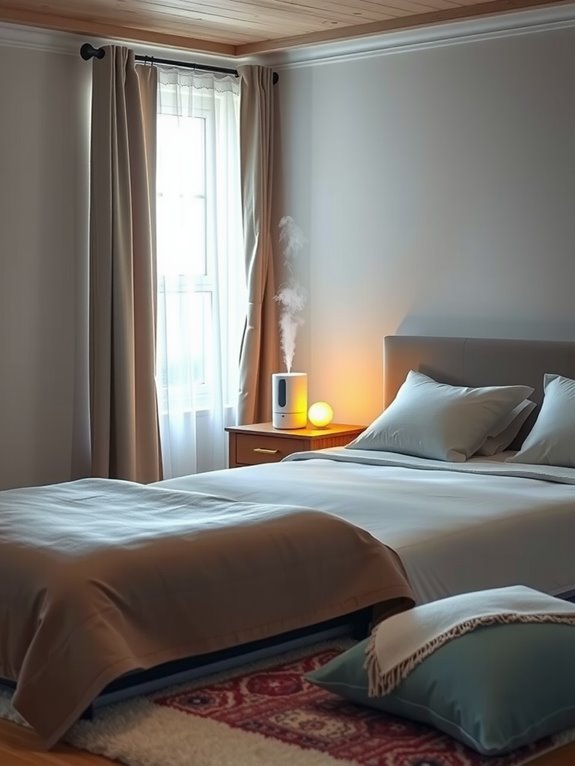
How’d you like your bedroom to feel equally comfortable whether you’re lounging by the window or tucked under your blankets on the far side of the room? Centering your humidifier makes that possible by spreading moisture evenly across the whole space.
Start by placing your unit on a nightstand or dresser at least 2 feet off the ground. Elevation helps the mist travel farther and more evenly. Leave about 1 foot of open space around the humidifier so air can flow freely, and keep it away from walls and electronics that soak up moisture like a sponge. Position it 2–3 feet from your bed’s head so you’re not breathing mist directly while you sleep.
| Placement Factor | Best Practice | Why It Matters |
|---|---|---|
| Location | Center of room | Even moisture distribution |
| Height | 2+ feet elevated | Better mist dispersion |
| Distance from bed | 2–3 feet away | Comfortable sleep |
| Clearance | 1 foot around unit | Prevents excess dampness |
The middle-of-the-room setup works because mist can spread outward in all directions instead of settling in one corner. If your bedroom is oddly shaped or unusually large, you might need to experiment a little—move the humidifier around for a few days and notice where the air feels driest, then adjust accordingly. Everyone in the room ends up breathing the same comfortable level of moisture.
Fine-Tune Your Bedroom Humidifier’s Position Using Humidity Readings
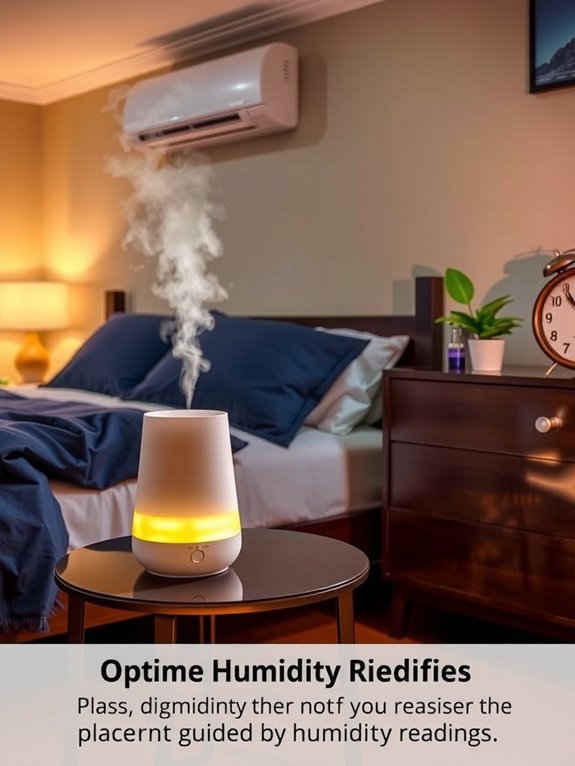
You’ve positioned your humidifier in what seems like the perfect spot—but is it actually doing the job?
A hygrometer reveals the truth. This handy device measures your bedroom humidity, helping you figure out where to place your humidifier for the best results. You’ll want to keep relative humidity between 30–50% for comfort and to prevent mold from growing.
Here’s how to use humidity readings effectively:
Check multiple spots around your room. Walk around with your hygrometer—a basic one costs $10–25—and check near walls, furniture, and your bed. You might find that one corner stays drier than others, kind of like how some parts of your house are always colder in winter.
Adjust your humidifier’s position based on what you find. If your readings show uneven moisture distribution, try moving the unit to a higher surface or closer to the center of the room. If certain areas feel too dry, that’s your signal to shift things around.
Monitor the area near your bed specifically. You want mist to reach where you sleep, but not blast you directly while you’re lying down. Getting the placement right means you’ll actually notice the difference when you wake up—your skin will feel less dry and your throat won’t be scratchy.
This hands-on approach turns your bedroom humidity from guesswork into something based on actual numbers, which usually means better sleep for everyone.
Avoid Common Bedroom Humidifier Placement Mistakes
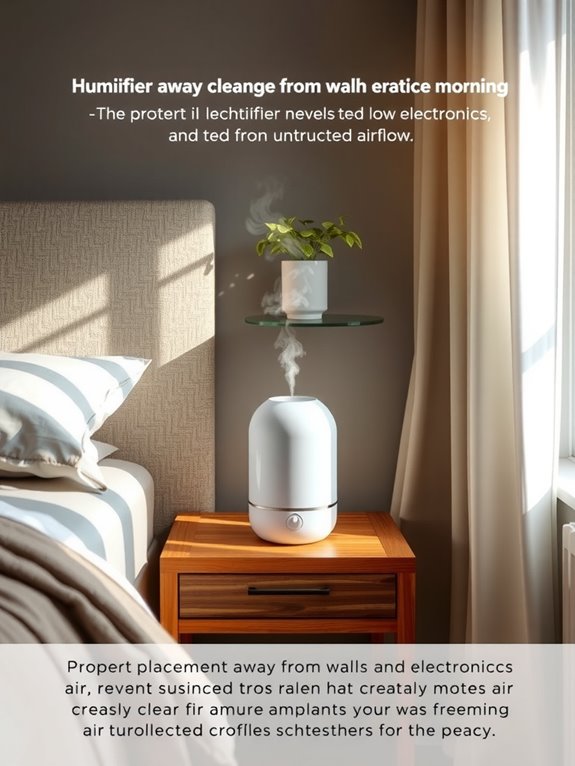
Where shouldn’t you put your humidifier? Some spots will work against you instead of for you.
| Mistake | Why It’s a Problem | Better Alternative |
|---|---|---|
| Floor or carpet placement | Causes dampness and tipping hazards | Elevate on nightstand or dresser |
| Directly beside your bed | Mist hits your face; dampens linens | Keep 2–3 feet distance from bed |
| Against walls or furniture | Creates condensation buildup | Maintain space around unit |
| Near heating vents | Over-humidifies unevenly | Place away from heat sources |
The key to good humidifier placement is giving it room to work. Your unit needs airflow all around it, so don’t tuck it behind furniture or under wall decor where the mist gets blocked. Electronics and your humidifier aren’t friends either—moisture will damage things like alarm clocks, lamps, and phone chargers.
Think about where the mist actually goes. Position your humidifier at least 2 to 3 feet from your bed so you’re not waking up to a wet face or damp sheets. A sturdy nightstand or dresser works well because it keeps the unit off the floor where spills become a problem. You also want to stay away from heat vents, since warm air and moisture together create uneven humidity levels. A unit like the LEVOIT LV600S (around $60) sits nicely on furniture and has a 1.5-gallon tank that won’t need constant refilling, which makes placement on a dresser practical for most bedrooms.
Simple placement choices make a real difference in how well your humidifier actually works.