
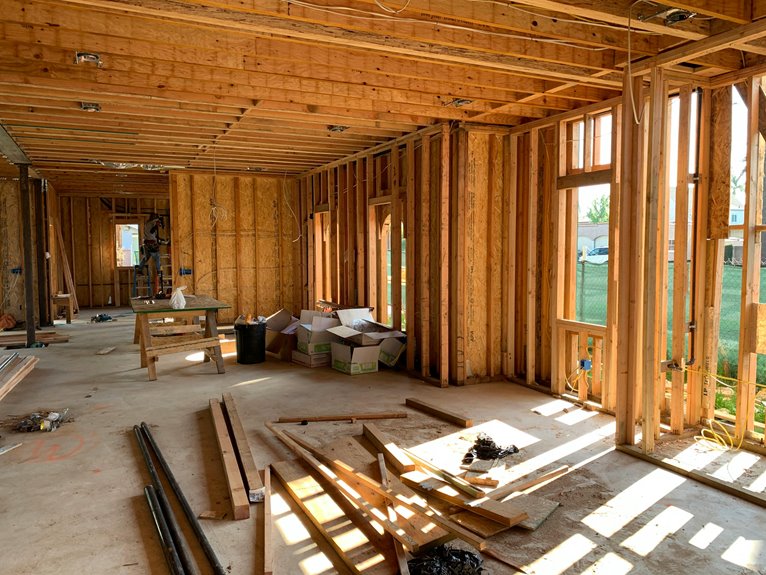
Floor joists typically space 16 inches on center for residential construction—that’s your reliable baseline. But your actual spacing depends on a few things: how far the joists need to span, what type of wood you’re using, how much weight they’ll carry, and whether you’re using solid lumber or engineered joists.
Heavier loads or longer spans might push you toward 12-inch spacing or require bigger joists altogether. Engineered I-joists, like those from brands such as Weyerhaeuser or Boise Cascade, often handle 19.2-inch spacing without breaking a sweat. These cost a bit more upfront—usually $10 to $15 per joist compared to $3 to $8 for standard lumber—but they’re straighter and less prone to warping.
Your local building codes and span tables are your real guides here. A span table tells you exactly what size joist and spacing work for your specific situation. Getting the spacing right prevents sagging, squeaks, and failed inspections later on. If you’re not sure which span table applies to your project, your local building inspector or a lumberyard employee can point you in the right direction.
Standard Floor Joist Spacing: 16 Inches On Center
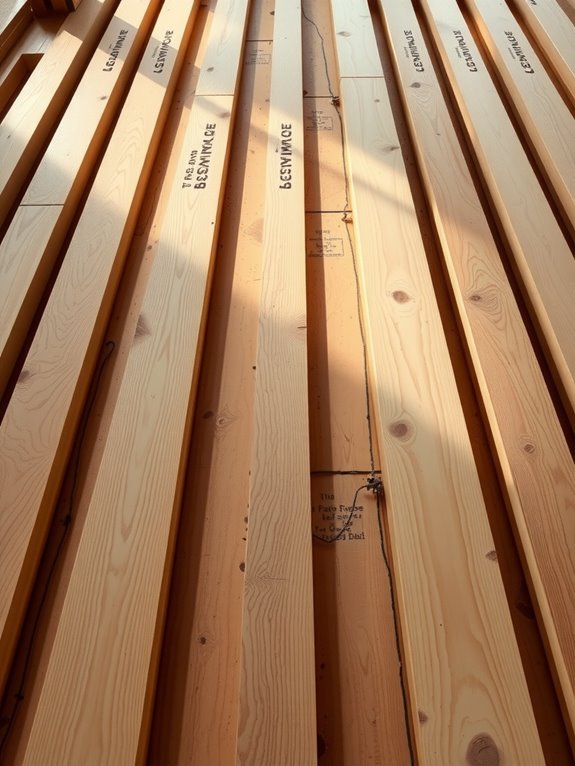
Ever wonder why builders space floor joists the way they do? The answer’s simple: 16 inches on center is the industry standard for residential construction, and there’s solid reasoning behind it.
When you space joists 16 inches on center, you’re creating an efficient balance between cost and performance. This standard spacing handles typical load distribution without wasting materials or inflating your budget. It also controls deflection—that annoying bounce or flex you’d feel walking across a poorly built floor—keeping your house feeling solid underfoot.
Building codes recognize 16 inches on center as acceptable for common joist sizes and residential applications. It’s the sweet spot between what makes sense logistically and what actually works structurally. You’ll find this spacing mentioned in most building codes nationwide, which means staying with it keeps your project compliant and practical.
Why Floor Joist Spacing Affects Stability and Safety
Why does spacing matter so much when you’re building a floor? Your joist spacing directly controls how weight distributes across your structure. When you get it right, you’re protecting against deflection, sagging, and those annoying squeaks that drive homeowners crazy.
| Spacing Issue | What Happens |
|---|---|
| Too wide | Excessive deflection and sagging |
| Inconsistent | Uneven support and weak joints |
| Code non-compliant | Safety risks and failed inspections |
The reason building codes exist for joist spacing is pretty straightforward: they keep your floor predictable and stable. Proper spacing handles both live loads (people walking around) and dead loads (the weight of the floor itself). When you nail the joist span correctly, your floor stays solid for decades instead of inviting expensive repairs down the road.
I’ve seen floors that started squeaking within a year because someone skipped proper spacing calculations. A few extra inches between joists might seem like no big deal, but it adds up fast when weight concentrates unevenly. Consistent spacing—typically 12, 16, or 24 inches apart depending on your joist size and span—keeps everything balanced and performing the way it should.
Why Your Wood Choice Changes Spacing Rules

Your choice of wood isn’t just about how it looks or what you’ll spend—it actually shapes your entire spacing plan. Different wood types have different strengths, and that strength directly affects how far apart you can space your joists.
Solid lumber like Douglas Fir or Southern Pine comes with specific spacing requirements. These are based on how much weight they can hold and how much they’ll bend under that weight. A piece of Douglas Fir can handle more load than a weaker wood species, so you might space joists further apart. Weaker woods need closer spacing to meet building code standards.
Lumber grade** changes things too. A higher-grade board with fewer knots and defects can span longer distances than a lower-grade piece of the same species. When you’re picking your lumber, check the grading stamp**—it’ll tell you what you’re working with.
Engineered joists like I-joists and LVLs (laminated veneer lumber) often let you use wider spacing than solid wood. These products are manufactured to be consistent, so they perform predictably. An I-joist might handle a 16-inch on-center spacing where you’d need 12-inch spacing with solid lumber of the same depth.
Building codes account for all these differences through engineering tables. You’ll look up your specific wood type and grade in these tables to find the right spacing for your span length. Getting this match right between your wood choice and your spacing keeps your floor level and stable.
Calculate Floor Joist Spacing by Span, Load, and Wood Type
Floor joist spacing depends on three main factors: how far your joists span between supports, how much weight the floor needs to hold, and what type of wood you’re using. A 2×10 Southern yellow pine joist can handle a longer span than the same size in spruce, which means you might space them further apart and use less material overall.
Finding the right spacing starts with knowing your span length and load requirements. You can look up span tables specific to your wood type and joist size, or contact your local building inspector for guidance. This step keeps your floor both safe and structurally sound without any guesswork involved.
Span Length Impact Analysis
How’s your joist spacing going to hold up if you’re spanning 12 feet instead of 10. That extra distance changes everything about your floor’s structural integrity.
The relationship between span length and joist spacing is pretty straightforward. When you increase how far your joists have to reach, you need to make adjustments in three main areas.
First, you’ll need bigger lumber. A joist that works fine at 10 feet might not cut it at 12 feet because the longer distance means more stress on the wood. You might jump from a standard 2×8 to a 2×10 or larger, depending on what you’re building.
Second, your spacing gets tighter. Instead of spacing joists 16 inches apart, you might need to move them to 12 inches apart. Closer spacing distributes the weight more evenly across your floor, which helps the longer joists do their job without bending or sagging.
Third, the type of wood matters more with longer spans. Southern Pine and Douglas Fir handle distance better than softer wood species because they’re naturally stronger. If you’re working with a weaker species, you’ll likely need even more support or bigger lumber sizes.
Check the span tables that come with your lumber grade and wood type. These tables show you exactly what spacing works for different combinations of span length and joist size. A structural engineer or building inspector can verify that your plan matches local building codes and your specific situation.
Load-Bearing Capacity Factors
What’s really driving your joist spacing decision isn’t just the distance they need to span—it’s the weight they’ve got to carry. You’re juggling live loads (furniture, people) and dead loads (the structure itself) that directly shrink your allowable span. Heavier loads mean tighter spacing or bigger joists.
Wood species matters a lot here. Douglas fir and Southern pine bend without breaking as easily as SPF (spruce-pine-fir), which means you can space them wider apart. If you’re building in a region where Southern pine is common and affordable, you might find 2x8s at 16-inch spacing work just fine. The same joist size at 24-inch spacing would sag under the same load with SPF.
Span tables are your roadmap. They show you exactly which joist size works at different spacings for your specific load conditions. You look up your wood type, find your load requirement, and the table tells you the maximum distance between joists. A 2×8 at 16-inch spacing might handle a room where a 2×6 at 24-inch spacing fails completely.
The real work comes next: calculate your actual loads, pick your wood species based on what’s available and your budget, cross-reference the span tables, then call in a structural engineer to confirm everything works for your specific situation. That confirmation step isn’t overkill—it catches problems before you’re already halfway through framing.
When to Use 12-Inch or 24-Inch Spacing Instead
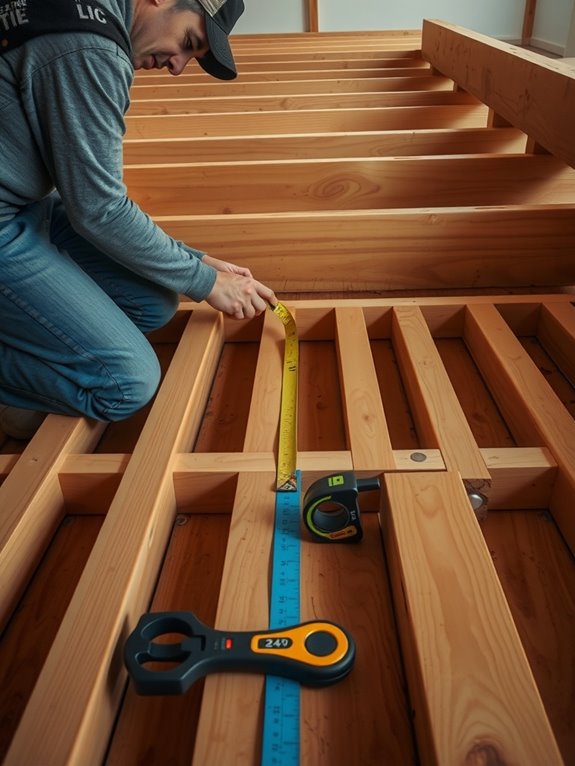
While 16-inch on-center spacing handles most residential floors well, sometimes you need to go tighter or wider based on what your floor needs to support.
You’ll want 12-inch on-center spacing when your subfloor faces heavier demands. Kitchens and bathrooms put serious weight on floors between the cabinets, appliances, and all the water-related stuff sitting around. Composite decking and softer materials also need closer support because they don’t have the natural stiffness of traditional wood joists. Your local building codes matter here too—they spell out exact requirements based on where you live and what weather patterns your area gets.
The 24-inch on-center option works only when you’ve got lighter loads pressing down and the span between joists isn’t stretching too far. This wider spacing saves money on materials, but it’s not a trade-off you can make on your own. Your building code is the actual rulebook you need to follow, and skipping that step means your floor might feel bouncy or develop problems down the line. Getting the spacing right is what determines whether your floor feels solid under your feet or gives you that slightly squishy feeling when you walk across it.
Solid vs. Engineered Joists: How System Type Changes Spacing
Ever noticed that some floors feel rock-solid while others have a slight bounce to them. Your joist type makes all the difference in how your floor performs.
Solid lumber joists typically space 16 inches center-to-center, which is pretty standard in most homes. Engineered joists like I-joists can stretch to 19.2 inches or greater, depending on what load you’re putting on them and what the span tables say. The nice thing about I-joists is they achieve longer spans with less depth, so you get more design flexibility without needing thicker material.
Open-web joists are great if you need to run pipes and wires through them because they have all that space built in. The trade-off is they need precise spacing and bracing to keep them from twisting. Engineered options in general give you more consistent dimensions and fewer crown variations than solid lumber, which means less field adjustment work when you’re framing.
Building codes spell out what spacing you can use based on which system you pick, so you’ll want to check the relevant span tables before you start framing. Your material choice directly determines what spacing works best for your project.
Installing Floor Joists With Correct Spacing and Alignment
Getting your floor joists spaced correctly and aligned properly separates a floor that lasts decades from one that squeaks and sags after a few years. It’s where the actual work happens.
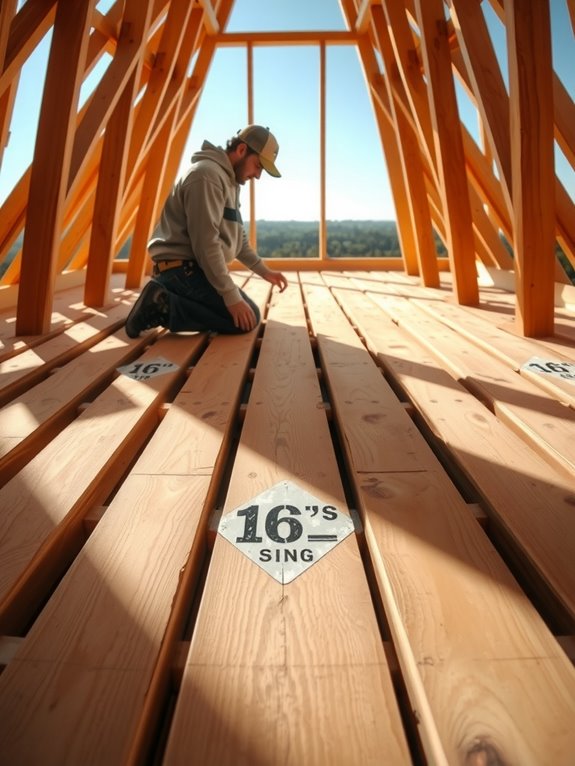
Mark your layout with chalk lines at 16 inches on center. Double-check that each joist position matches what your span tables say it should be. This step takes patience, but skipping it means fixing problems later.
Check joist straightness** by sighting down the board before you fasten anything. The crowns** should face up—that’s the slight curve in the lumber. Most boards have one, and you want it working for you, not against you.
Level and support each joist end on properly sized supports. Use temporary bracing to keep everything aligned while you work. Lumber width varies from board to board, so adjust hangers or shims to account for those differences. This keeps your top surface flat and uniform across all joists. You’re building the foundation your entire floor depends on, so spacing and alignment matter more than speed during this phase.
Avoiding Common Spacing Mistakes That Compromise Floors
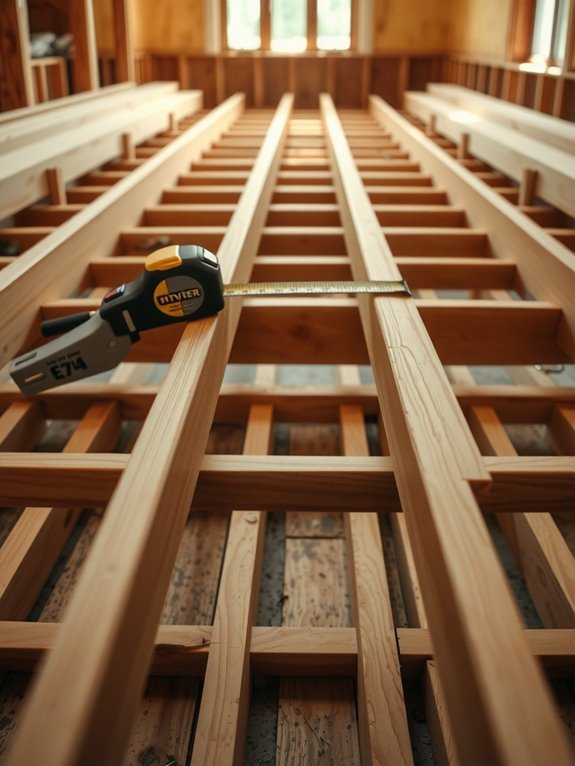
Your floor needs to handle more weight than you might think at first. Residential floors typically support 40 pounds per square foot of live load, but that number doesn’t account for snow piling up on the roof or deciding to add a bathroom upstairs five years from now. Both of those situations demand stronger support than your original plan probably includes.
The lumber you pick matters just as much as how far apart you space your joists. Standard 2×10 spruce works fine at 16 inches on center, but stretch that spacing to 24 inches and you’re asking for trouble. The floor will sag and flex in ways that’ll eventually crack your drywall and leave you staring at damage that costs real money to fix. Choosing the wrong lumber grade or species for your joist spacing is like wearing sneakers to a marathon—it might get you started, but it won’t hold up when things get demanding.
Underestimating Load Requirements
How’s that floor feeling under your feet—rock solid or a little bouncy? You’re probably underestimating the loads your joists must handle.
When you skip the math, several things go wrong. Dead load (the weight of the floor itself, around 8 pounds per square foot) combines with live load (40 pounds per square foot in living areas). Your joist spacing has to support both of these forces working together. Inadequate spacing causes excessive deflection, which means your floors sag or squeak as joists work overtime during typical use.
Ignoring subfloor thickness, room purpose, and local building codes often leads to needing costly midspan support later. That’s when you’re calling contractors and spending money you didn’t budget for.
Your load-bearing capacity depends on consulting span tables, calculators, or a structural engineer—not guessing. Lower-grade lumber without adjusted spacing increases failure risk. You can find span tables online through organizations like the American Wood Council, or use free calculators on sites like the Structural Building Components Association.
Accounting for deflection and structural integrity upfront saves your floor from becoming a bouncy nightmare. The numbers aren’t complicated once you know your joist size, spacing, span distance, and local snow load requirements. Trust the numbers; they’re your floor’s best friend.
Improper Material Selection
Why does lumber grade matter so much when you’re planning your joist spacing? Your material selection directly impacts how much your floor will bend and how strong it actually is. Choosing lower-grade lumber like #2 introduces more knots and defects, which reduces how much weight the wood can handle. This means you’ll get sagging floors unless you space your joists closer together or use bigger pieces, and that drives your costs up.
The type of wood you pick matters just as much. Soft woods with high moisture content don’t have the bending strength you need for longer spans between joists. When you use the wrong species, you run into code compliance problems that require expensive adjustments later.
Your subfloor also plays a role in this decision. The thickness and stiffness of your subfloor need to match your joist spacing choices. When these components don’t work together, you’ll end up with premature floor movement and moisture problems that cause squeaks and instability.
Smart builders pick appropriate grades and species from the start, matching them to the specific distances their joists need to span. This approach prevents costly fixes down the road and gives you the stable, quiet floors your clients want.
When to Consult a Structural Engineer for Custom Spacing?
When your floor framing project moves beyond what standard building tables cover, that’s when a structural engineer becomes helpful. You’ll want professional guidance in these situations:
Nonstandard spans and materials – Your joist span exceeds typical limits like 16″ OC for common 2×8 joists, or you’re using long-span engineered joists like I-joists or open-web trusses. These materials need custom spacing calculations based on their actual strength and how they’ll bend under weight.
Complex load conditions – You’re dealing with heavy live loads from gyms or commercial spaces, or your support layout is irregular. A structural engineer can calculate exactly how much deflection is acceptable and what spacing works for your specific situation.
Special circumstances – Multiple intermediate supports, cantilevers, seismic zones, or high-wind areas require code compliance validation. What works in one location might not meet building codes in another, and an engineer knows the local requirements.
Getting this expert review upfront prevents costly mistakes and keeps your floor joists performing safely over time. The cost of a consultation typically ranges from $300 to $800 depending on project complexity, which is much cheaper than fixing structural problems later.