You can paint bathroom tile in five straightforward steps. First, clean with a degreaser like TSP ($5–8) and score the surface with a utility knife so the paint has something to grip.
Next, fill any chips or cracks with epoxy patch. Then prime with a bonding primer made for glossy tiles—this step matters because regular primer slides right off tile like water off a duck’s back.
After priming, apply thin coats of tile paint. Multiple thin layers stick better than one thick coat, which tends to drip and puddle. Finally, seal everything with a moisture-resistant topcoat like Polycrylic ($8–12). Bathroom humidity is no joke, so this last step keeps your work from peeling in a few months.
Each step builds on the last one. You’re basically roughing up the surface, filling holes, creating a sticky base, painting, and protecting your work. The whole process takes patience more than skill. Stick around to discover exactly how to handle each stage without creating a mess you’ll regret.
Step 1: Clean and Score the Tile Surface for Better Adhesion

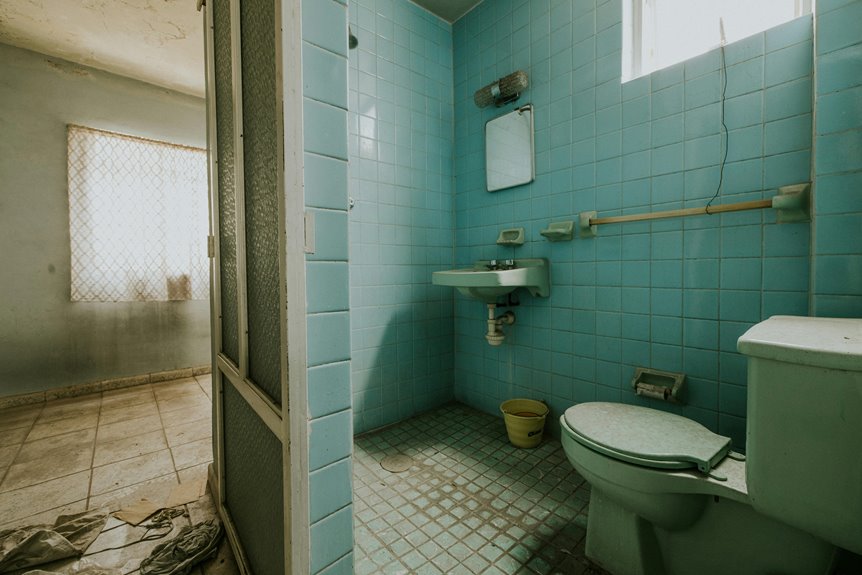
Why does tile paint peel off so quickly for some people? They’re skipping the most important part—proper prep work. You’ve got to clean your ceramic tile first with a degreasing cleaner that cuts through soap scum and oils. Something like TSP (trisodium phosphate) works well and costs around $5-8 per box. Rinse thoroughly and let everything dry completely.
Next comes scoring. Grab a utility knife and lightly scratch the glossy glaze in a crisscross pattern. This roughens the surface so paint actually sticks around. Wipe away dust with a damp cloth, then dry again. It takes maybe ten minutes but makes a real difference in how long your paint lasts.
If your tiles are particularly smooth, consider a tile primer or bonding agent designed for ceramic surfaces. Kilz Adhesion Primer ($8-12 per quart) or Zinsser Bulls Eye 1-2-3 ($10-15 per quart) both work well for this job. Don’t skip damaged grout either—patch or re-grout any problem areas since porous grout compromises how long your paint holds up. This foundation really does matter more than most people realize.
Step 2: Fill Chips and Cracks Before Priming
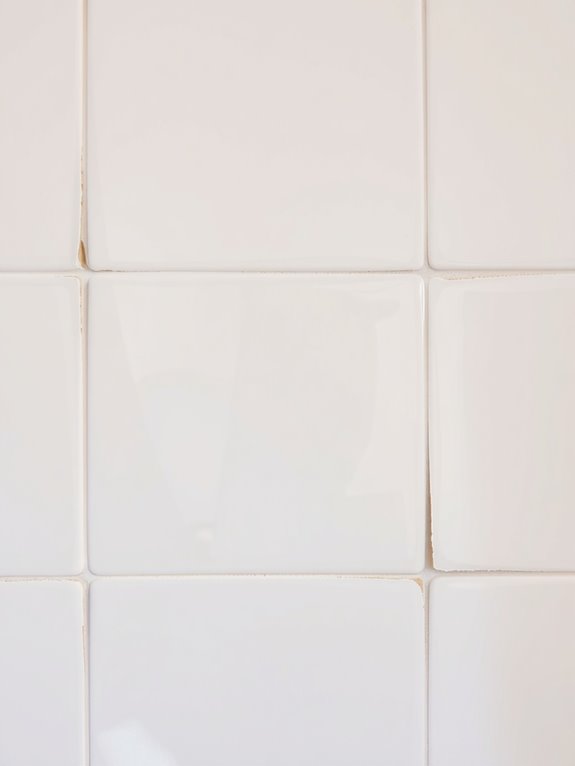
Now that your tiles are clean and scored, you need to fill in any chips and cracks you’ve found. Waiting until after priming means these spots won’t trap moisture or cause problems later on.
For small damage, grab a polyurethane-based epoxy patch or acrylic patching compound that matches your tile color. Products like DAP Fast ‘N Final or similar acrylic compounds run about $5-$10 and work well for most tile repairs. Use a small putty knife to press the compound firmly into each spot, then level it with the surrounding surface.
Let it cure according to the package directions—typically 15 to 60 minutes at first, but wait the full 24 hours before moving forward. This matters because patching compound that isn’t fully set will sand unevenly and cause problems when you prime.
Wait the full 24 hours before sanding patched areas—rushing this step causes uneven sanding and primer adhesion problems.
Once it’s completely dry, use fine-grit sandpaper (220-320 grit) and lightly sand those patched areas. This step creates a smooth surface that helps your primer and paint stick properly. You’ll notice the difference when you apply the primer—it goes on more evenly and adheres better to properly prepped spots.
Step 3: Apply Bonding Primer to Seal Glossy Tiles
Glossy bathroom tiles are basically paint-repellent, so you need a bonding primer to give your topcoat something to stick to. After you’ve prepped and degreased your tiles, this step comes next.
Pick a high-adhesion bonding primer made specifically for glossy surfaces. Sherwin-Williams ProClassic or Benjamin Moore’s Advanced Primer are solid choices in the $25-35 range. Apply a thin, even coat with a high-nap roller or brush, working methodically across the surface. Avoid piling on thick layers that drip and sag.
Check the manufacturer’s dry time—don’t skip ahead, or you’ll waste effort. Once it’s fully cured, lightly sand the surface to help your paint stick better. Wipe away all the dust before you move on to painting.
This priming step turns those slippery tiles into a surface that actually holds paint.
Step 4: Apply Tile Paint in Even Coats
You want a smooth, even finish on your tiles, not something that looks bumpy and sloppy. Before you start, stir your tile paint thoroughly. This step matters because it keeps the color consistent and helps the paint stick properly to the tile surface.
Stir your tile paint thoroughly before starting to keep the color consistent and ensure proper adhesion to the tile surface.
Grab a high-quality synthetic brush or a small roller—these work much better than cheap alternatives. Apply thin, even coats instead of one thick layer. Thick paint drips, pools, and won’t stick to your tiles the way you want it to.
Work in small sections and apply your first coat methodically. This means taking your time rather than rushing through it. Let the paint dry completely according to what the manufacturer says on the can. Check your work once it’s dry and look for any spots you missed or areas where the paint overlapped too much.
If your particular product recommends it, lightly sand any rough edges. Then apply that second coat using the same careful technique. Two or three thin coats create a finish that holds up much better than one thick coat ever will.
Step 5: Protect With a Moisture-Resistant Topcoat
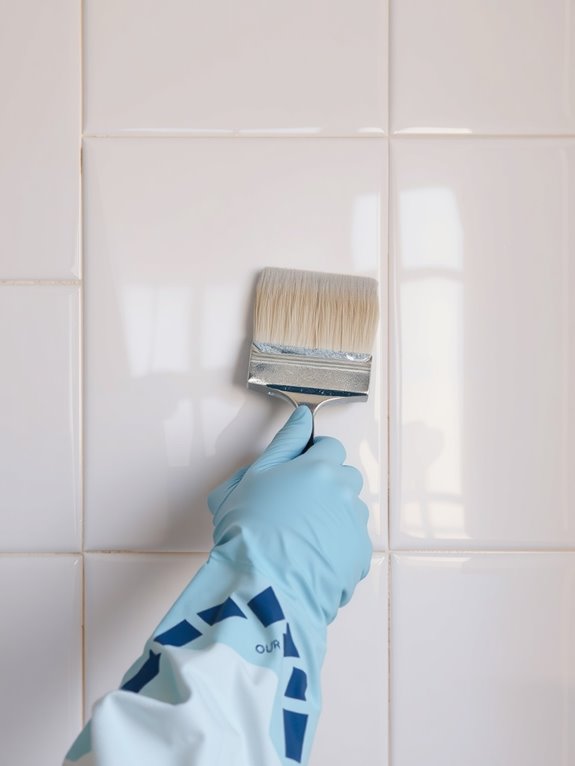
Why spend all that time painting if you’re not going to protect it? Your bathroom tile needs a moisture-resistant topcoat to stand up to humidity and water damage.
You’ll want to choose between a polyurethane or epoxy sealer—both work well for bathrooms. Pick your finish based on practicality: gloss is easiest to wipe down, satin offers a middle ground, and matte gives a softer look. Popular options include Polycrylic by Minwax (around $8–12 per quart) or Rust-Oleum’s polyurethane finishes ($10–15), which are available at most hardware stores.
Apply two to three thin coats with a brush or roller rather than one thick coat. Between each coat, lightly sand with 320–400 grit sandpaper—this helps the next layer stick better. Wait 4–6 hours between coats, though the exact time depends on your bathroom’s humidity. Full curing takes about 7 days before you can expose the tile to moisture, so plan accordingly if you need to use that bathroom.
The main thing is patience. Rushing through drying time is where people run into problems with peeling or water damage later on. Taking it slow protects your work and keeps the paint looking good for years.