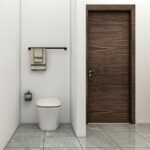
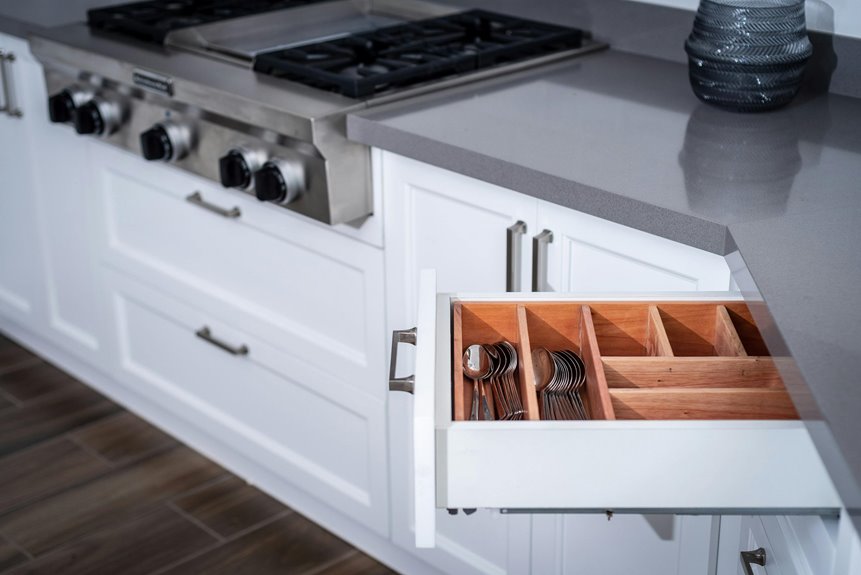
Standard bathroom cabinets typically measure 21 inches deep. This depth works well for most bathrooms because it provides decent storage without taking up too much floor space.
If your bathroom feels cramped, an 18-inch cabinet might be a better choice. On the other hand, a larger primary bathroom can handle a 24-inch depth, giving you more counter space to work with.
Brands like Kohler and Vanity Art offer solid 21-inch options that range from $300 to $1,200. Finding the right depth really depends on your bathroom’s size and how much storage you actually need.
Standard Bathroom Cabinet Depth: Why 21 Inches Is the Benchmark
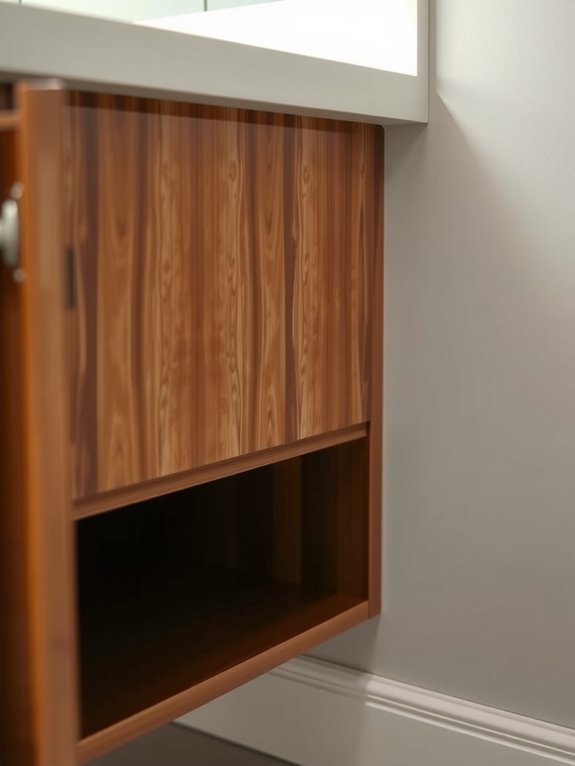
Ever wonder why your bathroom vanity seems to fit just right under the sink? Most standard vanities measure 21 inches deep, and there’s a practical reason for this measurement.
Most standard bathroom vanities measure 21 inches deep—a measurement that perfectly balances storage with functionality.
This depth works because it balances storage with functionality. You get room for your daily essentials without eating up too much floor space, and the measurement accommodates standard sink basins and plumbing without making your bathroom feel cramped. At 21 inches, you can actually move around without squeezing past things, and your guests won’t have to do an awkward sidestep to get through.
When you’re shopping for a new vanity, that 21-inch depth is your baseline. It fits most bathrooms because plumbers and manufacturers designed it that way. You’ll find options in this standard size from brands like Kohler and Vanity Art in the $300 to $800 range, depending on materials and finishes. Some deeper vanities go to 24 inches if you need extra storage, but they take up noticeably more space. Shallower options at 18 inches exist too, though they limit what you can fit inside.
The real benefit shows up when you’re renovating. Sticking with 21 inches means you won’t have plumbing headaches or gaps around your sink. It’s the measurement that just works, without requiring custom solutions or unexpected complications.
Quick Depth Guide: Choose by Bathroom Type (Half-Bath, Guest, Primary)
Pick your vanity depth based on what your bathroom actually needs. Half-baths work best with shallow 12 to 16 inch depths—they keep things from feeling cramped in a small powder room. Guest bathrooms hit a sweet spot at 18 to 20 inches, giving you useful storage without taking over the floor. Your primary bathroom can go deeper, typically 21 to 24 inches, since you use it every day and want more counter and cabinet space.
Start by looking at how much room your bathroom has. Once you know your bathroom’s footprint, picking the right depth becomes straightforward.
Half-Baths Need Shallow Depths
Why does a half-bath feel cramped when you’re choosing a vanity? You’re working with limited space, so picking the right vanity depth really matters. Most half-baths benefit from shallow vanities—think 12 to 16 inches deep. This keeps your clearance space generous and prevents doors from swinging into cabinets awkwardly.
| Vanity Depth | Best For | Floor Space |
|---|---|---|
| 12–16 inches | Tiny half-baths | Maximum |
| 18 inches | Compact half-baths | Good balance |
| 21 inches | Standard depth | Limited clearance |
| 24 inches | Full baths only | Crowded in half-baths |
| 30 inches | Primary baths | Spacious |
At 12 to 16 inches deep, vanities like the Glacier Bay Spa Vanity (around $150-200) give you plenty of room to move without sacrificing storage. If your half-bath is slightly bigger, an 18-inch option offers a nice middle ground between depth and walkability. Skip anything deeper than 21 inches unless you’ve got a genuinely spacious half-bath, which most people don’t.
You’ll also want at least 21 inches of clearance in front for comfortable passage. Less than that, and you’ll find yourself doing an awkward shuffle every time you need to use the sink. Deeper vanities create crowding and door swing issues that become frustrating after a few weeks of daily use.
Guest Bathrooms: Mid-Depth Balance
When you’re furnishing a guest bathroom, the sweet spot lands somewhere between a cramped half-bath and a sprawling primary suite—and that’s where an 18 to 20-inch vanity shines. This vanity depth offers the perfect balance for welcoming guests while keeping your space functional.
Mid-depth cabinets work beautifully because they preserve your floor space so guests don’t feel squeezed, provide honest storage without overwhelming smaller rooms, and maintain that openness that makes bathrooms feel inviting. The key is keeping at least 21 inches of clearance space in front for comfortable use.
Many guest bathrooms actually land near 21 inches, which aligns with standard vanity dimensions. Floating vanities trend even shallower—around 18 to 20 inches—to enhance sightlines and create that airy feeling. You’re fundamentally choosing clearance space and comfort for the people you care about. Brands like Vanity Art and KOHLER offer mid-depth options in this range, typically priced between $300 and $800 depending on materials and finishes, giving you solid choices without overspending on a secondary bathroom.
Primary Bathrooms Require Deeper
Primary bathrooms are a different beast altogether. You’re working with more space and higher expectations, so your vanity cabinet needs to step up to match. Most primary bathrooms benefit from deeper vanities—think 21 to 24 inches—which give you serious storage and countertop real estate. This depth works perfectly if you’re planning dual sinks or a makeup station, and you’ll appreciate having room for all those daily essentials without clutter.
| Vanity Type | Depth | Best For | Storage | Style |
|---|---|---|---|---|
| Standard Cabinet | 21″ | Primary baths | Excellent | Freestanding |
| Deep Cabinet | 24″ | Dual sinks | Maximum | Luxe |
| Floating | 20″ | Modern look | Good | Contemporary |
| Compact | 18″ | Small primary | Adequate | Minimalist |
| Corner Unit | 22″ | Space-saving | Very good | Efficient |
The extra depth also means you won’t stub your toes during your morning routine. Brands like Vanity Art and Spa Vanities offer 24-inch options in the $400 to $800 range, while high-end choices from Restoration Hardware can run $2,000 or more. If you’re working with a tighter budget, look at ready-made options from Home Depot or Lowe’s—they stock solid 21 to 22-inch vanities starting around $300 that work well for primary bathrooms without the custom price tag.
Shallow, Mid-Depth, and Deep Vanities: When to Use Each Size
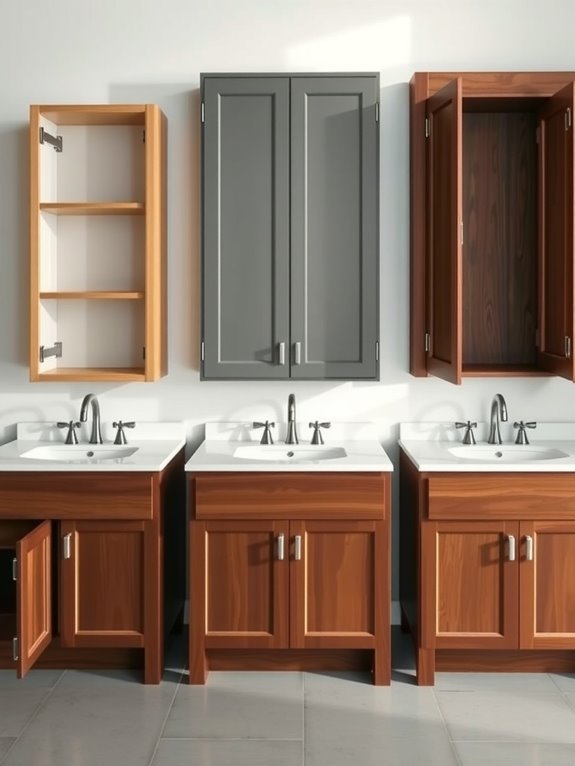
How do you know which vanity depth will actually work in your bathroom?
Finding the right fit means understanding your space and needs. Consider these options:
- Shallow vanities (12-16 inches) work well for powder rooms where you’re mainly washing hands quickly. They fit snugly into tight corners without eating up floor space.
- Mid-depth vanities (18-20 inches) give you decent storage without making your bathroom feel cramped. These work nicely in small-to-medium bathrooms where you want a little extra counter room but can’t sacrifice walking space.
- Standard vanities (21-24 inches) balance storage and countertop space in a way that fits most homes comfortably. They’re the Goldilocks option for primary bathrooms and master baths.
- Extra-deep vanities (24+ inches) maximize storage but need spacious layouts and careful plumbing planning. They work best in larger bathrooms where you have room to spread out.
Your vanity depth choice really comes down to two things: how much floor space you have and how much storage you actually need. If you’re squeezing a vanity into a half-bath, shallow is your answer. Mid-depth works when you want a little more counter space without overwhelming a modest bathroom. Standard depth handles most everyday situations nicely. Go deeper only if your bathroom has genuine square footage to spare and you really want everything within arm’s reach.
How to Measure Your Space for the Right Vanity Depth
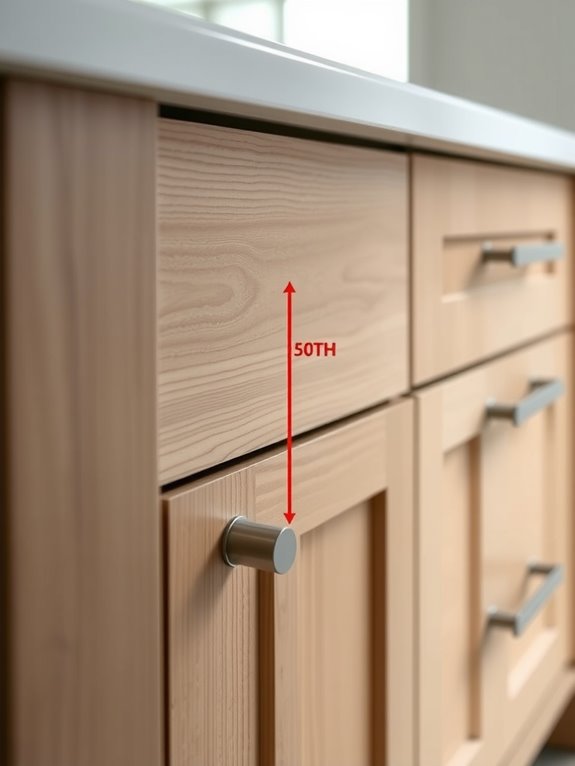
Before you fall in love with that sleek 24-inch vanity you spotted online, you need to actually measure your bathroom. What looks perfect in a photo might not fit through your doorway or leave enough room to walk around comfortably.
Start by measuring your room’s depth from wall to wall and note where your plumbing sits. You’ll want at least 21 inches of clearance in front of the vanity for comfortable foot traffic and so your door can swing open without hitting anything. Don’t forget about the countertop overhang either, which typically extends 1–2 inches beyond the cabinet. Check your vanity depth against all these measurements carefully, and confirm any obstacles in your space.
Taking time to measure now prevents costly mistakes later and helps you find a vanity that actually fits your bathroom instead of becoming an expensive piece of furniture you can’t use.
Does Mounting Type Matter: Floating vs. Freestanding Depth Options?
When you’re picking a vanity, you’ll notice that floating cabinets usually run about 8 to 12 inches deep, which creates that open, easy-to-clean-under feeling, while freestanding models stick with the standard 21-inch depth and give you way more storage space. Your choice matters because floating vanities need serious wall reinforcement to hold up, but they won’t take up floor space or interfere with your bathroom door swing like a deeper cabinet might.
Think about your actual bathroom layout and traffic flow before deciding. A cramped bathroom often benefits from floating shelving since it keeps the floor clear and open. A roomy bathroom can totally handle a traditional freestanding cabinet’s bulk and convenience. It comes down to what your space can actually support and what you’ll use most often.
Floating Cabinet Depth Options
Does your bathroom’s layout actually change based on whether you go floating or freestanding? Absolutely. When you choose floating depth options, you’re selecting cabinets that typically measure 18 to 20 inches—shallower than standard depths.
Floating vanity cabinets create an airy, modern feel that makes your bathroom feel spacious. Since they don’t project as far into your room, your floor looks bigger and less cluttered. You also get easier access underneath for cleaning and maintenance, which matters more than you’d think when you’re scrubbing around the base.
The wall reinforcement needs are more straightforward than freestanding vanities require. You’re anchoring to studs rather than dealing with floor installation, so the setup process stays pretty manageable.
The trade-off is real, though. You’ll sacrifice some behind-the-front storage space because these cabinets are shallower. But many homeowners decide that open, breathable atmosphere is worth adjusting where you keep your daily items. It’s a smart choice when your bathroom doesn’t have a ton of square footage to work with.
Freestanding Storage Advantages
Why do freestanding vanities keep showing up in so many bathrooms? They offer real storage benefits that floating cabinets simply can’t match. While floating options max out around 20 inches deep, freestanding vanities typically give you 21 to 24 inches of depth. That extra space means you actually have room to organize your hair tools, cleaning supplies, and daily essentials without everything getting crammed together.
The flexibility of these deeper cabinets works for different bathroom sizes. Whether you’re working with a large master bath or a smaller guest room, freestanding vanities adapt to what you need. You’ll want to think through door swing and plumbing placement when you’re picking one out, but the storage space you gain makes that planning worthwhile. That’s why freestanding remains the practical choice when you need cabinets that genuinely hold your stuff.
Installation And Space Implications
Floating vanities stick out just 12–18 inches from the wall, which gives your bathroom that open, airy feel. The catch is that you’re working with less storage depth inside the cabinet. If you go with a freestanding unit instead, you’re looking at about 21 inches deep—plenty of room for your everyday stuff in drawers and shelves.
Your choice of how to mount the vanity really does affect how everything works. Wall-mounted options need solid backing behind your bathroom walls to support the weight, which sometimes means extra work during installation. Freestanding units are simpler in that respect because they sit on the floor and don’t require reinforcement. They also work with your existing plumbing without modifications.
You’ll want at least 21 inches of clear space in front of your vanity so you can actually open doors and drawers without them hitting your legs. The depth of your unit matters too—if it’s too deep, your doors might not swing open all the way, or drawers could hit the opposite wall if your bathroom is narrow.
Think about what fits your daily routine before you decide. Do you need lots of drawer space for hair tools and cosmetics, or would you rather have that extra floor space. Both are valid choices depending on how you actually live.
Cartesian Vanities: Custom Depth and Width Choices
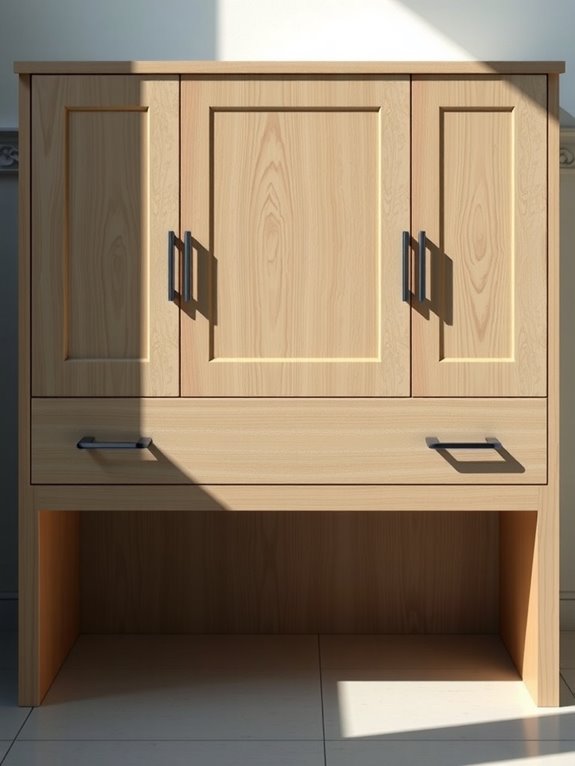
Looking for bathroom cabinets that actually fit your space? Cartesian Vanities give you real flexibility. You can pick a depth of either 18 or 21 inches, then choose your width from 12, 24, 30, or 36 inches. That’s a lot of combinations, which means you can match almost any bathroom layout you’re working with.
| Depth | Width Options |
|---|---|
| 18 inches | 12, 24, 30, 36 |
| 21 inches | 12, 24, 30, 36 |
Once you’ve settled on the size, you’ll need to pick your height (7.5 or 15 inches) and your drawer type. You’ve got four options: Plumbing, Full, False Front, or Tip Out. The choice depends on what you actually need to store and how you want to access it.
The design options go beyond just dimensions. Cartesian offers 11 different glass styles, so you can match the look you want. If you like having light in your bathroom during evening routines, you can add optional night lighting. A visualizer tool lets you see how your choices look together before you commit to ordering, which saves you from any second-guessing later.
Islamorada and Bodo: Other Vanity Depth Customization Options
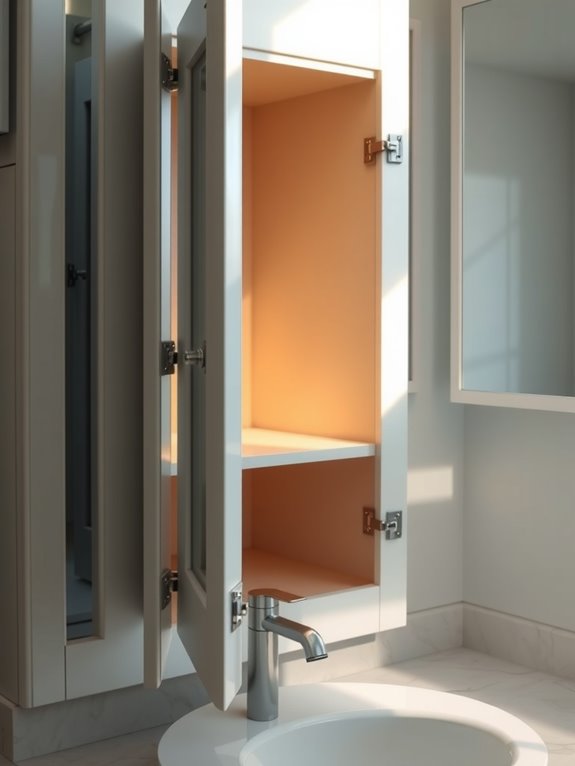
If your bathroom is on the larger side or you just want more storage space than what comes standard, Islamorada and Bodo are two solid options worth considering. They each bring something different to the table.
Islamorada works well if you want:
- A 21½-inch depth that doesn’t eat up too much floor space while still holding what you need
- Width choices in 24, 30, 36, or 48 inches to fit different bathroom layouts
- Soft-close hinges that prevent cabinet doors from slamming shut
- Adjustable feet to keep everything level on floors that aren’t perfectly flat
Bodo is the pick if you prefer:
- A deeper 23-inch profile that gives you a bit more room for bathroom supplies
- Two wood finishes: Light burnt oak or Light gray oak
- A moisture-resistant coating since bathrooms deal with humidity and splashes
- Width options limited to 36 or 60 inches
Both lines have adjustable feet built in, which matters more than you’d think when you’re dealing with older homes or uneven bathrooms. The extra inch of depth in Bodo might not sound like much, but it actually makes a real difference for storing bottles and containers.
Five Depth Selection Mistakes That Compromise Your Vanity
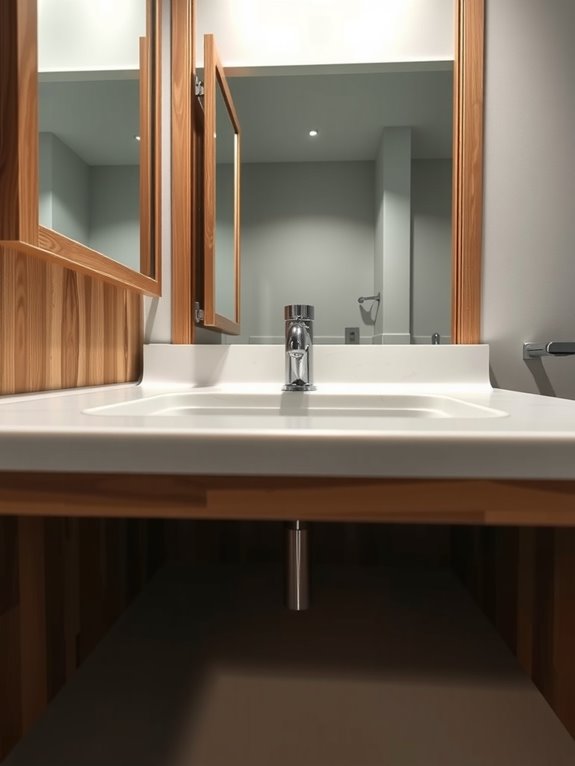
Picking the wrong vanity depth happens more often than you’d think, and it usually comes down to skipping the measuring step or not thinking through how the cabinet will actually sit in your bathroom. A 24-inch depth might seem reasonable until you realize it blocks the walkway and makes the room feel cramped. Floating cabinets sound like a space-saver at first, but you might lose storage you actually need. Then there’s the countertop overhang—most people forget to measure this part, which throws off the whole calculation. Deeper vanity drawers can also make it harder to access the plumbing underneath, which becomes a real headache if something needs fixing down the road. And if you don’t think about door swing space, you could end up with a bathroom that feels too tight to move around in comfortably.
Taking time to measure your actual space and think through these details prevents expensive do-overs and keeps your vanity working well for years. A standard 18-inch depth works for smaller bathrooms and gives you decent drawer space without eating into foot traffic. If you have a larger bathroom and want more storage, a 21-inch or 24-inch depth can work, but measure your clearance first. Pay attention to how far the countertop extends past the cabinet, check your door swing radius, and make sure plumbing access stays reasonable. These simple steps mean your vanity actually functions the way you need it to.
Why Bathroom Vanity Depth Differs From Kitchen Cabinet Depth (And When It Matters)
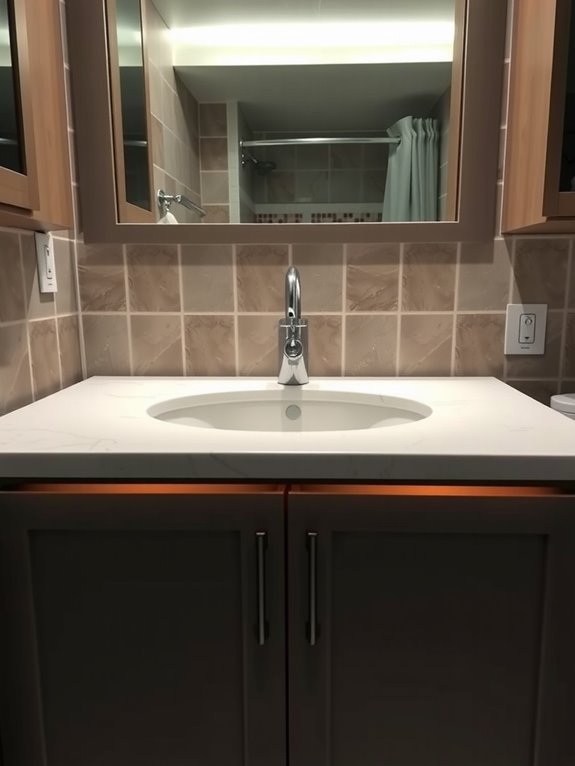
Why’d your kitchen cabinet idea end up looking awkward in your bathroom? Kitchen cabinets sit at 24 inches deep—noticeably deeper than standard bathroom vanity depth of 21 inches. That extra 3 inches might not sound like much, but it creates real problems in a smaller space.
The cabinet depth difference matters because bathrooms have different needs than kitchens. Bathroom vanities prioritize plumbing accessibility with built-in cutouts and space for pipes to run behind them. Kitchen cabinets are designed for work surface and storage, not plumbing. When you squeeze a deeper cabinet into a bathroom, the pipes and drains don’t fit where they need to go. You’ll either have plumbing work that costs hundreds of dollars or a vanity that doesn’t function properly.
Deeper cabinets also eat up bathroom floor space. Your bathroom counter becomes cramped because less room exists to move around and use the sink. In a small bathroom, that tight feeling gets old fast. You might bump into the cabinet door when you’re trying to get ready in the morning.
When you’re shopping for a bathroom vanity, stick with the 21-inch depth standard. Brands like Kohler, Vanity Art, and Home Decorators Collection all make quality vanities in this size at price points ranging from $300 to $1,200 depending on materials and features. Matching your vanity to bathroom standards means you avoid expensive renovations and end up with a space that actually works for daily use.
Vanity Depth Decision: Your Quick Reference Checklist
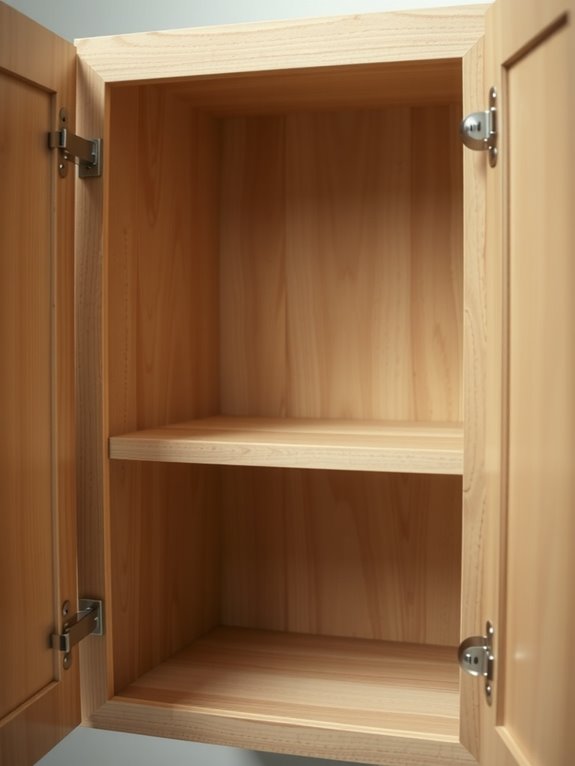
Now that you understand why bathroom vanities come in different depths, it’s time to pick one that actually works for your space. The key is matching your vanity depth to your bathroom layout and making sure doors can swing open without hitting anything. Here’s what to consider:
| Your Space | Best Depth | Why It Works | Key Consideration |
|---|---|---|---|
| Tight bathrooms | 12–16 inches | Keeps floor space open | Check plumbing access behind walls |
| Medium layouts | 18–20 inches | Works in most situations | Measure door swing clearance |
| Standard setups | 21 inches | Most common option | Compatible with typical fixtures |
| Spacious baths | 24+ inches | Lots of counter room | Requires careful layout planning |
Your choice really depends on what you’re working with. A tight bathroom might feel cramped with a deep vanity, while a spacious one can handle the extra depth without problems. The difference between a 16-inch and 21-inch vanity might only be a foot of floor space, but that foot can matter when you’re trying to move around. Measure your space twice before you buy—it’s way easier than dealing with a vanity that doesn’t fit through your doorway or leaves your bathroom feeling cramped.