

Most bedroom doors are either 30 or 32 inches wide, which works well for typical homes and hallways. If you need extra space for wheelchairs, walkers, or moving large furniture, a 36-inch door is the better choice.
Your decision comes down to three things: how much space you actually have, what your local building codes require, and what you need to fit through the opening. A 30-inch door fits snugly in most older homes. A 32-inch door is the standard for newer construction. A 36-inch door costs a bit more but gives you genuine flexibility if circumstances change later.
To measure your doorway, grab a tape measure and check the width from the inside edge of one side to the inside edge of the other side. Take measurements at the top, middle, and bottom of the frame since older doors sometimes aren’t perfectly square. If you’re replacing a door, measure the actual opening rather than just looking at what’s there. When you’re shopping for a new door, bring those measurements with you or take a photo of them on your phone.
What Size Bedroom Door Do You Actually Need?
When you’re planning a bedroom door, think about what’ll actually work in your space. Most bedrooms use 30-inch or 32-inch interior door widths, which fit standard bedroom sizes pretty well. If you need better accessibility or want to move furniture easily, 36 inches gives you that extra clearance you might appreciate.
Your door width directly affects the rough opening size, and this matters when you’re figuring out installation. You’ll want to add 2 inches to your door width for the rough opening, then add 2.5 inches to the height. It sounds like extra math, but it prevents headaches during installation.
Think about your lifestyle too. If you have a wheelchair user in your home or want universal access, the 36-inch door makes sense and aligns with ADA accessibility standards. In tighter spaces, 30-inch doors work fine if you’re not constantly moving furniture in and out. A friend of mine has a narrow hallway and swore a 30-inch door was cramped until she realized she rarely actually moves anything large through there. It’s worth being honest about what you actually do in your bedroom versus what you think you might do.
Five Factors That Determine the Right Width
Why does one bedroom door width work great for someone else’s home but feel all wrong for yours. The answer depends on five key factors that shape your ideal door width.
Your lifestyle and daily needs matter most. Moving a queen bed or dresser through a 30-inch opening sounds doable until you’re actually trying to squeeze it through. You’ll want 32 inches or wider for smooth transitions without the frustration. High-traffic hallways benefit from wider interior doors too, since narrow openings can create bottlenecks when multiple people need to pass through.
If mobility matters now or later—whether you use a wheelchair, walker, or just want flexibility as you age—32 inches becomes your standard bedroom width. The ADA (Americans with Disabilities Act) sets this as the minimum for accessible doorways, and it’s worth planning for even if you don’t need it today.
Your local building codes and regional standards also influence what’s actually possible in your area. Some places require specific minimums, so checking with your local building department takes five minutes and saves headaches later. Your home’s layout and personal preference complete the picture. Think about what actually works for your life and your space, not just what’s typical for most houses.
Standard Sizes: 30, 32, and 36 Inches Explained
When you walk into the hardware store looking for a bedroom door, you’ll see three widths that show up again and again: 30-inch, 32-inch, and 36-inch. Knowing what each one does helps you pick the right fit for your space.
The 30-inch door works best in smaller bedrooms or tight hallways where you don’t have much room to spare. It’s a practical choice if your space feels cramped, though you’ll want to measure twice before buying. The 32-inch door is what you’ll find in most newer homes built in the last couple decades. It checks the ADA-compliance box (meaning it’s accessible for wheelchairs and walkers) while still fitting comfortably in standard bedroom openings without feeling oversized. If you need extra clearance for moving furniture or have accessibility requirements, the 36-inch door gives you that breathing room.
Your choice basically comes down to two questions: how tight is your space, and do you need extra room for movement or access. Measure your opening before you head to the store, and you’ll know exactly which size will work.
How to Measure Your Bedroom Door Opening
Once you’ve figured out what size makes sense for your space, grab a tape measure and check what you’re actually working with. Getting your bedroom door opening measurements right means you’ll pick a door that actually fits.
Start by measuring at three different spots: the top, middle, and bottom of the doorway opening. Write down all three numbers, then use the smallest one—that’s your real opening width. This matters because doorways aren’t always perfectly square, and you want the measurement that reflects the tightest spot.
Standard doors come in at 80 inches tall, though if you’re in an older house, you might find 78-inch doors instead. The thickness varies too. Most doors measure 1 3/8 inches thick, while solid-core doors run 1 3/4 inches. Knowing this helps when you’re shopping, especially if your doorframe has limited space.
Rough opening measurements (the framed hole before the door goes in) typically run about 32 by 82.5 inches for standard sizes. If you’re replacing an existing door, these numbers help you figure out whether you need just a new door slab or if you’ll need to adjust the frame itself. Getting these details right before you buy saves you the headache of returns or having to make modifications later.
What Your Local Building Code Requires
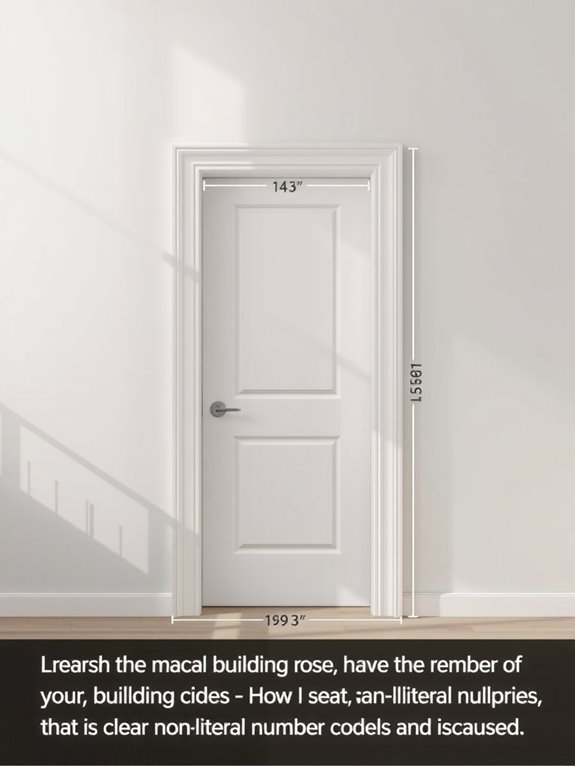
You’ll want to check with your local building officials because the IRC doesn’t actually set a nationwide minimum for interior door widths—it’s up to your state and city to decide. Some areas are fine with 32-inch doors in bedrooms, while others might require wider openings for accessibility. A few places have their own rules that catch people off guard.
Before you measure twice and buy once, a quick phone call to your local building department saves you from installing a door that doesn’t meet code. It takes maybe ten minutes and beats the headache of having to swap out a door after installation.
IRC Standards And Minimums
What does your local building code actually require for bedroom door width? The IRC doesn’t set a nationwide minimum interior door width standard. Your local amendments determine what works in your area instead.
State variations exist because different regions have different needs. Michigan requires 24-inch minimums for certain applications, while other states differ. Interior door size requirements vary dramatically by region, unlike exterior doors which have more consistent guidelines across the country.
You’ll need exact rough opening (RO) guidance from your local building official before you start framing or ordering doors. Regional requirements can surprise you, so don’t assume national rules apply to your bedroom renovation. Your building codes reflect local needs, climate considerations, and construction practices specific to where you live.
Contact your local code official before you start any work. They can tell you exactly what your area requires and help you avoid ordering the wrong size doors or framing mistakes.
State-Specific Code Variations
Every state has its own rules about interior door widths, which makes things interesting when you’re planning a remodel. Michigan requires a 24-inch minimum for certain spaces, while other states have wider standards. If you want your bedroom doorway to meet ADA requirements for accessibility, that’s something to plan for now rather than later. The 36-inch door has become popular in many regions because it works well in most situations and gives you flexibility.
Since the IRC doesn’t set one standard for the whole country, your local building department has the final say on what works for your home. Before you start any remodeling project, call them directly. They’ll tell you exactly what door widths your area requires and which state codes apply to your specific situation. It’s a quick conversation that saves you from having to redo work later.
Pre-Hung vs. Slab Doors: Installation Impact on Your Choice
When it comes time to pick a new bedroom door, here’s the thing—the choice between a pre-hung door and a slab door can make your whole installation experience either smooth or surprisingly complicated.
Pre-hung doors arrive ready to go, while slab doors demand more effort. Here’s what separates them:
Pre-hung doors include hinges and jambs pre-installed, fitting standard doorway openings perfectly and cutting your installation time substantially. You’re looking at prices typically between $150 and $400 depending on the style and material. The trade-off is they cost more upfront but save headaches later.
Slab doors are just the door itself—no frame, no hinges attached. They cost less initially, usually $50 to $200, and they let you fit them into your existing rough opening without framing changes. This flexibility matters if you’re comfortable with extra work.
Your situation determines which one makes sense. Replacing only the door in an existing frame? Grab a slab and save money. Upgrading to wider openings or doing a complete doorway renovation? Pre-hung doors simplify aligning everything correctly since the jambs and hinges are already positioned right.
Budget and skill level should guide this decision. If you’ve hung doors before or enjoy home projects, a slab door is manageable and keeps costs down. If you’d rather spend a weekend watching TV instead of wrestling with jamb installation, the upfront cost of a pre-hung door pays for itself in peace of mind.
Non-Standard Openings: Solutions When 36 Inches Isn’t Enough
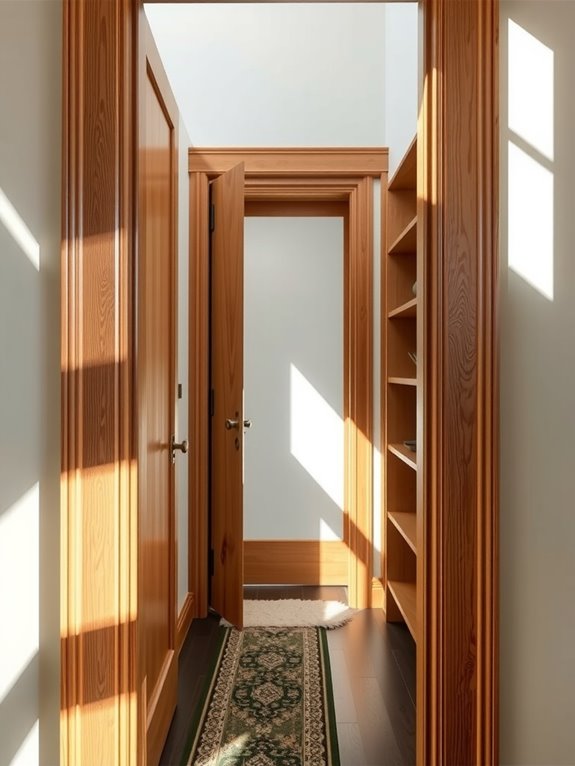
When your bedroom opening is too narrow for standard doors, you have practical options that won’t require major construction. A custom 34-inch door works if you have just a bit less space than the typical 36 inches. Pocket doors slide into the wall cavity, which means they don’t swing out into your room and take up floor space—handy if your bedroom is already tight. Sliding barn door systems offer a trendy alternative that works without extra framing.
Before picking a solution, measure your rough opening size, which is your door width plus about 2 inches for the frame. You’ll also want to check your local building codes, since some areas have minimum width requirements for bedroom doors. A quick call to your building department or a look at their website takes five minutes and prevents choosing a door you can’t legally install.
Custom doors typically run $200 to $400, depending on materials and finishes. Pocket door kits range from $150 to $350 and include the hardware and guide rails you need. Barn door systems start around $100 for basic hardware and go up to $300 or more if you want higher-end materials or finishes. Measuring twice and checking codes once will save you from ordering something that doesn’t work for your space.
Oversized Opening Solutions
What do you do when your bedroom’s opening is wider than the standard 36 inches, or when you’re dealing with an irregular space that just won’t cooperate. You’ve got real options that work well for awkward rough openings.
Pocket doors or sliding barn doors let you create wider interior doors without using up wall space. These work best when you need maximum clearance since they slide into the wall instead of swinging out. A typical sliding barn door kit runs between $150 to $400 depending on the material and finish you pick.
French doors paired together give you a generous 60- to 72-inch opening that looks both elegant and spacious. Double French doors let light flow through while keeping the area feeling open. Most quality pairs cost between $300 and $800 for standard sizes.
Custom doors solve those tricky irregular spaces by fitting openings within 1/8 inch of your exact measurements. While custom options cost more—usually $500 to $1,500 per door—they eliminate guessing games with non-standard dimensions.
Whichever route you choose, you’ll need to adjust your rough opening accordingly to give your wider interior doors proper support and clearance.
Custom Framing Alternatives
How do you handle a bedroom opening that refuses to fit standard dimensions? Custom framing solutions tackle non-standard openings by adjusting rough openings and jambs to accommodate wider door widths. You can expand openings from 34″ to 42″ wide, or install double door assemblies that maximize accessibility without cramping your space.
| Solution | Best For | Key Benefit |
|---|---|---|
| Custom framing adjustment | Wider interior doors | Accommodates 34″-42″ widths |
| Header modification | Structural support | Enables larger openings safely |
| Pre-hung door installation | Quick setup | Fits custom rough openings |
When standard doors won’t work, professionals design frames that keep your wall finishes looking good while giving you more clear width to work with. You’ll need special hardware and hinges matched to your specific door width. In older homes, adjusting the framing under the studs helps guide your final installation so everything fits snugly and operates smoothly.
The tricky part is getting the measurements right. A standard door opening is usually 32″ wide, but if you need something wider—say, for accessibility or to connect two rooms—you’re looking at custom work. Pre-hung doors come already assembled in their frames, which saves time since they’re built to match your rough opening measurements. If you’re working with limited space or an oddly-shaped doorway, custom framing adjusts both the jambs and the rough opening itself so your door hangs properly without gaps or binding.
Header modifications become necessary when you’re expanding an opening significantly. The header (that horizontal beam above your door) needs to handle the weight of whatever’s above it, which is why structural support matters here. Professional framers calculate the right header size based on your opening width and what’s directly overhead. This isn’t a guessing game—it’s about safety and making sure nothing sags down the road.