
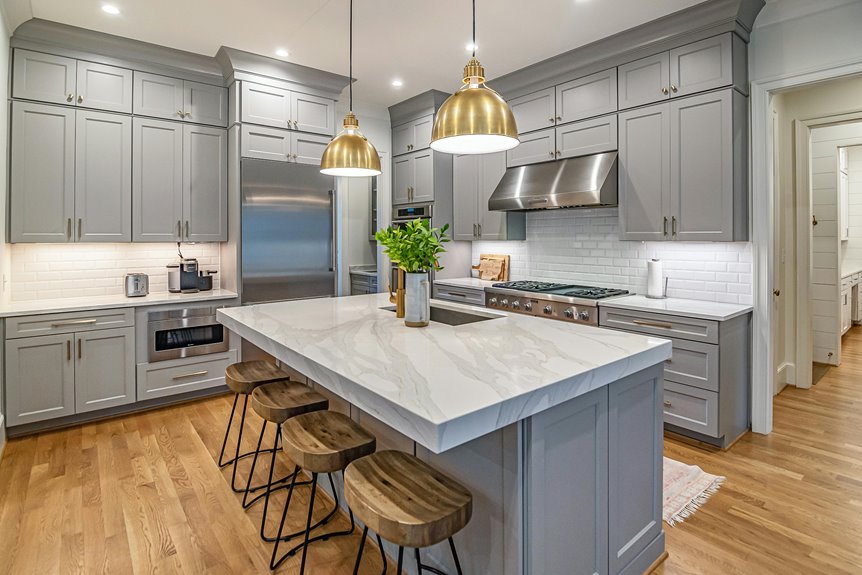
Your kitchen island should typically be 36 inches tall—that’s standard counter height and works well for cooking and prep work. If you want a bar-style island for dining and entertaining, go with 42 inches instead.
The stool heights need to match your island. With a 36-inch counter, look for 24–26 inch stools. For a 42-inch bar-height island, you’ll want 28–30 inch stools. Getting this right means people can actually sit comfortably without their knees hitting the underside or feeling like they’re perched on a ladder.
The real decision comes down to how you’ll use the space. A standard-height island works better if you spend a lot of time cooking and need comfortable workspace. A bar-height island makes more sense if you host people and want a casual spot for them to gather while you work. Some kitchens even have both sections at different heights, though that takes more planning and budget. Think about your daily routine and what would actually happen at your island most often.
What Are Standard Island Heights (36 vs. 42 Inches)?
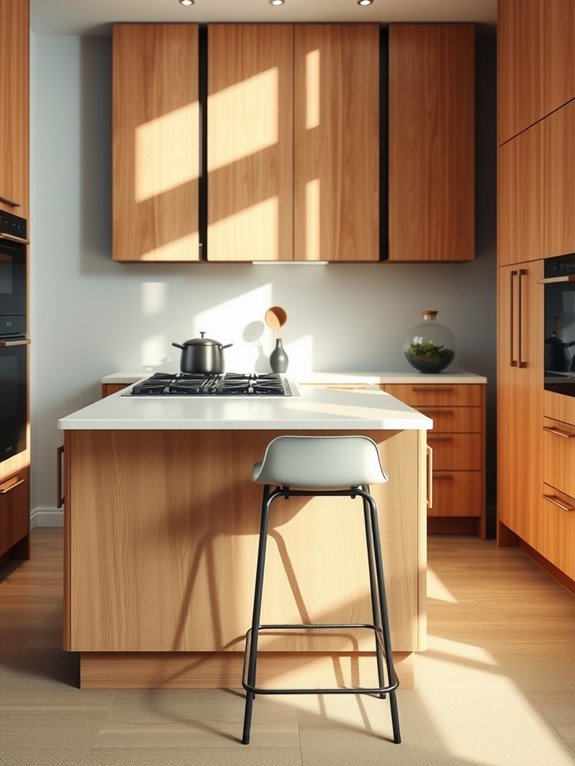
How do you know which height works best for your kitchen island? You’ve got two main options to consider.
The standard island height of 36 inches matches your existing kitchen counters, making it the go-to choice for prep work and cooking tasks. This measurement comes from the NKBA standard, which means it lines up with everything else in your kitchen for a smooth workflow. You’ll want counter-height stools that sit around 24–26 inches tall, so there’s a comfortable space between the seat and the counter surface.
Then there’s the bar-height island at 42 inches. This taller setup creates a separate casual seating zone that feels more like a bar or dining spot. Bar-height stools measure about 28–30 inches, and the extra height gives your kitchen a more polished look.
If you can’t decide between the two, consider a two-level island. This design gives you a 36-inch prep surface for cooking on one side and a 42-inch seating area on the other. You get both cooking and dining zones without taking up much extra floor space, and it actually works better than you’d expect since people cooking won’t bump into people sitting and eating.
How Does Island Height Affect Comfort and Workflow?
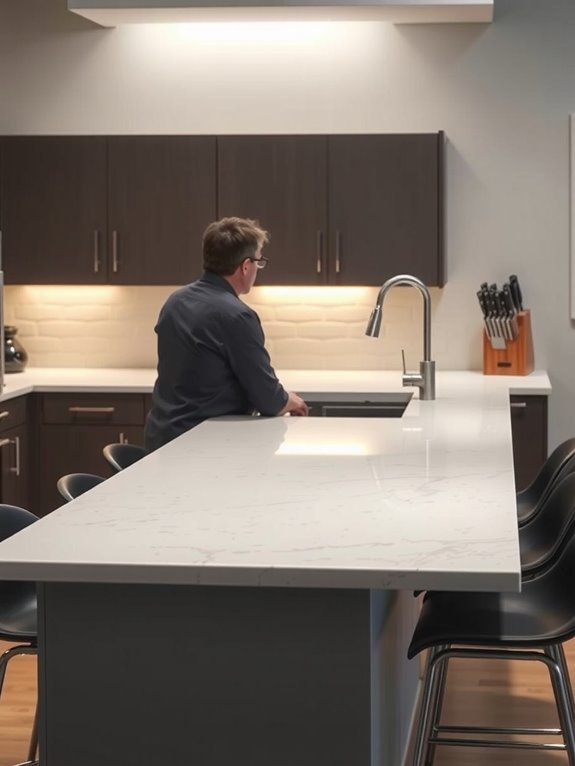
Your island’s height matters more than you might think. It affects how your back feels after cooking and whether you can move around easily. Get the height wrong, and you’ll notice discomfort pretty quickly.
A standard 36-inch counter is the go-to for food prep. Your elbows bend at about 90 degrees, which feels natural and keeps your workflow smooth. If you spend time chopping vegetables or cooking most days, this height works well for you.
A 42-inch bar height is taller and better suited for casual seating with bar stools. The trade-off is that it’s harder to work at if you’re doing serious prep work. Your shoulders and back have to work differently, and you’ll feel it.
The choice really comes down to how you use your island. If cooking and prep are daily activities, stick with 36 inches. If you mainly use it for entertaining and want that bar-stool setup, the 42-inch option might be worth the adjustment. Think about what you actually do in your kitchen most often, then build around that.
Ergonomic Posture and Alignment
Ever notice how you naturally slouch when a counter’s too low, or strain your neck when it’s too high. Your island’s height directly shapes how your body feels during cooking and entertaining. When you choose the right measurement, you’re investing in comfort that lasts through years of meal prep.
Standard counter height at 36 inches aligns naturally with prep work, keeping your shoulders relaxed and your posture neutral. This is what most kitchens use, and there’s a reason for that. Your arms hang at a comfortable angle, and you’re not constantly reaching up or bending down.
Bar height at 42 inches works well if people are sitting and eating there, but it actually makes food preparation harder. If you’re standing at a bar-height counter trying to chop vegetables or knead dough, you’ll feel the strain in your back and shoulders pretty quickly.
Clearance and legroom matter too. You’ll want at least 15 inches of space under an overhang so you can pull up a stool or get close to the counter without hunching. This small detail prevents the awkward positioning that builds up quietly over time and leaves you sore by evening.
Two-tier islands solve a lot of these problems by separating cooking zones from dining areas. The lower section (36 inches) works for food prep, while the higher section (42 inches) gives guests a place to sit and watch. This way, you work comfortably without anyone feeling squeezed or blocked from the action, and wheelchair users can still navigate the space without trouble.
Workflow Efficiency During Cooking
When you’re cooking dinner for a bunch of people, island height matters more than you might think. A standard 36-inch island matches your regular counters, so you won’t find yourself constantly stretching or stooping. That means you can move between your prep area and stove without making those awkward adjustments that wear you out.
Two-level islands are worth thinking about if you have the space. You get a 36-inch work surface for chopping vegetables and mixing ingredients, plus a 42-inch bar-height section where people can sit and eat. This splits your cooking zone from where your guests hang out, so everyone has room to exist without getting in each other’s way.
The space around your island matters just as much as the heights. Keep at least 15 inches of room for your legs and 36 inches of clearance around the whole thing. You’ll move between your appliances and storage without feeling boxed in, which means faster cooking and less stress in the kitchen.
How to Choose the Right Height for Your Family
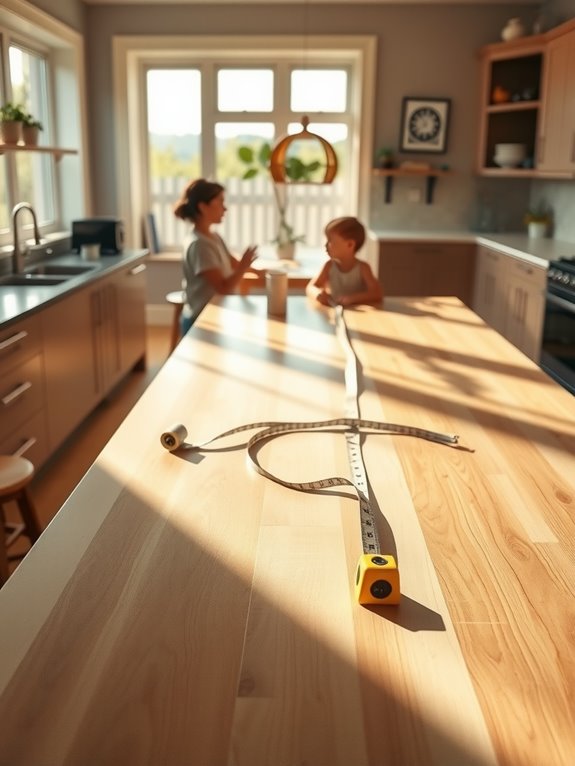
What works for your neighbor’s kitchen might not work for yours, and that’s totally okay. Your kitchen island should fit your family’s actual needs, not just standard sizes.
Measure your household – Start by thinking about who uses your kitchen most. Account for the tallest and shortest family members, since they’ll be the ones actually using the island day after day. If you have someone who’s 5’2″ and another who’s 6’3″, you’re working with a pretty wide range.
Consider accessibility and comfort – Wheelchair access or mobility needs might require a 30-inch height instead of standard sizes. Prep work also demands a standard 36-inch counter height so you’re not hunching over while chopping vegetables or kneading dough.
Plan for how you entertain – If you like having people around while you cook, a 42-inch bar-height island gives guests legroom to pull up a stool and chat without getting in your way. This height works well if sitting and eating at your island matters to your family’s routine.
A two-level island handles both jobs nicely: keep the 36-inch side for your cooking and prep work, and use the 42-inch side for seating and gathering. Adjustable build-ups let you customize height slightly if you need to fine-tune things after installation, so you don’t have to get it exactly right the first time.
Finding the Right Stool Height for Your Island
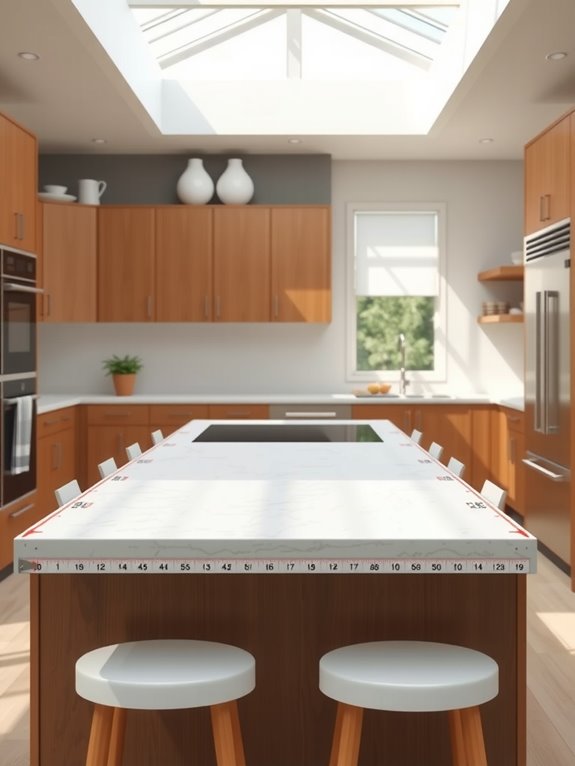
Once you’ve decided on your island height, the next step is picking stools that actually fit the space underneath. This is where people often go wrong by just eyeballing it and hoping for the best.
The target clearance is about 10–12 inches of space between the top of the stool seat and the bottom of your countertop. This gives you enough room to slide in comfortably without your knees bumping the counter or feeling squeezed. It sounds like a small detail, but it really matters when you’re sitting there eating breakfast or doing homework.
Before you buy anything, measure this clearance at your actual island. Pull out a tape measure and check a few spots along the counter. Then when you’re shopping—whether it’s at a furniture store, online retailer, or somewhere like IKEA or Wayfair—you’ll know exactly what height range works. You can compare the seat height listed on the product description to your measurement. Doing this upfront prevents the frustrating situation of bringing stools home only to find they’re too tall or too short.
Measuring Counter-To-Seat Clearance
You can’t just grab any stool and hope it works out. Getting the counter-to-seat clearance right matters because the wrong spacing can leave you uncomfortable or constantly bumping your legs into the counter.
Start by measuring three things: your finished counter height (typically 36 inches for standard islands), the stool seat height you’re considering, and the gap between the countertop and seat cushion. You’ll also want to check how much legroom sits underneath the island itself.
Aim for 10–12 inches of clearance between your countertop and stool seat. This space lets you sit without feeling cramped or squeezed. At the same time, make sure you have at least 15 inches of legroom under the island so your legs have room to move around. When you get these measurements right, your kitchen becomes a place where people actually want to hang out instead of just passing through.
Matching Stools To Island
How do you know which stool will actually fit your island? It comes down to two main things: your island’s height and the stool seat height you pick.
| Island Type | Island Height | Recommended Stool Height |
|---|---|---|
| Standard Counter | 36 inches | 24–26 inches |
| Bar-Height | 42 inches | 28–30 inches |
| Custom Height | Varies | Varies |
For a standard 36-inch island, look for counter-height stools between 24 and 26 inches tall. This spacing creates that comfortable 10–12 inch gap between where you sit and the countertop, which matters more than you’d think when you’re eating breakfast. If your island is bar-height at 42 inches, you’ll want stools around 28–30 inches instead.
Beyond the numbers, pay attention to the space underneath and around your island. You need at least 15 inches of legroom so your legs don’t feel cramped when you’re sitting down. Also think about how many people will sit there at once and whether they’ll have enough elbow room to feel comfortable. Getting these practical details right makes your kitchen actually pleasant to use rather than just looking nice.
Non-Standard Island Heights: When to Go Off-Spec
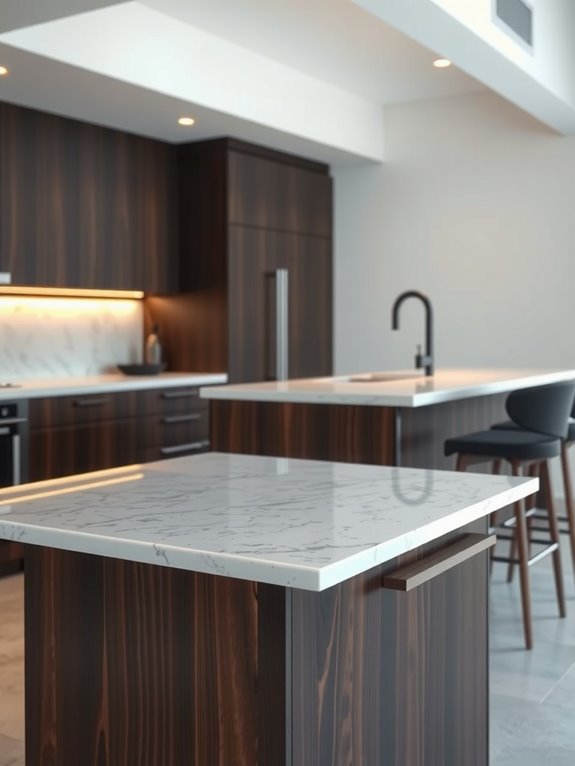
What if your kitchen’s perfect island height doesn’t match those standard 36 or 42 inches everyone talks about? You’re not alone. Your unique needs might call for non-standard heights that work better for your space and lifestyle.
Several situations call for going off-spec. Two-tier islands combine a 36-inch prep surface with 42-inch bar seating for mixed functionality. If you need wheelchair access, build-ups can lower your island to 30 inches. Sometimes your island height needs to align with surrounding countertops for a smoother workflow. And specialty tasks might require customized seating height or prep surface elevation.
When you adjust island height, keep at least 15 inches of legroom underneath for stools and legs. You’ll also want 42 to 48 inches of clearance around your island so people can actually walk around it without bumping into each other. Getting these measurements right means your island works for how you actually cook and move through your kitchen, not just how it looks.
Beyond Height: Space, Ceiling, and Other Design Factors
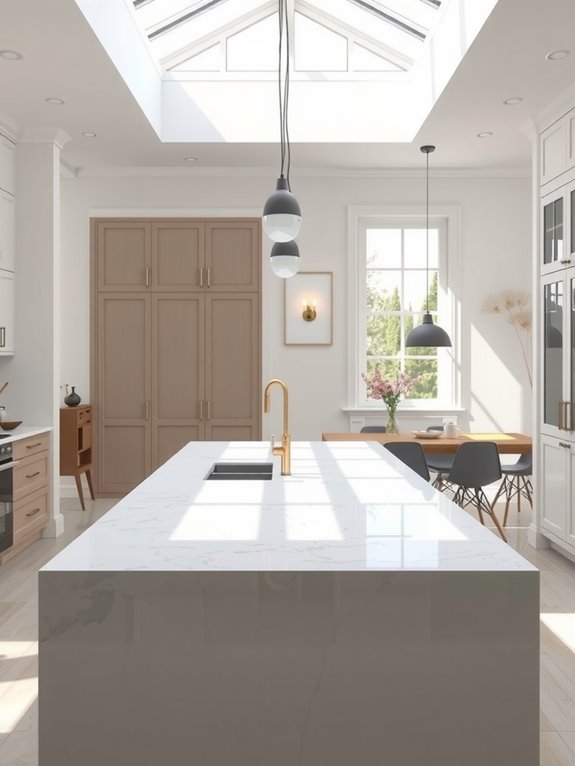
While island height matters plenty, it’s only part of the equation. Your kitchen’s overall layout and ceiling height play equally important roles in making your island actually work. Before you commit to any counter height or bar-height island option, you’ll want to measure your space carefully.
| Design Factor | Why It Matters | What to Check |
|---|---|---|
| Ceiling Height | Affects how the island looks and lets air move through your kitchen | Keep at least 36 inches of space between the top of your island and the ceiling |
| Kitchen Layout | Changes how people move around and whether the workspace feels comfortable | Leave 42 inches or more of walkway space on every side of the island |
| Surrounding Countertops | Helps everything look connected or creates an intentional contrast | Keep the same height as existing counters or pick a different height on purpose |
The space around your island matters more than you might think. Your legroom clearance, how your island aligns with other countertops, and whether you want a two-tier design all depend on having enough room to work with. Think about where sunlight comes through your windows and whether your layout lets people move comfortably from the stove to the fridge to the sink without bumping elbows.