
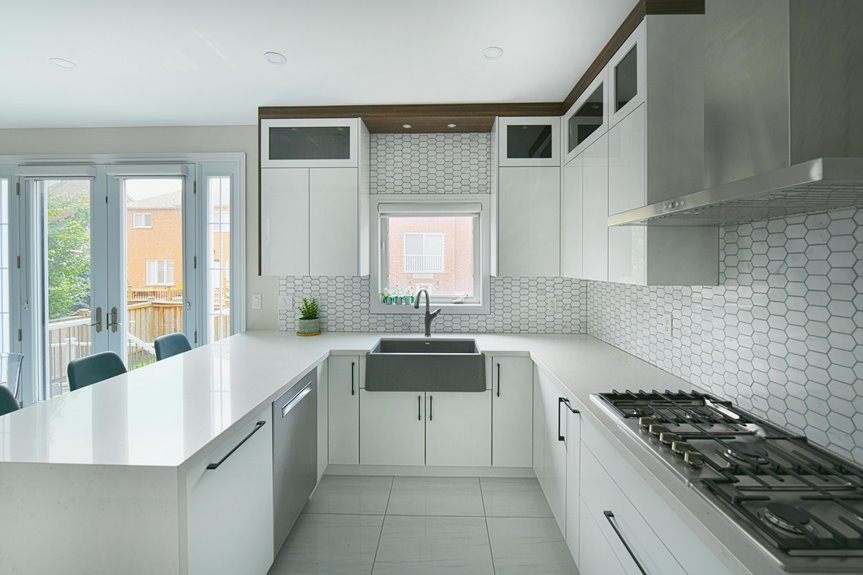
A kitchen soffit is that rectangular box hanging from your ceiling above the cabinets. It exists because your upper cabinets don’t reach all the way to the ceiling, and builders use it to hide ductwork, plumbing, and wiring that would otherwise be visible.
The problem is that soffits often make kitchens feel smaller and more dated than they need to. If you’re looking at yours and thinking it’s time for a change, you have several options to consider.
You could remove it completely if there’s nothing important hiding inside. This opens up your ceiling and makes the space feel taller. Before you start, though, you’ll need to check what’s actually in there. Sometimes it’s just empty space, but other times you’re dealing with exhaust ducts from your range hood or electrical wiring that would need to be rerouted.
Painting the soffit to match your ceiling or walls is a simpler route. A few coats of paint in the same color as your ceiling makes it visually disappear. This costs under $50 in materials and takes a weekend.
If you have the budget, extending your cabinets all the way to the ceiling removes the soffit entirely while giving you extra storage. Stock cabinets for this run between $500 and $2,000 depending on size and quality. It’s a bigger project but eliminates the problem for good.
Another option is leaning into the soffit as a design feature. You could add recessed lighting underneath it, install shiplap across the face, or paint it a contrasting color that feels intentional rather than accidental. These approaches cost between $200 and $800 and keep the soffit while making it look like you meant it to be there.
Your best choice really depends on your budget and what you discover when you peek inside that box.
What’s a Kitchen Soffit (and Why You Have One)
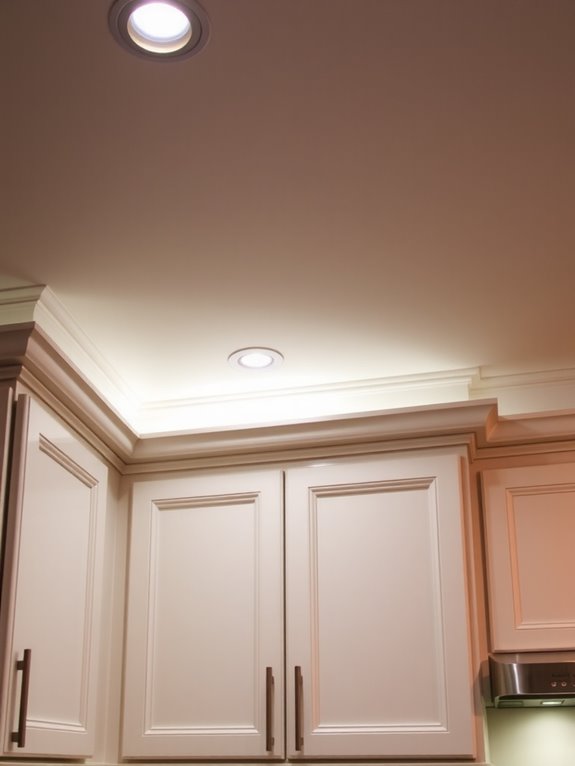
If you’ve ever looked up in your kitchen and noticed a boxy, rectangular structure hanging down from the ceiling above your cabinets, that’s a soffit. Most kitchens have them because standard upper cabinets don’t reach all the way to the ceiling, and builders fill that gap with a bulky box rather than leave empty space.
These structures usually hide ductwork, plumbing, or electrical wiring that can’t easily be rerouted. While soffits serve a practical purpose, they tend to make kitchens feel smaller and more dated. The good news is that removing or updating a soffit during a kitchen renovation opens up visual space and increases the perceived ceiling height, giving your kitchen a fresher look that feels more current.
Remove, Disguise, or Embrace: Which Path Is Right for You?
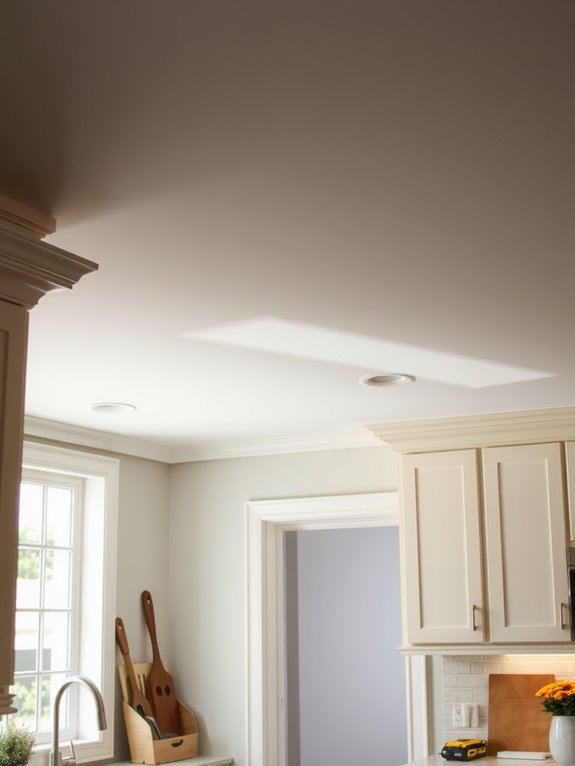
Now that you’ve spotted a soffit eating into your kitchen space, you’re looking at three paths forward: remove it completely, hide it with design choices, or make it part of your kitchen’s look.
Removing a soffit means calling in plumbers, electricians, and contractors to reroute systems and patch your ceiling. It’s pricey and messy. If your budget is tighter, design updates work well. Crown molding from a home center (usually $1-3 per foot) or fresh paint can make a soffit blend in without touching any structure. You could also extend your cabinets all the way up—this hides the soffit while giving you more storage space, which is nice when kitchen real estate feels cramped.
Then there’s actually leaning into your soffit. Add some decorative lighting underneath (recessed LED strips run about $20-50), slap on shiplap for texture, paint it a bold color that matches your kitchen’s vibe, or use it as a display shelf for plants or cookbooks. The best option depends on what you can spend, how soon you need it done, and whether you want that soffit gone or just looking like it belongs there.
Remove It Yourself: The Step-by-Step Process
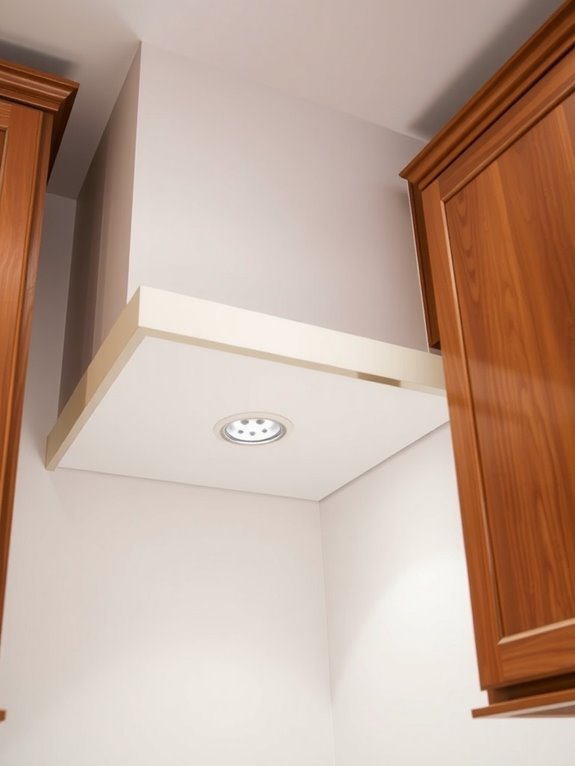
Deciding to remove your soffit instead of hiding it takes some courage, and you can do it yourself if you have basic DIY skills and the right tools. Before you start tearing anything down, check what’s behind that soffit. Peek inside for electrical wiring, plumbing, or ductwork. If nothing’s back there, you’re in good shape. If you find ductwork, that’s the time to call a professional—rerouting ducts isn’t a beginner job.
Once you’ve confirmed the space is clear, carefully demo the soffit using a pry bar (something like a Wonderbar, around $15-20) and a reciprocating saw if needed. After removal, you’ll need to patch and texture the drywall with joint compound and a putty knife. Match your existing paint color by bringing a paint chip to your local hardware store. If you have built-in cabinets nearby, you might need to reinstall or adjust them after the work.
Timing matters here. Coordinate with your contractor so appliance and countertop installation doesn’t get in the way of your ceiling work. The whole process takes patience—you’re looking at several days depending on how much patching and finishing you need. The payoff is real though: you get a noticeably more open kitchen without the visual bulk of that soffit taking up valuable space above your head.
Budget-Friendly Alternatives Without Removal
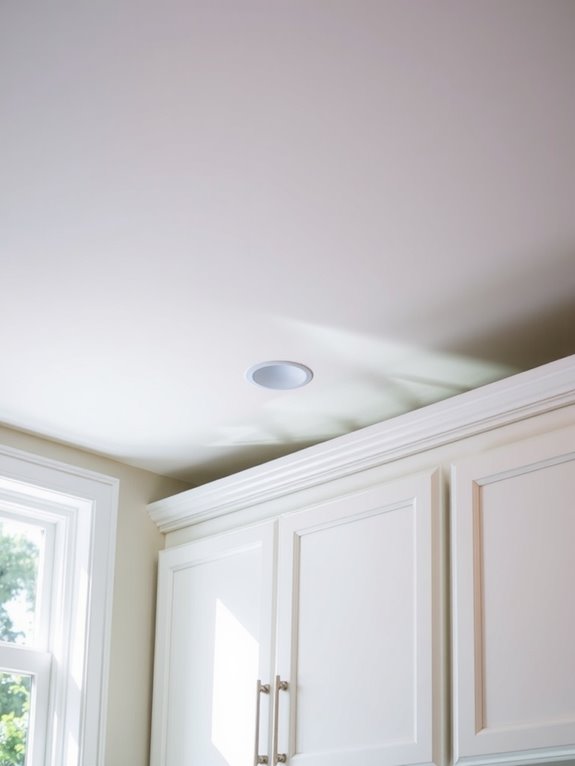
What if you don’t want to tackle a full soffit removal. You’ve got solid options that won’t drain your wallet.
Consider extending cabinetry to the ceiling. This creates a seamless look while disguising that awkward soffit. Crown molding or decorative trim freshens things up without requiring structural changes. A fresh coat of paint matching your upper cabinetry or walls helps the soffit blend into your kitchen naturally. Open shelves above existing cabinets visually reduce bulk. You can also turn it into a design feature with tile, wallpaper, or contrasting paint colors.
Here’s how these options stack up:
| Option | Cost | Difficulty | Impact |
|---|---|---|---|
| Paint soffit | Low | Easy | Subtle |
| Crown molding | Low-Medium | Medium | Noticeable |
| Open shelves | Medium | Medium | Dramatic |
| Tile/Wallpaper | Medium | Medium | Striking |
Painting is the cheapest route. A gallon of quality kitchen paint runs $30-50, and you can tackle it yourself with basic prep work.
Crown molding costs around $3-10 per linear foot installed, depending on material. It adds polish without major effort.
Open shelving works well if you like displaying dishes or cookbooks. Budget $150-400 for materials and basic installation.
Tile or wallpaper brings personality. Peel-and-stick wallpaper costs $25-60 per roll and requires no tools. Tile runs higher but lasts longer.
These options work well for anyone seeking a polished kitchen without the expense and hassle of removal.
When to Hire a Soffit Professional Instead of DIYing
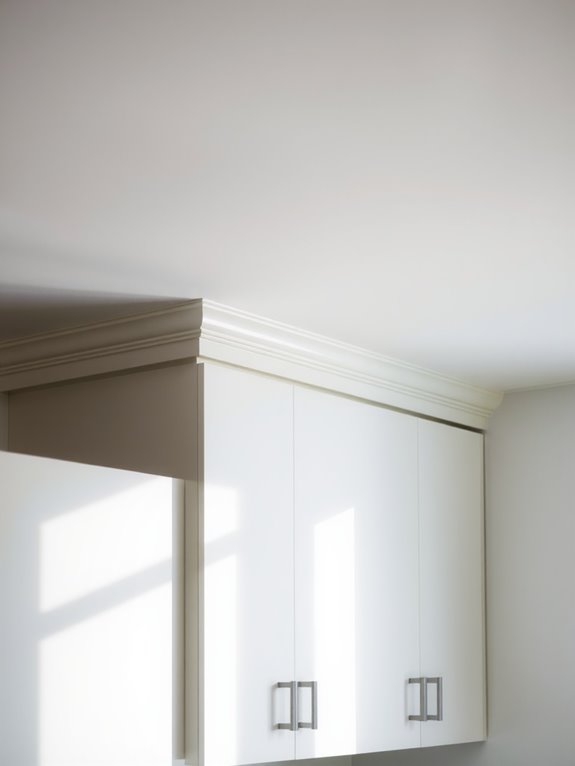
Sometimes you’ll find unexpected surprises hiding inside your soffit—ducts, plumbing, or wiring that could get damaged if you’re not careful. When that happens, calling a professional makes sense. A soffit contractor knows how to reroute these systems properly and keep everything up to code, which protects your home’s infrastructure from future problems.
Hidden ducts, plumbing, and wiring require professional rerouting to keep your home’s infrastructure safe and code-compliant.
You’ll want professional help in these situations:
- HVAC ducts or electrical wiring run through your soffit and need careful handling
- Structural framing makes removal too complicated for a typical DIY project
- Drywall finishing and texture work need to blend seamlessly with your existing walls
- Multiple trades need to work together so nothing breaks and water stays out
A licensed contractor can also suggest other options, like updating cabinets or adding decorative elements instead of removing the soffit entirely. They’ll give you realistic timelines and costs upfront, which saves you from surprises and expensive fixes later on.