
You’ll mix half a cup of distilled white vinegar with one cup of distilled water as your base. Then add a teaspoon of vegetable oil—this protects your wood from drying out. For cleaning power, choose between vinegar or mild Castile soap like Dr. Bronner’s (usually $8–12 per bottle). If you want your floors to smell fresher, toss in a few drops of essential oils such as lemon or lavender.
Shake everything in a glass bottle until it looks cloudy. This means the ingredients are combining properly. Before you use it on your whole floor, test it on a hidden spot first. You don’t want any surprises on your visible areas.
When you’re ready to clean, mop with the grain using a damp microfiber cloth—not soaking wet, just damp. Microfiber cloths work better than cotton ones because they actually pick up dirt instead of just pushing it around. Dry your floors immediately afterward with a clean, dry cloth. Moisture sitting on wood is how you get warping and damage.
Keep your floors looking decent by sweeping regularly, at least a couple times a week. The difference between floors that last and floors that don’t really does come down to how you clean them and how often you maintain them.
Why Make Your Own Wood Floor Cleaner?
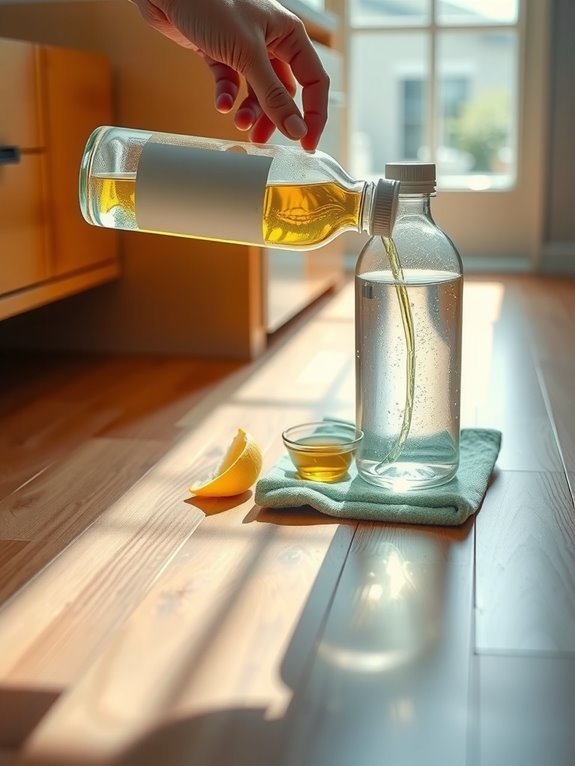
Why spend money on expensive commercial wood floor cleaners when you probably have everything you need at home? Many people have switched from store-bought products to homemade versions. When you make your own cleaner, you know exactly what’s touching your floors—no mysterious chemicals or harsh additives. Simple ingredients like distilled white vinegar and water work well and won’t leave the buildup that some commercial cleaners do.
Homemade cleaners also cost less. A bottle of distilled white vinegar runs about $2 to $3, and you likely have water already. Compare that to commercial cleaners that often cost $8 to $15 per bottle, and the savings add up quickly, especially if you clean regularly. The environmental benefit is nice too, since you’re using fewer chemicals going down the drain.
Before you start cleaning your whole floor, test your mixture on a hidden spot. Different wood types react differently to liquids, so this step protects your floors. Vinegar works for many floors, but some sealed or finished woods need gentler treatment. A small test takes two minutes and saves potential damage.
Gather Ingredients for Your DIY Wood Floor Cleaner
You’ll want to grab the basics: a half cup of distilled white vinegar (your main cleaning ingredient), a cup of water, and a glass spray bottle to mix everything together. The glass bottle keeps things cleaner than plastic because vinegar won’t eat away at it over time.
If you want to customize your cleaner, consider adding 10-15 drops of essential oil for a fresh scent—lemon and lavender work well—or about a teaspoon of vegetable oil to give your floors a subtle shine and light protection. Get your measuring cup and a clean workspace ready before starting. This keeps your cleaner pure and stops dust or leftover debris from sneaking in.
Essential Ingredients You Need
Before you start cleaning, check what’s already in your kitchen cabinets. You’ve probably got everything you need for an effective wood floor cleaner.
Grab half a cup of white vinegar—the same stuff you use for cooking. You’ll also need one cup of distilled water, which keeps your floors from getting streaky. Add one teaspoon of vegetable oil to stop your wood from drying out. That’s the basic formula right there.
A glass spray bottle works best for applying the mixture and lets you shake it before each use. If you want it to smell better than vinegar, add a few drops of essential oil like lemon or lavender. The whole thing costs just a couple of dollars to make, and it works about as well as cleaners that cost way more at the store. These ingredients work together to cut through dirt while keeping your wood’s natural finish protected.
Optional Additions For Enhancement
How’d you like your cleaner to smell like a lemon grove instead of a pickle jar.
Essential oils are the simplest way to customize your cleaner’s scent. Add 10-15 drops of your favorite oil, and you’ve got a formula that actually smells good. Lemon, lavender, pine, and lemongrass all work well without taking over your whole house.
| Oil Type | Best For | Drops to Add |
|---|---|---|
| Lemon | Brightness | 12-15 |
| Lavender | Calm vibes | 10-12 |
| Pine | Fresh scent | 10-14 |
You can also boost your cleaner with natural ingredients like olive oil. A small splash adds shine and helps wood keep its moisture. Just avoid silicone-based products—they build up on floors and leave a sticky coating over time. Your wood floors work better with natural additions that actually help rather than just coat the surface.
Choose Your Cleanser: Vinegar or Castile Soap
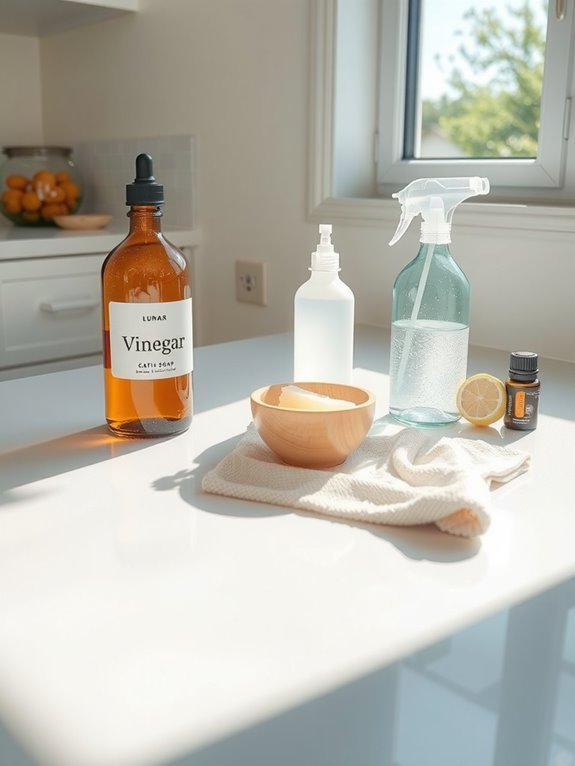
You’ve got two solid options for your wood floor cleaner: distilled white vinegar or Castile soap. Vinegar cuts through grease and grime really well, while Castile soap is gentler and plant-based but still cleans effectively.
Both work best when you dilute them in water. The nice thing about both options is that they’re pH-balanced, which means they won’t damage your wood’s finish the way harsher chemicals can. If you want serious cleaning power, pick vinegar. If you prefer something milder and less smelly, go with Castile soap.
Vinegar: The Powerful Cleanser
When you’re looking for a natural way to clean your wood floors, distilled white vinegar is often your best bet. This cleaner cuts through grease, grime, dirt, and sticky residue pretty well. You’ll mix about 1/2 cup of vinegar with 1 gallon of warm water for larger areas, or use 1/2 cup vinegar to 1 cup water for smaller batches. The vapor from the solution actually helps loosen stubborn buildup on your floors.
What makes vinegar so effective is its natural acidity. It breaks down deposits without leaving harsh chemical residues behind. Before you commit to cleaning your entire floor, test this cleaner on a small, hidden spot first. This smart step protects your wood’s finish from any unexpected damage. You’ll feel confident knowing you’re using something safe and effective for your home.
Castile Soap: Natural Alternative
If you’d rather skip the vinegar route, Castile soap offers another solid option for keeping your wood floors clean and fresh. This plant-based cleanser works gently on your wood without harsh chemicals. You’ll dilute it with water to create a safe spray or mop solution that cuts through grime while protecting your floors’ finish.
| Benefit | Why It Matters | Your Floor Gets |
|---|---|---|
| Plant-based | Non-toxic for your home | Safe, natural cleaning |
| Mild foaming | Effective grime removal | Spotless surfaces |
| Versatile | Works with other ingredients | Customized solutions |
The nice thing about Castile soap is that it does double duty. You get effective cleaning power without the worry of toxic fumes or harsh residue building up on your wood over time. A bottle of pure Castile soap (like Dr. Bronner’s, which runs around $8-12) goes a long way since you only need a small amount per cleaning.
Before you mop your entire floor, test a small, hidden spot first. Wood finishes vary quite a bit, and you want to make sure the solution doesn’t dull or damage yours. Once you’ve confirmed it works, mix about one-quarter cup of Castile soap with water in a spray bottle or bucket, depending on how you prefer to clean.
You can also get creative by adding a few drops of essential oil like lemon or lavender, or mix in a small amount of conditioning oil to give your floors extra shine. This flexibility means you can adjust your cleaning routine based on what your floors need that day.
Comparing Both Cleansing Agents
So which cleaner should you pick—vinegar or Castile soap? Both work well, but they’re built for different situations. Vinegar is your go-to for cutting through grease and grime quickly. It’s cheap (usually under $3 a bottle), has a strong smell that doesn’t bother everyone, and dries fast without leaving streaks or film behind. Castile soap offers a gentler option if vinegar’s smell bothers you. It cleans effectively while smelling more pleasant, kind of like bringing a spa feel into your kitchen or bathroom.
The honest answer: vinegar wins when you’re dealing with tough, greasy messes like stovetop splatters or buildup around the sink. Castile soap shines when you want something milder and better-smelling. Both need water to work properly and use the same basic method—spray, wipe, and dry. Your choice really comes down to what matters most to you: tackling stubborn grime or having a cleaning experience that doesn’t assault your nose. Either one will get your surfaces clean.
Select a Natural Protectant for Shine and Durability
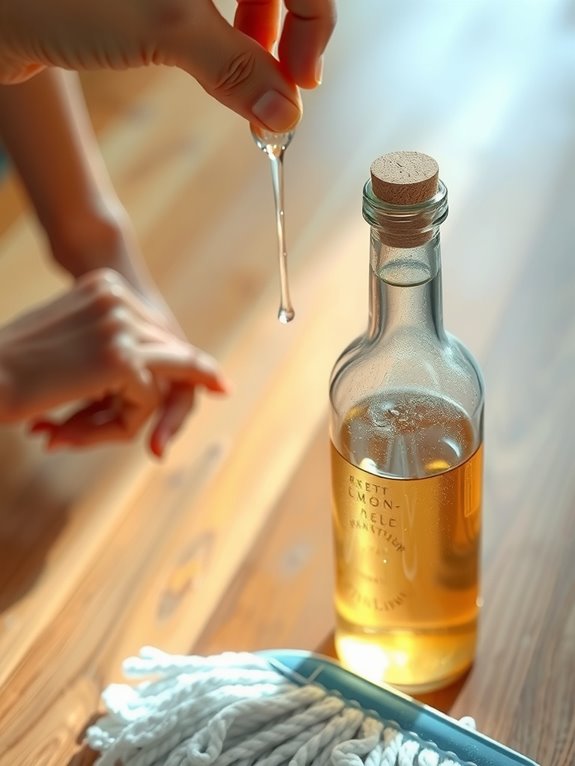
After you’ve cleaned your wood floors, adding a natural protectant helps keep them looking fresh and prevents that dull, hazy coating that builds up over time. You have several solid options to choose from.
Olive oil is probably your best starting point. It’s affordable (usually $3-8 per bottle), likely already sitting in your kitchen, and it works well for basic protection. Coconut oil, linseed oil, jojoba oil, and tung oil are also worth considering, since each one brings slightly different benefits depending on your floor type and what you’re trying to achieve.
When applying any protectant, use a microfiber cloth and work in gentle circular motions. The tricky part is not overdoing it—you’re moisturizing your floors, not soaking them. Too much oil can leave a slick or sticky residue that attracts dust. Start with a small amount and add more only if needed.
These natural protectants work alongside your cleaning routine to boost shine while adding a protective layer that helps your floors hold up better over time. The result is floors that stay looking good for months rather than weeks.
Pick Your Fragrance With Essential Oils (Optional)
Your wood floors are now clean and protected. If you want to add a pleasant scent while you clean, essential oils work well for that. It’s completely optional, but your home will smell good in the process.
Your wood floors are now clean and protected—enhance the experience by adding a pleasant scent with optional essential oils for a fresh-smelling home.
Lemon, orange, and lavender are popular choices because they smell fresh and inviting. You only need about 10–15 drops per batch, so a small bottle lasts a while. Some essential oils also have antibacterial properties, which is a nice bonus. Brands like Plant Therapy or Young Living offer quality options in the $5–$15 range per bottle.
If essential oils aren’t your thing, dried lavender or fresh citrus peels work too. They give you a subtle scent without being too strong. You can usually find dried lavender at grocery stores for a couple of dollars.
Before you use any fragrance on your whole floor, test it on a small, hidden area first. Different wood finishes can react differently to oils and plant materials, so checking a corner saves you from potential problems. Once you’ve confirmed it works with your floor, you can enjoy the scent while keeping your floors looking good.
Measure and Combine Your Base Ingredients
You’ll start by measuring 1 cup of water. This is your base—it dilutes everything else and makes your cleaner actually work on those dusty, grimy spots. Next comes 1/2 cup of distilled white vinegar. The vinegar cuts through built-up grime and kills bacteria without leaving behind the chemical smell you get from store-bought cleaners.
Last, add 1 teaspoon of vegetable oil. Any basic vegetable oil works fine—the kind you probably already have in your kitchen. The oil protects your wood and keeps it from drying out while you’re cleaning, which is something you notice pretty quickly if you skip this step. Your floors get that dry, dull look otherwise, and you’ll end up reapplying the oil later anyway.
Water as Your Foundation
Water is the foundation of any homemade wood floor cleaner, and it’s worth getting right. Pour one cup of room temperature or warm water into your mixing bowl—this is where everything starts. Water does the real work here by diluting your vinegar and oils so they won’t leave a sticky film on your floors.
Warm water is better than cold because it helps dissolve and spread those cleaning agents more evenly across your wood. You’re basically creating the right thickness so your cleaner applies smoothly whether you’re spraying or mopping. This prevents the cleaner from getting too strong in one spot, which keeps your floors safe while still actually getting clean.
Vinegar’s Cleansing Power
White distilled vinegar is the main ingredient that does the work in your homemade floor cleaner. You’ll want to use 1/2 cup of it mixed into a gallon of warm water. The reason vinegar works so well comes down to its acidic nature, which breaks down dirt, grease, and sticky buildup that plain water leaves behind.
This approach cleans your floors without relying on harsh chemicals. Vinegar naturally disinfects surfaces while cutting through the grime that builds up over time. A bottle of white distilled vinegar costs just a few dollars at any grocery store, so you’re getting an effective cleaning solution for very little money. The difference shows up right away when you start wiping—the floors look clean without that chemical smell some commercial cleaners leave behind.
Oil for Protection
How do you keep your freshly cleaned wood floors from drying out and looking dull? You’ll want to add oil for protection. A carrier oil mixed with a small amount of wax creates a protective layer that keeps your floors looking their best.
You don’t need much—just a few teaspoons of oil per cup of water does the trick. Olive oil works great as an inexpensive option, though coconut, linseed, and tung oils offer different finishes depending on your wood type. Olive oil usually costs a few dollars for a bottle you’ll have around for other uses anyway, which is a nice bonus.
After applying your oil mixture, buff everything with a clean microfiber cloth. This spreads the protectant evenly and removes excess moisture, leaving your floors moisturized without that sticky residue buildup. The whole process takes less time than you’d expect, and your floors will look noticeably better without any of the heavy maintenance that fancy finishes sometimes require.
Shake and Prepare Your Finished Cleaner
Pour everything into a glass spray bottle and shake it well. This action helps your ingredients emulsify, which means they blend together smoothly instead of separating into layers.
When you shake the bottle, the oil distributes evenly throughout the water and vinegar mixture. You’ll notice the liquid becoming cloudier as you work—that’s exactly what you want to see. Glass works better than plastic here because vinegar’s acidity can wear down plastic spray bottles over time.
The real benefit of taking time to shake properly is that your cleaner stays mixed between uses. If you just pour it into any old bottle and skip the shaking, you’ll open it next week to find separated layers sitting at the bottom. Nobody wants to shake their cleaner for five minutes before every floor cleaning session, so getting the emulsion right now saves frustration later.
Once the mixture looks well-blended and cloudy, you’re ready to use it on your floors.
Test Your Homemade Wood Floor Cleaner First
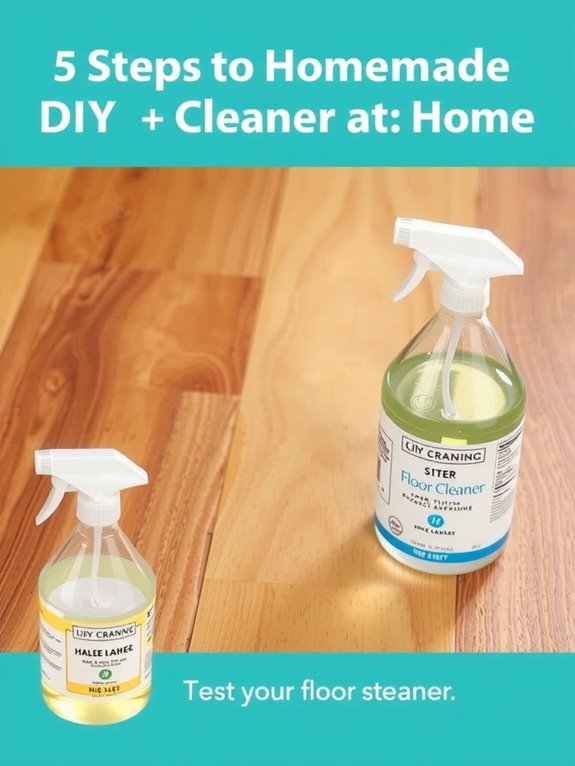
Before you start mopping your entire floor, it’s worth taking a few minutes to test your homemade cleaner on a small, hidden spot first. Finding a closet or corner where nobody will see any mistakes is smart planning.
Put just a tiny amount of your cleaner on the wood and let it dry all the way. Then look closely at what happened. Did the wood get darker or lighter. Does it look dull instead of shiny. Is the surface warped or raised up. These signs tell you whether your mixture is safe for your specific floor finish.
If everything looks normal after the test dries, you’re ready to clean the whole floor with confidence. But if you spot damage or blotching, stop right there. You might need to try a different cleaner, dilute your recipe with more water, or switch to something completely different. A quick test like this takes five minutes and prevents you from ruining your floors, which would cost way more time and money to fix later.
Mop Your Floors With the Grain
Now that you’ve confirmed your cleaner won’t damage your floors, it’s time to put it to work the right way.
The key to streak-free wood floors is mopping with the grain. Here’s how to do it properly:
- Start from the farthest corner and work toward your exit
- Use a damp (not soaking wet) mop to avoid over-saturating the wood
- Make grain-directed strokes in consistent, overlapping passes
- Finish with a dry microfiber cloth to catch remaining moisture
Think of the wood grain like a map that guides your strokes and helps preserve your floor’s natural look. A damp microfiber cloth works well because it cleans effectively without leaving puddles or wet spots behind. When you follow the grain while mopping, you’ll notice fewer streaks and a more polished appearance. The difference between random strokes and grain-directed ones is pretty noticeable once you try it.
Dry and Maintain Your Clean Wood Floors
How quickly should you dry your freshly cleaned wood floors? Get moving right away. Use dry mopping with microfiber cloths or clean towels to speed up the process and eliminate lingering moisture. Wet floors are slippery and can damage wood over time, which means extra repair costs down the road.
Once your natural wood cleaner has done its job, allow floors to dry completely before anyone walks on them. Think of it as giving your floors a chance to reset. To keep that fresh shine going, sweep or vacuum regularly—maybe a couple times a week depending on foot traffic. Wipe up spills immediately since water sitting on wood for even a few hours can leave marks or cause swelling.
Rinsing the surface as needed prevents buildup and keeps your wood looking naturally beautiful without sticky residue. You’re not just cleaning; you’re protecting your investment and keeping your home safe from slip hazards.