
Standard kitchen base cabinets measure 24 inches deep as just the box itself. When you factor in your countertop overhang (usually 1 to 1.5 inches) plus door hardware, the total depth comes to about 25 to 26 inches. Wall cabinets are shallower at 12 inches, which is why they sit differently above your counters.
This standard sizing works well with most appliances like dishwashers and refrigerators, and you can find quality base cabinets priced between $150 to $400 per unit. That said, your kitchen’s particular layout might need different depths. Understanding what’s available gives you real flexibility when planning your space.
Standard Depth: Why 24 Inches
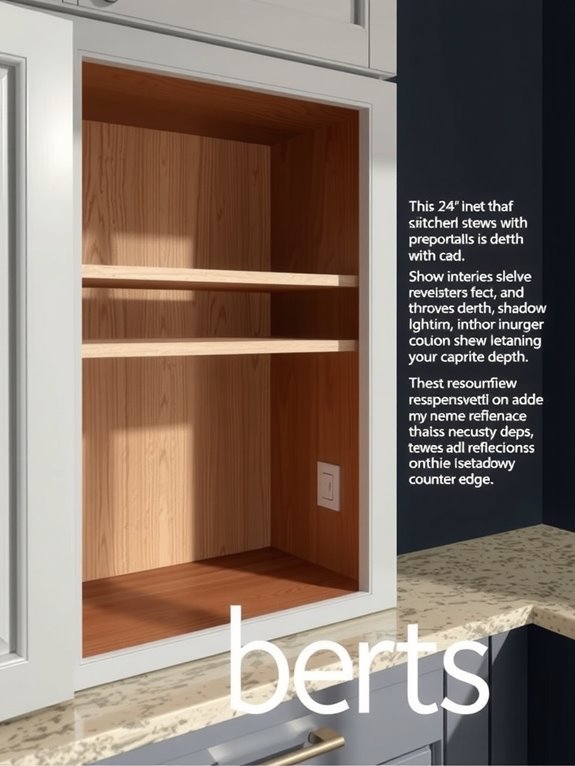
Why do kitchen cabinets seem to have a universal depth? It’s because the standard base cabinet depth of 24 inches has become the industry norm, and there’s actually a practical reason for it.
The standard 24-inch base cabinet depth has become the industry norm for practical reasons that benefit homeowners everywhere.
When you’re planning your kitchen remodel, this measurement works perfectly with most appliances. Add countertop overhang—typically 1 to 1.5 inches—and your total depth reaches about 25 to 26 inches. Wall cabinets sit at 12 inches, which creates nice visual balance in your space. The interior usable depth gives you roughly 23 inches of storage space.
Here’s what makes this standard helpful: you’re not hunting for custom pieces that cost extra money. Most cabinet manufacturers stick to these dimensions, so you’ll have plenty of options at standard price points. A basic 24-inch base cabinet runs anywhere from $150 to $400 depending on materials and quality. Compare that to custom cabinets, which can easily cost two or three times more per unit.
This cabinet depth compatibility means you’re working with what millions of homeowners already use. You get straightforward choices, reasonable prices, and storage that actually fits your kitchen layout without strange gaps or awkward spaces.
What That Number Actually Means: Cabinet Box vs. Total Depth
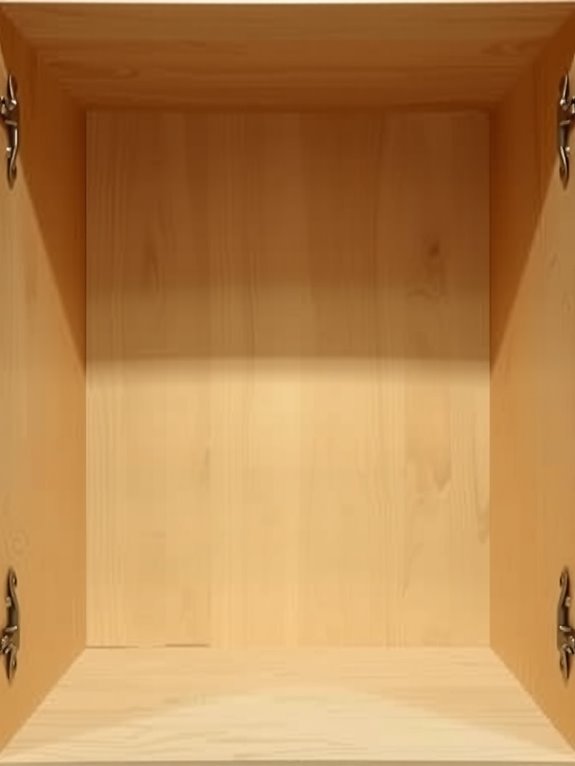
When you’re shopping for cabinets or reading measurements online, you’ll notice the 24-inch number gets thrown around a lot—but here’s the thing: that’s just the cabinet box itself, not what you’ll actually see sticking out into your kitchen. The cabinet box is the basic measurement, but once you add the doors, handles, and that countertop overhang, you’re really looking at 25–26 inches of actual depth when everything’s installed.
This front-to-back measurement matters because it affects how much stuff you can fit inside and whether your appliances will actually squeeze in next to them. Wall cabinets work differently though—they’re only 12 inches deep because you don’t need as much reach when you’re storing things overhead. Understanding these numbers helps you plan better storage capacity and skip the frustration of surprises during installation.
Wall Cabinets and Tall Pantry Cabinets: Depth Variations Explained
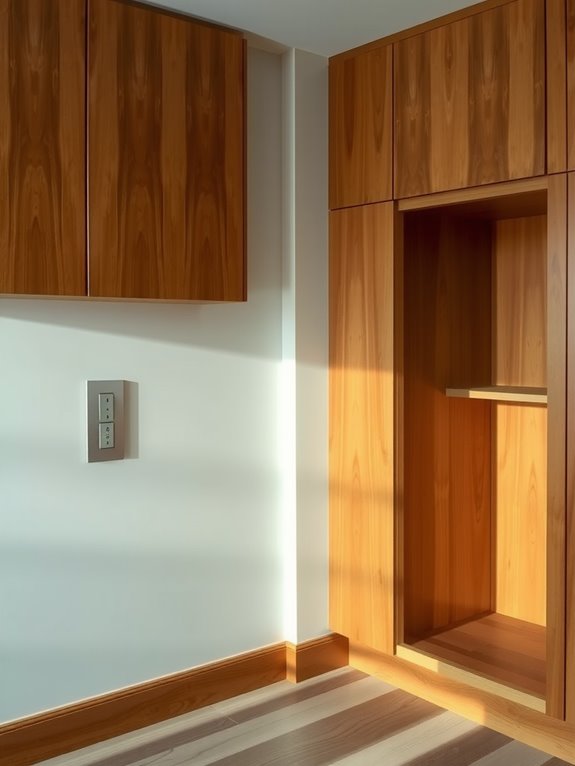
Wall cabinets don’t play by the same rules as base cabinets. While your base cabinets sit at a standard 24 inches deep to match your countertop, wall cabinets give you more flexibility in how deep you go.
Most kitchens work well with 12-inch-deep wall cabinets. They fit neatly above your countertops and look balanced with the rest of your kitchen. But if you have specific areas that need more storage, you can go deeper. A 15 to 24-inch-deep wall cabinet works particularly well above a refrigerator or when you’re planning a dedicated pantry section.
Most kitchens work well with 12-inch-deep wall cabinets, but deeper options suit spaces needing extra storage.
Tall pantry cabinets follow similar logic. A 24-inch-deep pantry cabinet matches your base cabinet depth and gives you serious storage for bulk items. If you’re working with tighter space or narrow corners, a 12-inch-deep pantry works just fine.
The real advantage here is mixing depths throughout your kitchen based on what actually matters to you. Keep your everyday dishes in standard 12-inch cabinets where they’re easy to reach. Use the deeper cabinets in spots where you need to store more stuff—like above the fridge or in a corner pantry. This approach means your cabinet layout fits your life instead of forcing you to adapt to what someone else designed.
Will Your Appliances Fit? Depth and Clearance Compatibility
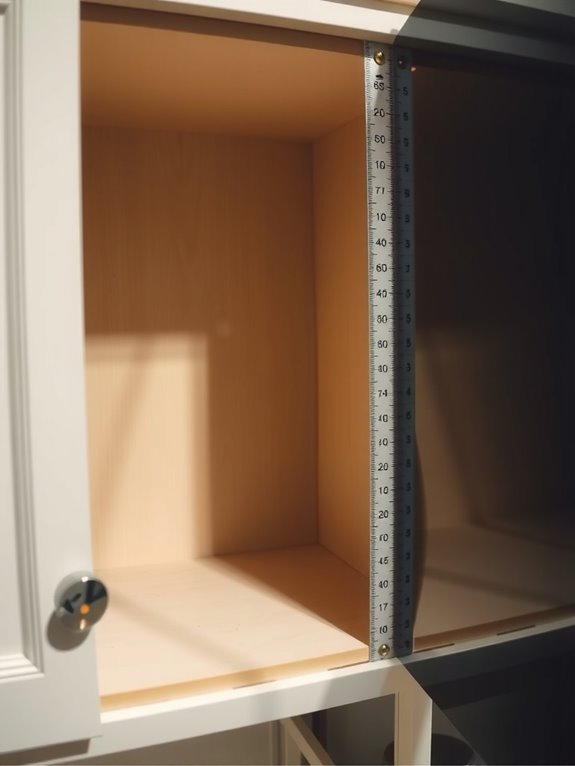
Cabinet depth comes down to one simple question: will your stuff actually fit inside. Your base cabinets are typically 24 inches deep, which is the standard measurement across most kitchens. But here’s where things get tricky—your appliances might have different ideas.
A standard dishwasher needs the full 24-inch opening to slide in properly. Full-size refrigerators, though, demand much more space. Most models run 30 to 36 inches deep, which means they’ll stick out past your countertop if your cabinets are only 24 inches. Counter-depth appliances solve this problem. They’re built specifically to be 24 to 25 inches deep, so they line up with your cabinet interior and countertop overhang without any awkward gaps or sticking out.
Wall cabinets sit at around 12 inches deep, which gives you some breathing room and keeps things from feeling cramped above your counter.
Before you buy anything or finalize your layout, measure three things: how deep your fridge actually is, what clearance your dishwasher needs, and where your countertop overhangs. Getting these measurements right means you won’t end up forcing expensive equipment into spaces it doesn’t belong, and you’ll avoid the frustration of a $1,500 appliance that doesn’t fit properly.
Going Non-Standard: Shallow Cabinets, Islands, and Custom Depths
Not every kitchen needs to follow the standard 24-inch cabinet depth. If your space is cramped or oddly shaped, shallow cabinets between 12 and 18 inches deep work well in tight corners. Wall cabinets can go up to 24 inches when you plan carefully. Islands typically use two 24-inch base cabinets back-to-back, or mix 24-inch with 12-inch pieces to reach 36–39 inches deep with overhang factored in.
Custom depths range from about 12 to 30 inches, which opens up options for unusual layouts and makes your kitchen easier to move around in. Pantry cabinets and specialty storage units also benefit from this flexibility.
A few practical things help when mixing different depths:
- Angled end cabinets keep the visual flow smooth between varying depths
- Transitional pieces fill gaps without looking awkward
- Professional installers know how to handle spacing and clearance issues so nothing sticks out where it shouldn’t
Your kitchen layout is one of a kind, so your cabinet depths should work for how you actually use the space.
Measuring Your Space: How to Verify Depth Before Ordering
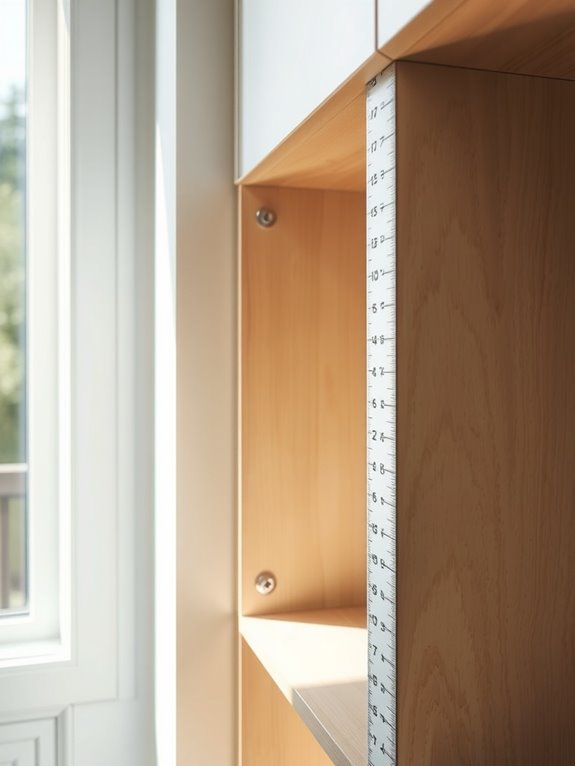
Before you order your cabinets, grab a tape measure and check your actual wall-to-wall distances. What looks standard might surprise you once you measure it yourself.
You’ll also need to account for things like door handles, hinges, and any trim that sticks out from the wall. These details can eat up a couple of inches from your usable space, which matters more than you’d think when you’re trying to fit things in. While you’re measuring, verify that your appliances—like a 24-inch dishwasher or a 30-plus-inch refrigerator—will actually fit and close properly with the cabinet depths you’re considering. It’s the kind of thing that’s easy to overlook until you’re standing there with a cabinet that won’t quite work with your kitchen layout.
Measuring Wall-to-Wall Distances
When you’re planning your kitchen layout, how you measure the space matters just as much as knowing what those standard cabinet depths actually are. You’ll want to measure the wall-to-wall length of each cabinet run and record the longest uninterrupted span. This keeps your cabinetry from crowding appliances or doors.
Start by measuring from wall to wall where you’re installing cabinets, and note any obstacles in the way. Record the longest continuous space available for your kitchen cabinetry. You’ll also want to check the aisle clearance—aim for at least 36 inches minimum, though 42 to 48 inches gives you more comfortable movement.
Standard base cabinets run about 24 inches deep, while wall cabinets typically measure 12 inches. Add a countertop overhang of 1 to 1.5 inches, and your total working depth comes to around 25 to 26 inches. Taking accurate measurements prevents those costly mistakes that pop up during installation.
Accounting for Hardware Protrusion
Have you thought about what happens once you install cabinet doors and drawer fronts on those 24-inch measurements? That’s when hardware protrusion stops being theoretical and becomes something you actually have to deal with in your kitchen layout.
Your standard 24-inch cabinets won’t stay at 24 inches deep after installation. Drawer fronts and door fronts extend roughly 3/4 to 1 inch beyond the box itself. Add handles and knobs to that, and you’re gaining even more depth. This directly affects how much space you have for walking through your kitchen and how your toe-kick clearance works out.
If you’re planning for standard 24-inch dishwashers or built-in ovens, you need to account for this extra depth. Then factor in countertop overhang, which typically runs 1 to 1.5 inches. You’re suddenly looking at nearly 26 inches of total front-to-back depth measuring from your wall outward.
The practical move here is measuring before you order anything. Write down the box depth, add the hardware protrusion, and include any overhang you’re planning. This simple step prevents those frustrating moments when things don’t fit the way you expected.
Verifying Appliance Clearance Zones
It’s time to measure your actual kitchen space—not just what the cabinet specs say, but the real gaps where your appliances and people have to fit. Walk through with a tape measure and check wall-to-wall clearance carefully. Don’t forget about the toe-kick space beneath your base cabinets and any countertop overhang you’re planning to add.
Different appliances need different amounts of room. Dishwashers usually need 24-inch openings, so make sure your base cabinet depth actually fits one. Refrigerators often run 30–36 inches deep, which can be tight. If you want a fridge that plays nicer with standard cabinetry, counter-depth models work better. Your wall cabinets sit at 12 inches deep, which means they align differently with deeper base cabinets, and you’ll need to plan for side clearance so nothing sticks out awkwardly.
If accessibility matters for your kitchen—whether now or down the road—check ADA clearance requirements while you’re at it. A good rule: measure twice, order once. Your future self will appreciate the extra few minutes you spend getting this right.
Choosing Your Ideal Cabinet Depth for Your Layout
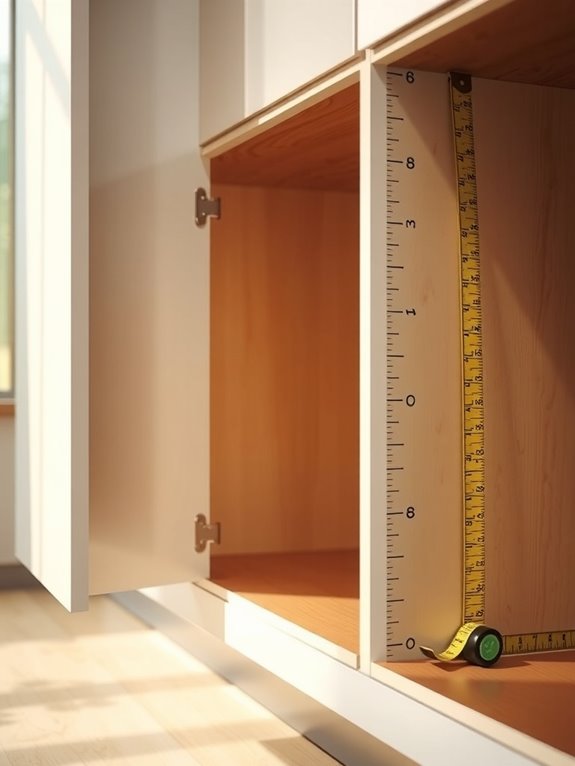
Why does cabinet depth matter so much when you’re planning your kitchen? Your layout depends on it, honestly. Standard depth base cabinets measure 24 inches, which gives you about 23 inches of usable interior space plus a 1–1.5 inch countertop overhang. Wall cabinets typically run 12 inches deep, though you might pick deeper options if you’re installing specific appliances. Pantry cabinets usually match your base cabinets at 24 inches.
Here’s the practical part: these standard depths line up nicely with most appliance sizes like dishwashers and refrigerators. If you’re building an island or working with a cramped space, you have options. Shallower base cabinets (12–18 inches) give you more walking room, while deeper ones (27–30 inches) give you more storage. The real move is matching your cabinet depths to how you actually cook and what space you’re working with.