
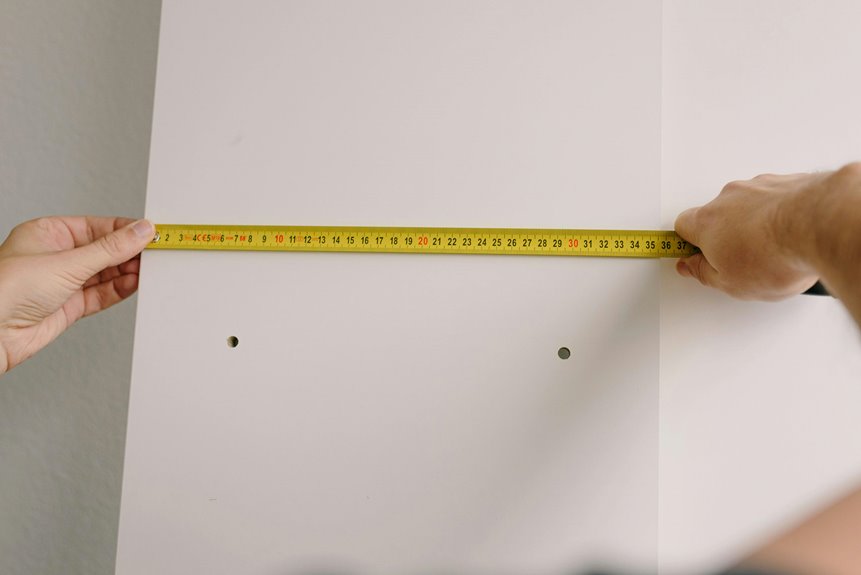
Standard kitchen counters sit at 36 inches tall, which is the height you’ll find in most homes. This measurement comes from base cabinets that measure 34.5 inches, plus about 1.5 inches for your countertop. The reason this height became standard is pretty straightforward—it works well for the average adult. You’re not constantly bending over, and you’re not stretching awkwardly across surfaces either.
That said, your actual ideal height depends on your own height and how your elbows naturally bend when you’re standing at a counter. If you’re taller than average, 36 inches might feel a bit low. If you’re shorter, it might feel high. The best way to figure out what works for you is to think about your own comfort when you’re cooking or preparing food. Your counter height should let your arms rest naturally while you’re working, not force you into an uncomfortable position.
The Standard Kitchen Counter Height: 36 Inches
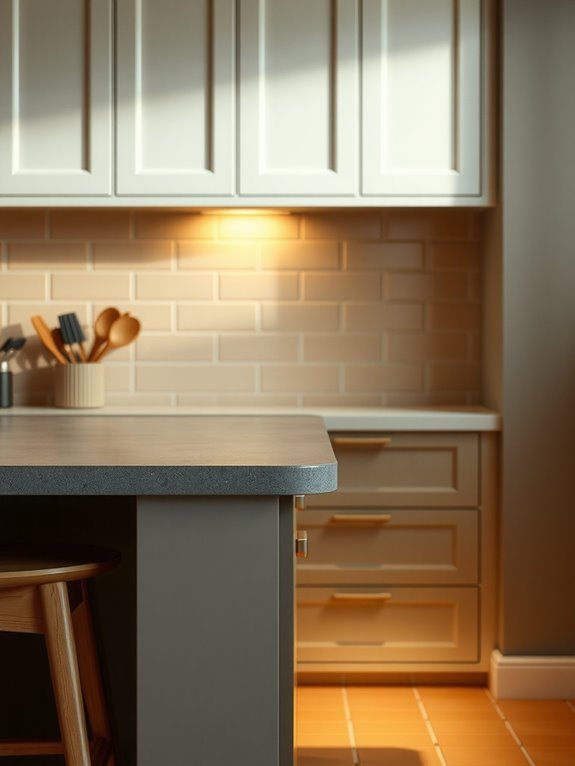
When you’re planning a kitchen remodel or just wondering why your counters sit at a particular height, the answer is 36 inches from floor to surface. This measurement comes from a straightforward formula: base cabinets measure 34.5 inches tall, and adding a standard 1.5-inch countertop thickness gets you to that 36-inch mark.
Why does this specific height matter. The 36-inch standard works well for the average adult. It’s high enough that you don’t have to bend too far when working, but low enough that you can reach across without stretching uncomfortably. Kitchen designers and manufacturers built this measurement into their plans decades ago, and it stuck around because it actually works.
The 36-inch standard works because it balances comfort—high enough to minimize bending, low enough to reach without stretching.
Everything in your kitchen is designed around this height. Built-in appliances like dishwashers, ovens, and cooktops are engineered to fit perfectly with 36-inch counters. When you’re shopping for a new stove or microwave, manufacturers know they’re building for this standard, so the products align without awkward gaps or uneven surfaces.
If you’re taller or shorter than average, you might find that standard height doesn’t feel quite right. Some people add a few inches to their counters or lower them slightly depending on what works for their household. That’s perfectly fine to consider during a remodel, though it does mean custom orders and potentially higher costs.
Understanding this measurement helps you make decisions when upgrading your kitchen. You’ll know what to expect when measuring for new appliances, and you can spot whether your current setup matches the standard or if someone customized it. It’s one of those details that shows how kitchens are actually built with function in mind, not just randomly put together.
Why Base Cabinets and Countertop Thickness Change Your Height
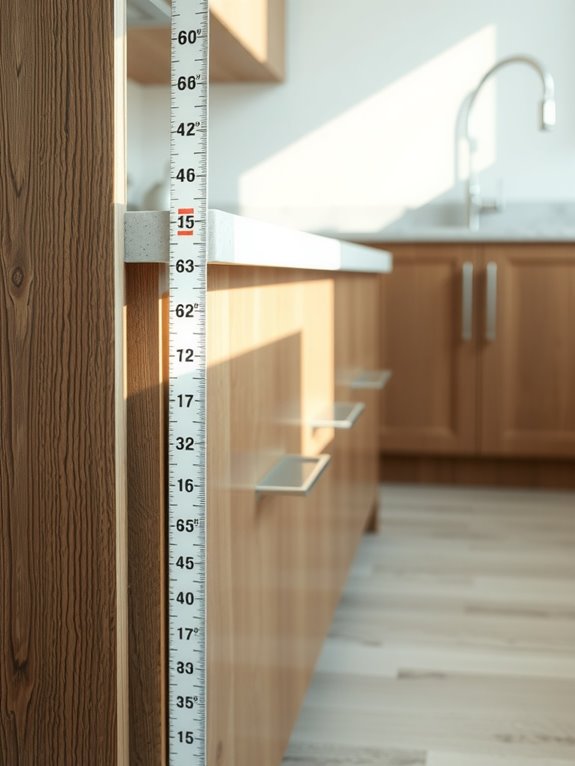
How do you end up with a counter that’s actually 37 inches instead of 36? Your base cabinets are typically 34.5 inches tall, which gives you the starting point. But then you’ve got to add in the toe kick—that little space at the bottom so your feet don’t bang into the cabinet when you’re standing at the counter. The thickness of your countertop material is where things really shift.
A chunky granite slab, like those found at big-box retailers ranging from $40 to $100 per square foot installed, can easily add an inch or more to your final height. Thinner laminate countertops, which run about $10 to $30 per square foot, might actually bring you in below that standard 36-inch mark. Custom materials and thicker slabs push you higher, while slimmer cabinet proportions work in the opposite direction.
Your cabinet box dimensions matter too. A shallower cabinet design combined with a thinner countertop could leave you with an uncomfortable workspace if you’re taller or if you spend hours prepping meals. On the flip side, someone shorter might find a super-high counter awkward for everyday tasks. The point is that these small decisions about material thickness and toe kick size directly impact whether your kitchen actually feels good to work in, and that’s worth thinking about before you make your final choice.
Is 36 Inches Right for You? Measure for Ergonomic Comfort
Standard counters at 36 inches work well for plenty of people, but yours might need to be different. Your height, arm length, and the way you cook all play a role in picking the right counter height for you. The easiest way to figure this out? Stand at your current counter and check where your elbows naturally fall.
| Your Height | Ideal Counter Height | Why It Works |
|---|---|---|
| Under 5’4″ | 34–35 inches | Reduces strain on shoulders |
| 5’4″–5’10” | 36 inches standard | Matches most base cabinets |
| Over 5’10” | 37–39 inches | Prevents hunching |
Rest your hands naturally on the counter surface. Your elbows should bend at about 90 degrees. If you find yourself reaching up or bending down too much, you’re working against your body instead of with it. This matters because spending hours at the wrong height can lead to shoulder and back strain over time.
Kitchen islands often sit at 42 inches, which feels different from your main counter, and that’s perfectly fine. Different zones in your kitchen can have different heights depending on what you do there. An island for eating might work better higher than a prep counter. Pay attention to how your body feels when you’re actually working, and go with what feels right for your space and the way you use it.
Four Reasons to Go Taller or Shorter Than Standard
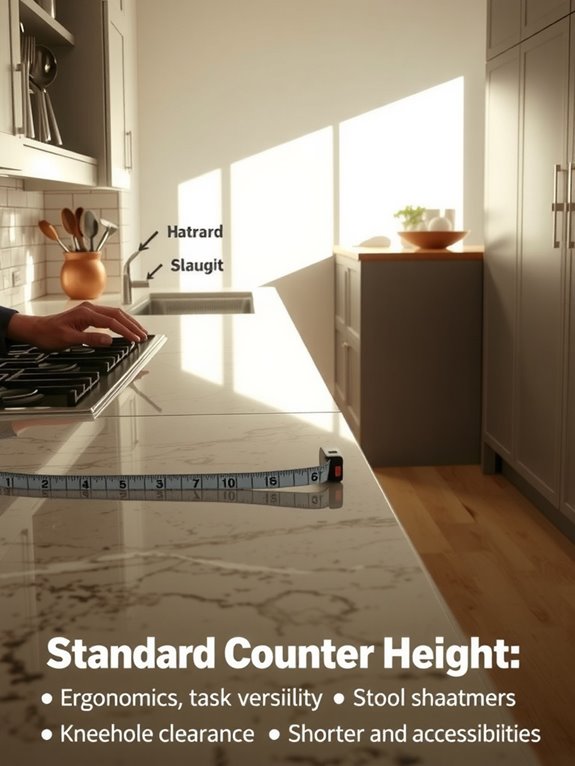
While 36 inches works great for most people, you might find that going taller or shorter actually makes your kitchen work better for your specific situation. Whether you’re unusually tall, need easier access for kids, or want to create a bold design statement that catches attention, there’s more flexibility here than you’d think.
If you’re on the taller side, standard counter height can feel cramped. Going up to 38 or 39 inches means less bending when you’re washing dishes or prepping food. It’s one of those small changes that makes a real difference after a few months of daily use.
On the flip side, lowering your counters to 34 inches helps younger kids reach without climbing on stools. Parents often say this shift saves time during meal prep and makes cooking together feel less complicated. It also works well if you’re shorter and want everything within easy reach.
There’s also the design angle. Mixing counter heights creates visual interest and breaks up a long stretch of cabinetry. Dropping an island to 34 inches while keeping main counters at 36 inches gives the kitchen a more intentional layout without feeling random.
Before you commit, test the height if you can. Many kitchen showrooms let you stand at different counter heights to see what feels right. If that’s not possible, measure from your elbows while standing in a relaxed position—that’s roughly where your work surface should land. Think about who uses the kitchen most and what tasks matter to you. A few inches one way or the other might seem minor, but you’ll notice it every single day.
Ergonomic Comfort Matters
Why does your back hurt after chopping vegetables for twenty minutes? Your kitchen counter height probably doesn’t match your body. You’re not alone—many people work at counters that don’t line up with how they naturally stand and move.
The standard height is 36 inches, which works okay for average adults. This comes from base cabinets at 34.5 inches plus a 1.5-inch countertop on top. But standard doesn’t mean it’s right for everyone. If you’re taller, you might find yourself stooping over, which gets uncomfortable fast. If you’re shorter, a 36-inch counter can feel too high and awkward to use.
The good news is you have options. Raising your countertop to 38–39 inches works well if you’re on the taller side—it cuts down on the strain in your shoulders and wrists. Shorter people often feel better working at 32-inch counters where they don’t have to reach up as much. The point is that the right height prevents aching shoulders, wrists, and backs.
Think about your own working posture and how much time you actually spend at your kitchen counter. You’ll probably use it for hundreds of hours a year. It makes sense to get it right for your body instead of forcing yourself to work against the standard measurements.
Accessibility And Special Needs
Not everyone’s body fits the 36-inch standard, and that’s completely okay. Sometimes you need to go shorter or taller to make your kitchen work for you.
Wheelchair users need lower surfaces. A counter at 32 inches lets you roll underneath and reach everything without stretching. This height works because it gives you the space your chair needs while keeping daily tasks within easy reach.
Shorter people benefit from lower counters too. At 34 inches, you won’t have to stoop as much when washing dishes or chopping vegetables. It might seem like a small difference, but it adds up over hundreds of meals throughout the year.
Taller people need more height. Going up to 38–39 inches reduces strain on your back during food prep and cooking. Your arms stay in a more natural position, which means less fatigue by the end of the day.
Mixed heights work best in practice. You can have your main prep counter at one height, a lower section for someone using a wheelchair, and a taller bar area for standing work. These variations fit together smoothly with your cabinets while meeting accessibility standards.
When you work with contractors who understand special needs, your kitchen actually serves your body and lifestyle instead of fitting some imaginary average person. It’s worth asking contractors upfront about their experience with accessible kitchen heights and layouts.
Design Statement And Resale
When you’re planning a kitchen remodel, you’ll face a choice: stick with the standard 36-inch counter or customize the height to match your vision. Going taller—around 38 to 39 inches—makes a bold design statement and can feel more ergonomic for taller cooks. However, deviating from standard counter height affects your resale value. Future buyers might negotiate costs or demand you restore the standard 36 inches. Shorter counters work beautifully for accessibility and special needs, but they’ll similarly impact kitchen ergonomics expectations in the eyes of potential buyers.
The base cabinets typically measure 34.5 inches, plus countertop thickness of about 1.5 inches, creating that familiar height. Before remodeling, weigh whether your design statement justifies potential negotiation headaches down the road. If you love cooking and plan to stay in your home for years, a custom height might feel worth it. If you’re thinking about selling within five years, sticking closer to standard dimensions keeps things simpler with future buyers.
Counter Heights for Specific Needs: Accessibility, Tall Users, and Islands
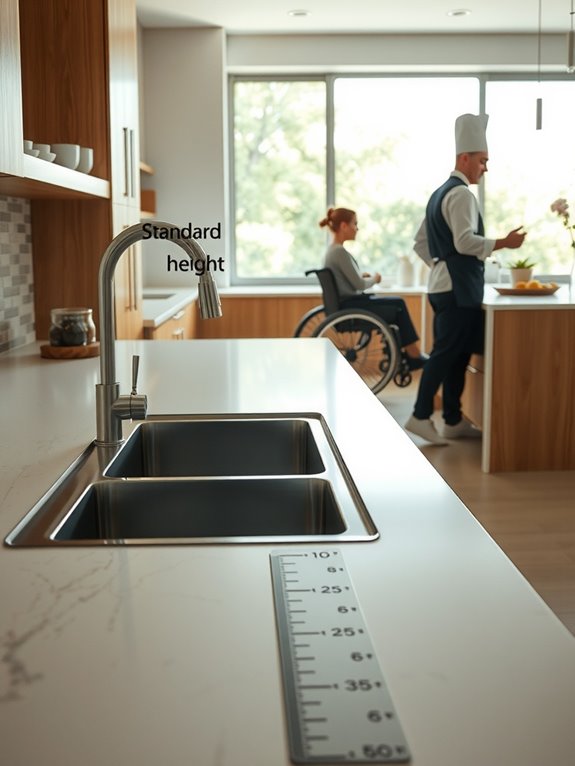
How’s your kitchen working for you right now? Your counter height matters more than you’d think, and the right measurement can make cooking and cleaning genuinely easier.
Standard Heights and Why They Matter
Most kitchen counters sit at 36 inches, which works fine for many people. But that measurement isn’t actually right for everyone. If you’re shorter, use a wheelchair, or spend a lot of time standing in your kitchen, a different height makes a real difference. Accessibility counters typically range from 32 to 34 inches, which keeps things within comfortable reach. Taller folks often find that 38 to 39 inches reduces that annoying stooping sensation. Island counters bump up to 42 inches when bar stools are part of the plan—the extra height looks modern and creates a nice gathering spot.
Making It Work for Your Space
Your base cabinets and countertop don’t have to match everywhere. Combining different heights throughout your kitchen actually works really well. You might use a lower 34-inch counter for prep work where accessibility matters, then add that 42-inch island for seating and conversation. While fully adjustable countertops aren’t common in standard kitchens, many people achieve comfort by varying heights in different zones. The goal is simple: you spend real time in your kitchen, so it should fit your body and your routine.
Will Custom Counter Heights Affect Your Home’s Resale Value?
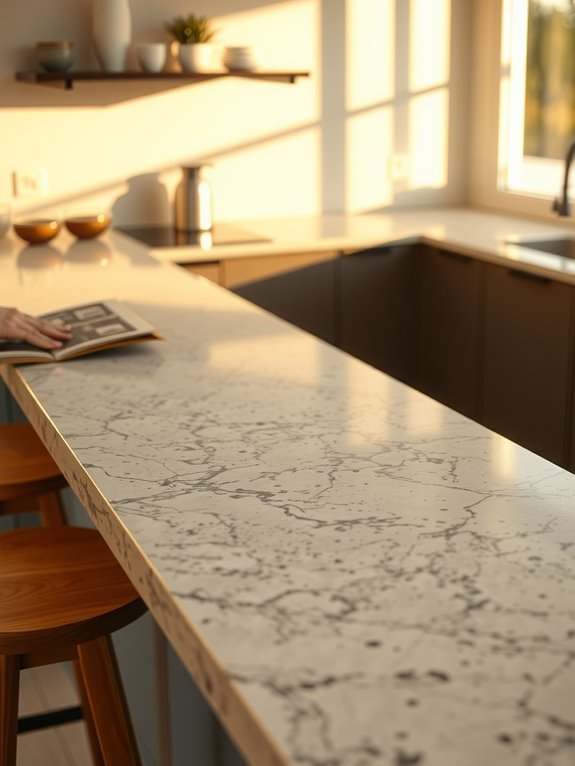
If you’re thinking about customizing your counter heights, resale value is probably on your mind—and that’s smart thinking. Most buyers walk into a kitchen expecting standard 36-inch countertops, the height you see in typical homes. When you go significantly higher or lower, you’re creating something that might make them pause during negotiations.
The real issue with custom heights comes down to practical concerns. Built-in appliances like dishwashers and ovens are designed to fit standard base cabinets, so unusual counter heights can create clearance problems. Islands at odd heights might appeal to some buyers, but others will immediately start calculating renovation costs in their heads.
Here’s the good news: thoughtful customization for accessibility works just fine. If you need slightly taller counters because of your height or mobility needs, staying within a couple inches of standard keeps your kitchen resale-friendly. An accessible counter at 38 inches instead of 36 typically won’t raise red flags the way a drastically different height would. The balance matters more than the perfection.
Your best bet is thinking like a future buyer while you’re planning. Will the average person see your custom height as a convenient feature or a problem they’d need to fix. That question tells you whether you’re making a smart adjustment or creating a headache for yourself down the road.