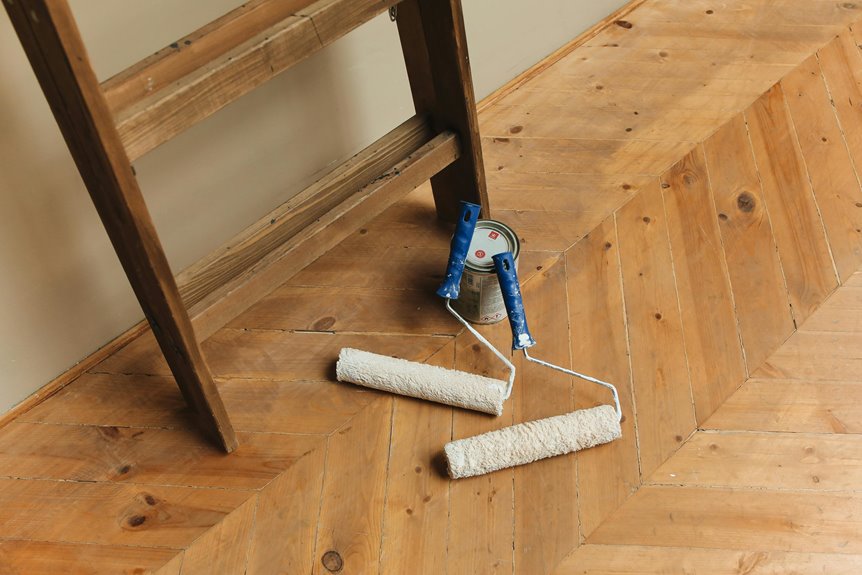
First, figure out what kind of paint you’re dealing with. Dab the spot with a cloth soaked in warm water. If the paint gets soft and sticky, it’s latex. If nothing happens, you’ve got oil-based paint on your hands. This matters because the cleanup method changes based on what you’re working with.
For latex paint, grab soapy water and a plastic scraper—you probably have both already. For oil-based paint, you’ll need mineral spirits, which costs around $5 to $8 per quart at most hardware stores. Start by blotting the paint gently with a damp cloth rather than scrubbing hard, since aggressive rubbing can damage the wood finish.
When blotting doesn’t cut it, apply your solvent and let it sit for a few minutes so it can break down the stubborn spots. This waiting period actually does the work, which beats scrubbing endlessly. After the solvent has had time to work, use your plastic scraper to lift away the softened paint.
Once the paint is gone, sand the area lightly with fine-grit sandpaper (220-grit works well). This smooths out any remaining residue and prepares the wood for refinishing. After sanding, use a wood stain or polyurethane to restore the hardwood’s appearance and protect it from future damage.
Identify Your Paint Type (Water-Based or Oil-Based)
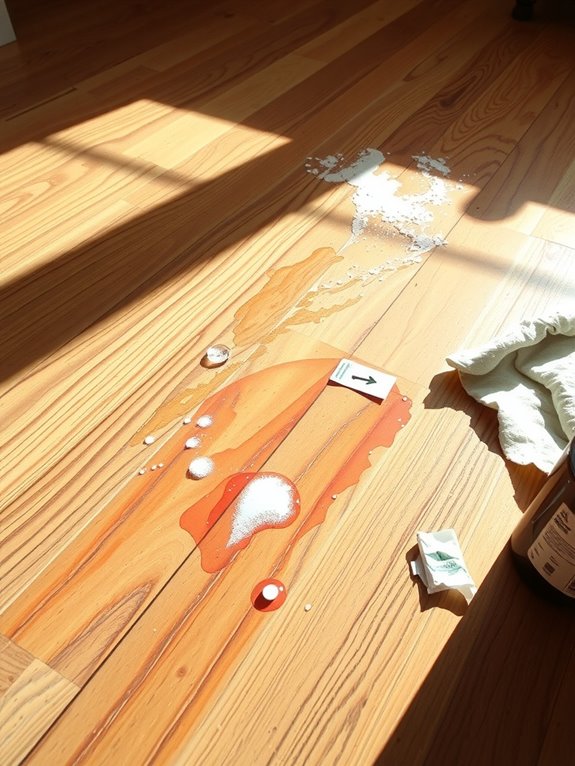
Why does it matter what kind of paint you’re dealing with? The answer is simple: you’ll need a different removal method depending on whether you’ve got latex or oil-based paint on your hardwood floors.
The easiest way to figure this out is to test a small area. Grab a damp cloth and gently rub the stain. If warm water softens the paint, it’s latex—which means soap and water will handle the job just fine. If nothing happens, try rubbing alcohol on your test spot instead. Oil-based paint won’t respond to water, so you’ll need stronger solvents to break it down.
Check your paint can’s label if you still have it around. That’s the fastest way to get your answer. Knowing what you’re working with before you start saves you time and prevents you from wasting effort with the wrong approach.
Gather Paint Removal Supplies Based on Paint Type
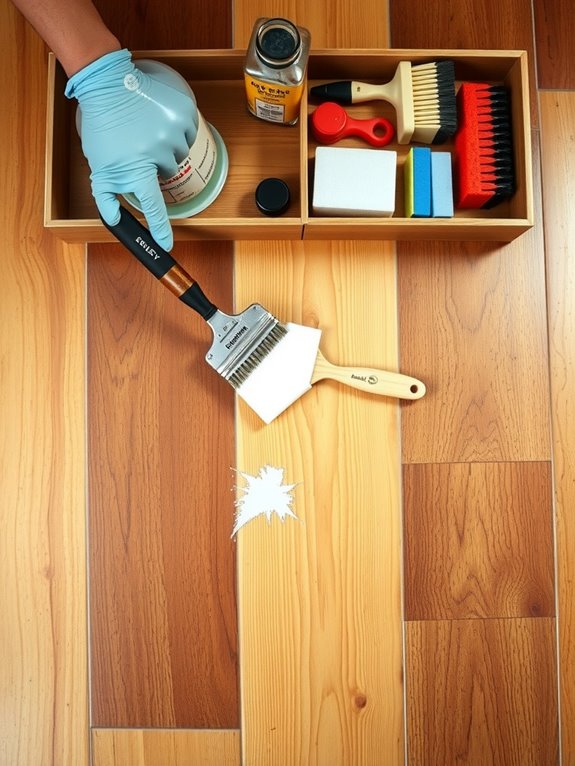
Now that you know what type of paint you’re dealing with, it’s time to grab the right supplies. For latex paint, you’ll need warm soapy water, a damp cloth, and a plastic scraper. Oil-based paint requires paint thinner or mineral spirits instead, plus clean rags and a plastic scraper.
Before you start scraping away on your actual floor, test your chosen cleaner on a hidden spot first. This takes five minutes and saves you from discovering later that the cleaner damaged your wood’s finish. It’s one of those small steps that feels obvious once something goes wrong.
Pick up basic supplies from any hardware store—most paint thinners run between $8 and $15 per quart, and a pack of plastic scrapers costs around $3 to $6. You probably already have soap and rags at home. Once you’ve got everything gathered and tested your cleaner, you’re ready to start the actual removal work.
Remove Paint With Gentle Blotting and Scraping
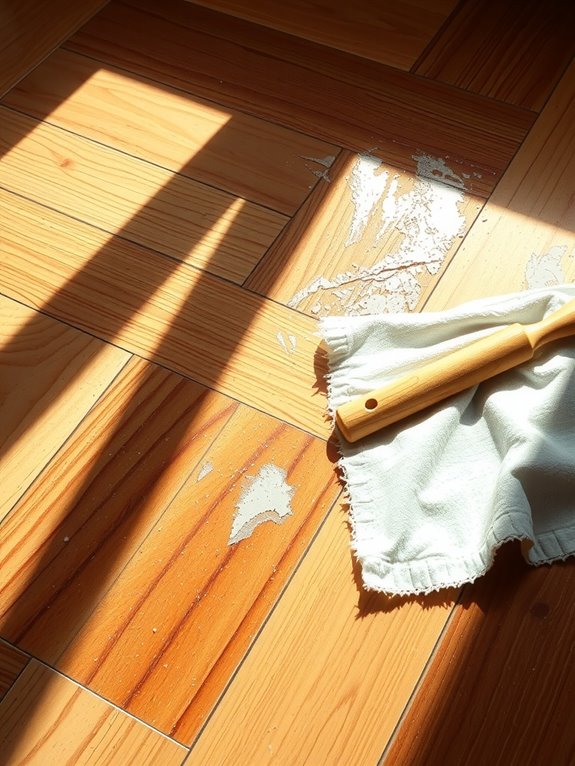
How do you actually get that paint off without wrecking your floor? Start by dampening a cloth with warm water and a little dish soap. Use blotting motions to lift the paint rather than rubbing hard—think of it like you’re coaxing the paint away, not fighting it.
For stubborn dried spots, let a damp cloth sit on the area for a few minutes so the paint softens. Then blot and lift again. If blotting alone isn’t working, grab a plastic scraper and hold it at a 45-degree angle. Gently push under the paint to remove it without scratching the surface.
Here’s the smart move: test your method on a spot you won’t notice first. You’ll protect your floor finish from any surprise damage. After scraping, wipe everything with a clean, dry cloth to remove lifted paint and moisture.
If Gentle Methods Fail: Use Solvents for Stubborn Paint
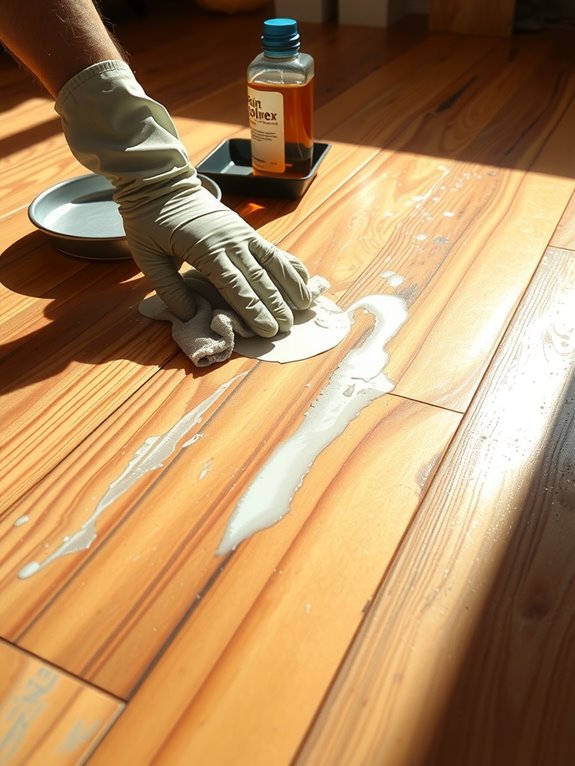
Sometimes that plastic scraper just won’t cut it, and you’ll need to bring in reinforcements. When stubborn latex paint refuses to budge, solvents become your best friend. Start by testing rubbing alcohol or acetone on a hidden spot—you’re protecting your hardwood floors’ finish, after all.
Apply a small amount to a clean, damp cloth and gently rub the paint. You’re basically convincing that dried paint to surrender. For really tough spots, let your damp cloth sit for several minutes to soften the paint first, then grab your plastic scraper at a 45-degree angle and work carefully.
After loosening the paint, wipe everything with a damp cloth to remove residue and solvent. If latex paint lingers, repeat in small, controlled portions. Always keep solid ventilation going when using these chemicals—open a window or run a fan to keep the fumes from building up in your space.
Remove Paint Residue and Restore Your Floor
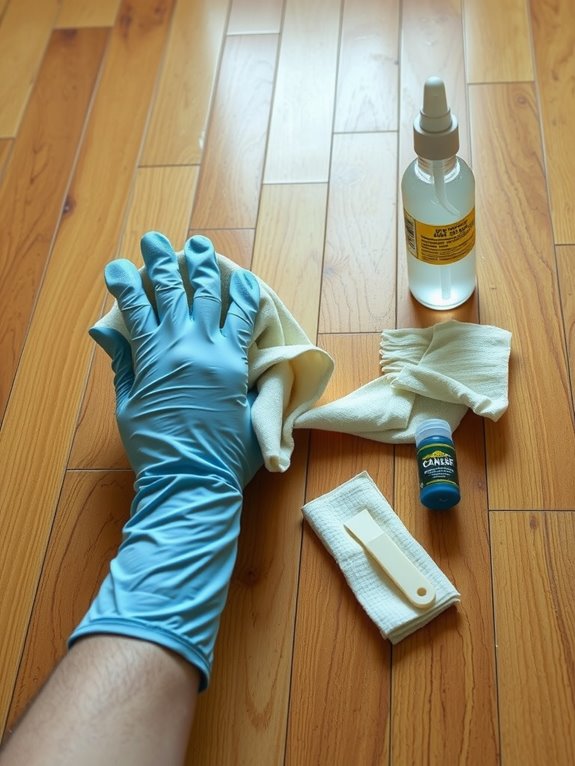
Once you’ve scraped away the bulk of that paint, it’s time to clean up what’s left behind and bring your hardwood floors back to life. You’re almost there—just a few finishing touches remain.
- Sand lightly with fine-grit sandpaper (150–220 grit) to smooth rough edges where paint clung stubbornly
- Wipe away all dust with a soft cloth so your floor gleams
- Use rubbing alcohol on a damp cloth for latex paint residue, or mineral spirits for oil-based stubborn spots
- Let the area dry completely before applying any finish
These final steps really do matter. A quick sand-and-wipe takes your floor from patchy to polished. Once you’ve got that beautiful hardwood surface back, you’ll be able to see what condition it’s actually in underneath all that paint.