
VCT flooring is a budget-friendly tile made of vinyl, limestone, and pigments. You’ll spot these 12×12-inch tiles in grocery stores, schools, and office buildings because they hold up well—typically lasting 20 to 30 years with regular upkeep. The trade-off is straightforward: this flooring demands consistent maintenance. Plan on dust mopping daily, damp mopping twice a week, and strip-and-wax sessions every 6 to 12 months. Those burnishing sessions run $200 to $400 each, so the real cost depends on how committed you are to keeping them looking clean and polished.
VCT costs less upfront than luxury vinyl planks, but the maintenance expenses add up over time. If you’re the type who stays on top of floor care, these tiles deliver solid durability and a clean appearance. If regular maintenance sounds like a chore you’d rather skip, you might want to consider lower-maintenance alternatives that don’t require as much hands-on attention.
What VCT Is: Material, Durability, and Cost Advantage
VCT, or vinyl composition tile, is a practical flooring choice you’ll find in everything from grocery stores to gyms to office buildings. These 12×12 inch tiles blend vinyl resins, limestone fillers, and pigments into a tough commercial flooring option that handles heavy foot traffic without complaint.
The durability is where VCT really shines. Because it withstands repeated use in busy spaces, individual tiles can be replaced if they get damaged instead of redoing your entire floor. The adhesive installation method bonds tiles permanently to your subfloor, which means they’re not going anywhere.
Here’s the trade-off: you’ll need regular waxing and sealant applications to keep your floors shining. Yes, maintenance requires ongoing effort. But the initial cost advantage and replaceable tiles make VCT smart for spaces where durability matters most. The upfront expense is typically lower than other commercial flooring options, and that savings adds up when you’re outfitting a large area.
Where VCT Performs Best: High-Traffic Commercial Spaces
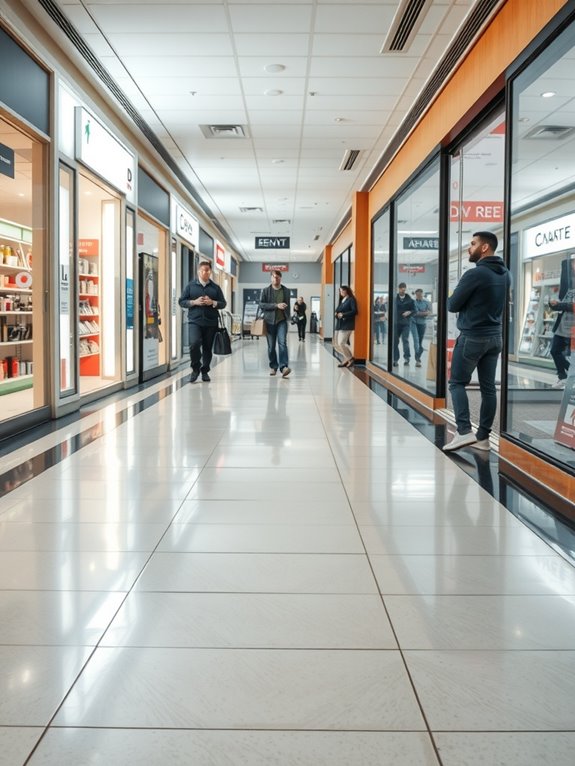
VCT flooring performs best in busy commercial spaces like retail stores, offices, and medical facilities. These environments deal with constant foot traffic, and VCT holds up well without showing damage quickly.
The way VCT gets installed matters too. The glue-down method keeps tiles locked in place so they won’t shift around under pressure from all those footsteps. If one tile gets damaged down the road, you only replace that single tile instead of redoing your whole floor, which saves money and hassle.
The tradeoff is maintenance. VCT has a porous surface that needs regular stripping and waxing to keep its shine and protect the material underneath. When you stay on top of this routine care, your floor can last 20 to 30 years. It’s basically the difference between a floor that looks decent for a decade and one that holds up for decades.
VCT vs. Luxury Vinyl: Total Cost of Ownership Breakdown
When you’re picking flooring for a commercial space, the upfront price tag’s only half the story. VCT costs less initially than luxury vinyl tile, but maintenance is where things get real. VCT requires regular sealing and finishing, plus ongoing work like stripping and waxing—labor that adds up over time. Luxury vinyl tile needs less upkeep, saving you money on those recurring costs.
Here’s the durability angle: VCT handles heavy traffic better because you can replace individual tiles without redoing the whole floor. With proper care, VCT lasts 20–30 years, while luxury vinyl typically lasts 10–20 years. That matters if your space gets constant foot traffic.
When you factor in installation, replacement costs, and maintenance throughout your flooring’s life, VCT often delivers better value for commercial spaces designed for serious wear and tear. The key is understanding what your space actually needs. A warehouse or busy retail store might benefit from VCT’s durability. A smaller office with lighter traffic could work fine with luxury vinyl’s lower maintenance demands.
Your VCT Maintenance Schedule: Daily Tasks to Seasonal Stripping
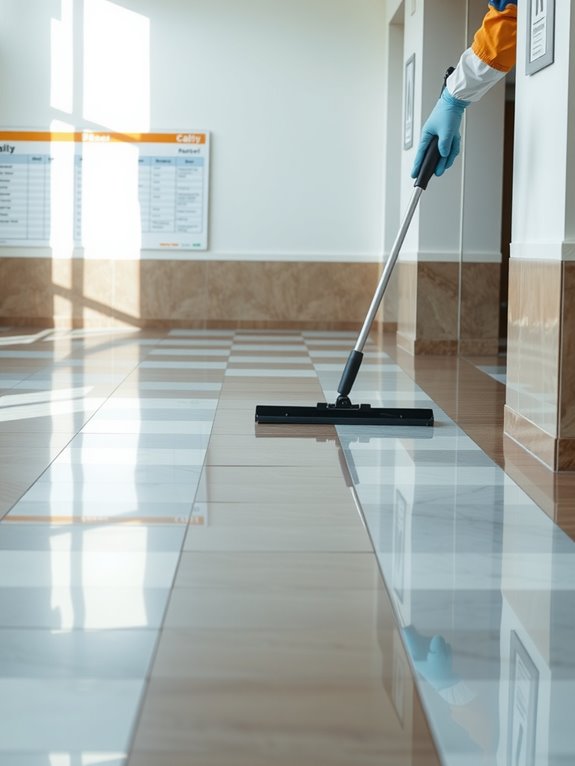
Now that you’ve decided VCT’s the right choice for your space, you’ll want to know what it actually takes to keep it looking sharp—because that 20–30 year lifespan doesn’t happen by accident.
Your maintenance schedule breaks down into manageable chunks. Daily dust mopping removes debris that scratches surfaces. Damp mopping with a neutral cleaner twice weekly prevents buildup. Monthly burnishing restores gloss between deep cleanings. Every 6–12 months, you’ll tackle stripping and refinishing to remove old wax and reapply fresh coatings.
| Maintenance Task | Frequency |
|---|---|
| Daily dust mopping | Every day |
| Damp mopping with neutral cleaner | 2x weekly |
| Burnishing | Monthly |
| Stripping and refinishing | Every 6–12 months |
This routine handles wear and tear effectively. During refinishing, floor sealing protects against damage. Yes, VCT demands commitment, but you’re investing in durability. A basic dust mop costs $20–40, and a microfiber damp mop runs $30–60. Neutral cleaners like Zep All-Purpose cleaner (around $10 per gallon) work well without leaving streaks. For burnishing, you can hire professionals for $200–400 per session or rent a burnisher for $50–75 per day if you prefer doing it yourself.
Modern VCT Design Variety: Patterns, Colors, and Custom Options
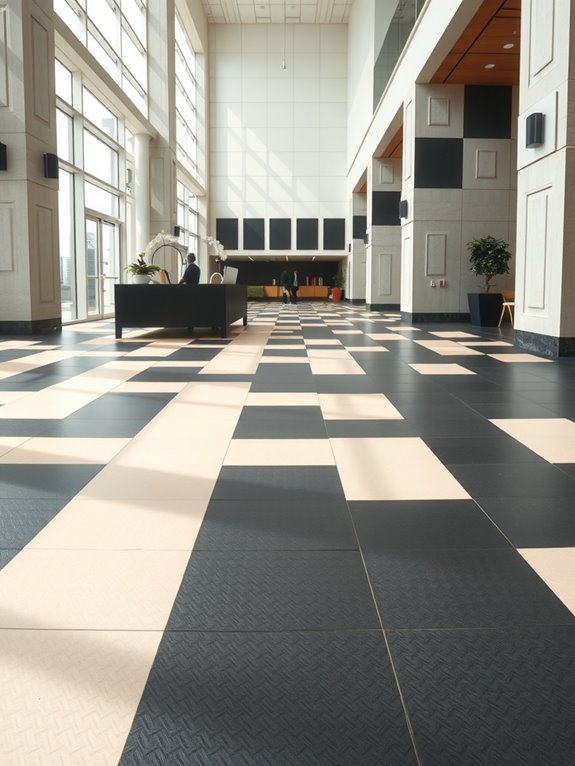
Just how much creative freedom do you actually have with VCT flooring. More than you’d think. Major manufacturers offer 150+ colors and patterns, so you’re not limited to boring beige. You can choose classic checkerboard designs that feel timeless, herringbone patterns that add sophistication, or basketweave layouts for visual interest. These vinyl composition tile options work well in commercial flooring applications where durability matters.
Standard patterns not cutting it. Custom patterns exist too. Whether you’re designing a clinic, retail shop, or office, the right pattern and color combination works hard for your space without costing extra. You’ve got real choices here that fit both your vision and your budget.