
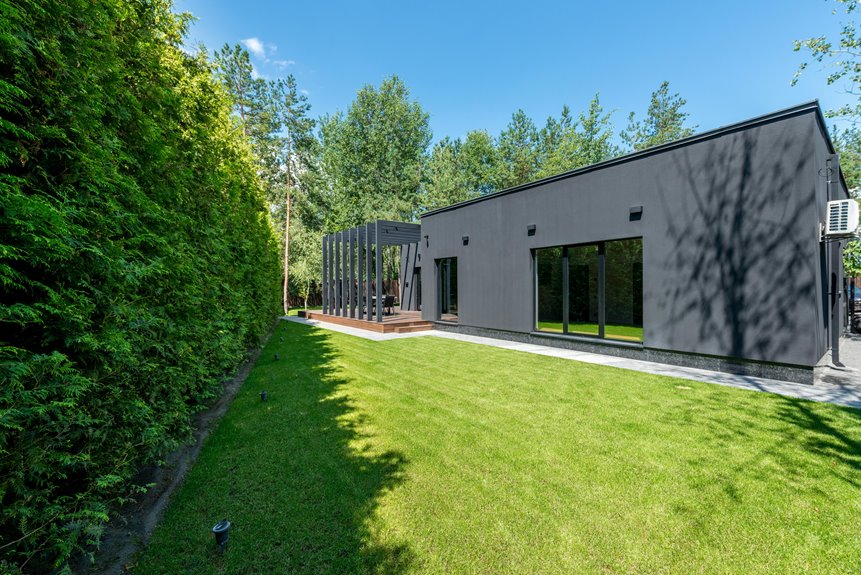
Is Backyard One Word or Two Words?
In modern American English, “backyard” is written as one word. This is the standard you’ll see in dictionaries, newspapers, and style guides. It works the same way as “bedroom” or “kitchen”—words that started as two separate terms but got used together so often they merged into one.
You can use “backyard” as a noun when you’re talking about the actual space: “We’re grilling in the backyard tonight.” You can also use it as an adjective to describe something related to that space: “backyard barbecue” or “backyard games.”
There’s one main exception worth knowing about. British English handles this differently and uses “back garden” as two words instead. If you’re writing for a British audience or publication, that’s the form they’ll expect.
Two words occasionally show up in older texts or very formal descriptive writing, but it’s not standard anymore. Sticking with one word keeps your writing consistent with what most style guides recommend and what your readers will expect to see.
The Simple Rule: Use “Backyard” as One Word

When you’re talking about the outdoor space behind your house—you know, where you might set up a swing set or have a cookout—the answer is straightforward: use “backyard” as one word. This is the standard form you’ll find in dictionaries and style guides everywhere.
Think of it like “bedroom” or “kitchen.” We don’t split those up, and we shouldn’t split “backyard” either. Writing it as one word keeps you consistent with how most people actually use it. When you’re describing that space where you relax with friends and family, “backyard” works because it’s become a single, familiar concept in how we talk and write.
Stick with one word, and you’ll match current writing standards. It’s that simple.
When “Back Yard” as Two Words Actually Works

Ever notice how sometimes two words just feel right? You’ll find “back yard” works when you’re describing specific features or really focusing on location. Think of it this way: you’re painting a picture of that space behind your house.
| Context | Style | Example |
|---|---|---|
| Descriptive writing | Two words | “Our back yard features a deck” |
| Casual emphasis | Two words | “The back yard needs mulch” |
| British English | Two words | “Back yard improvements” |
| General reference | One word | “We love our backyard” |
| Compound noun | One word | “Backyard parties are fun” |
When you’re highlighting what makes your outdoor space unique—like those garden beds or the patio you just built—two words give your writing extra punch. You’re zeroing in on location and detail. It’s the difference between saying you have a yard and saying you’re really talking about that specific outdoor area behind your home where things actually happen.
Backyard as a Noun: The Main Usage
Now that you understand when two words work best, let’s focus on the standard usage you’ll see most often. When you’re talking about your backyard as a noun, you’re describing the actual space behind your house. This is the one-word form that dominates modern American English, and it’s what most people use every day.
Your backyard might include a garden where you grow vegetables, a shed for storing tools, a pool for summer fun, or a grill for weekend cookouts. Maybe you’ve got a hammock strung between two trees, or a fire pit where you gather with friends on cool evenings. The noun usage emphasizes the whole rear area of your property rather than just one specific spot or activity.
When someone asks, “Want to hang out in your backyard?” they’re referring to that entire outdoor space you own behind your home. It’s a straightforward way to talk about your property, and you’ll hear it used this way everywhere—at school, at home, in casual conversations with neighbors. This one-word form is standard and gets the job done without any confusion.
Backyard as an Adjective: Describing Yard Activities
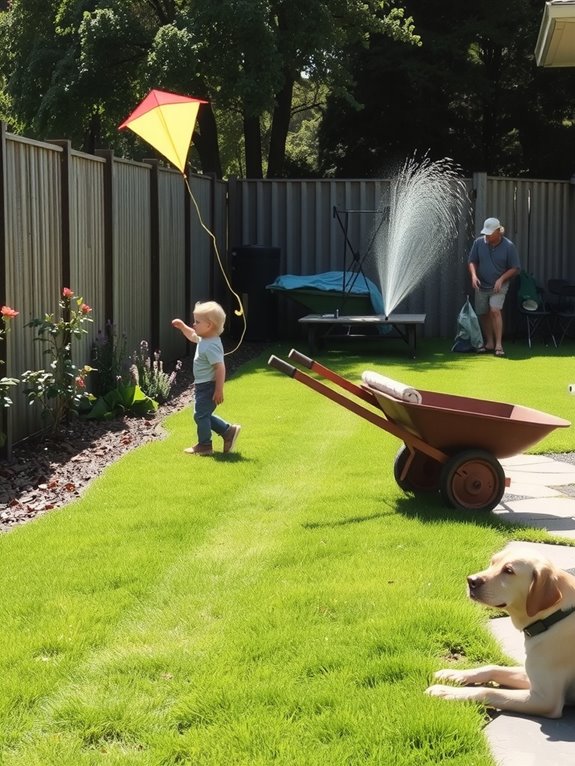
How do you describe an activity that happens in your yard? You’re probably using “backyard” as an adjective. When you say “backyard barbecue” or “backyard pool party,” you’re describing where the action takes place. This adjective form emphasizes location rather than naming the space itself.
| Activity Type | Example | Common Setting |
|---|---|---|
| Cooking | Backyard cookout | Patio area |
| Swimming | Backyard pool party | Shallow end |
| Gathering | Backyard reunion | Open lawn |
The single-word form “backyard” works best for this descriptive purpose. It feels more natural than “back yard” when modifying nouns. Think about how you’d talk with friends—you’d say “Let’s have a backyard gathering” without hesitation. This adjective usage helps you quickly communicate both the activity and its location in a way that feels easy and natural.
Why “Front Yard” Stays Two Words (But “Backyard” Doesn’t)
You might’ve noticed that “backyard” got squeezed into one word while “front yard” stubbornly stays as two. There’s actually a reason for this quirk.
The main difference comes down to how often we use these phrases. You probably say “backyard” way more in everyday life—think backyard barbecues, backyard pools, and backyard games. English basically rewards this frequent use by mashing the words together over time. It’s easier to say one word than two, so the more we use a phrase, the more likely it is to get combined.
Meanwhile, “front yard” hasn’t gotten the same popularity boost. We just don’t talk about our front yards as much, so the two words have stayed separate. Language is lazy in a good way—it takes the shortcuts we use most often and makes them permanent. The phrases we repeat constantly eventually get shorter and snappier because that’s what our brains prefer.
Frequency Drives Compound Formation
Why does “backyard” get to be one word while “front yard” stays split into two. The answer comes down to how much you actually use each term. When you say “backyard” all the time—relaxing in your backyard, throwing a backyard barbecue, or putting up a backyard shed—those words start smooshing together. English does this naturally. The more often a phrase pops up in conversation, the more the language pushes it toward becoming a single word.
“Front yard” doesn’t get this treatment because people mention it way less. You’ll notice the difference pretty quickly if you pay attention to how often each one comes up in daily talk. Style guides like Chicago have officially recognized this shift, listing “backyard” as a closed compound. Your own language habits literally drove this grammatical change. Basically, frequency wins. The more you say something, the more it wants to become one word instead of two.
Attributive vs. Nominative Usage Patterns
When you’re describing something—like a “backyard pool” or “backyard party”—you write backyard as one word. That’s attributive use, where the word sits right before a noun and modifies it directly.
The situation changes when you’re talking about location. You’d say “in the back yard” or “the back yard is huge,” using two separate words. This nominative usage emphasizes the place itself rather than treating it as a descriptor or label.
Front yard follows a different pattern. It stays two words even when it’s describing something, like “front yard landscaping.” This difference shows us something real about how language works. The single-word “backyard” exists because we use it constantly as a standalone noun or quick way to describe something. You’re not just pointing out space—you’re naming it like you would name a room in your house.
Historical Evolution of Back Compounds
Language-shift patterns reveal something interesting: back- compounds have historically moved toward single words much faster than front- compounds. “Backyard” became one word while “front yard” stayed split. If you’ve read enough books or written enough emails, you’ve probably noticed this difference without realizing what caused it.
This linguistic journey happened gradually over centuries, driven mainly by how often people used these words. Backyard started fusing together because people said it constantly in everyday conversation—talking about backyard barbecues, backyard games, backyard spaces. The repetition naturally pushed it toward a closed form.
Front yard resisted that consolidation. Style guides like Chicago Manual of Style actually encouraged backyard’s single-word status, which helped cement the shift. British English added another layer; Brits sometimes kept “back yard” as two words while favoring “back garden” instead, showing how regional preferences mattered alongside frequency.
The takeaway is straightforward: how often we use a compound word and where we live shape whether it stays split or fuses together over time.
American vs. British English: Backyard or Back Garden?
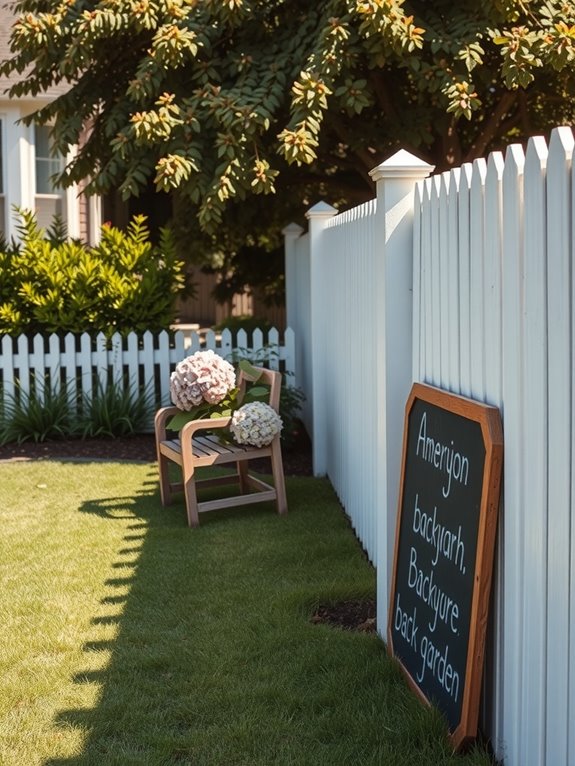
When you read American websites or magazines, you’ll see “backyard” as one solid word. But if you’re browsing British publications, “back garden” shows up as two separate words instead. This isn’t just a spelling thing—it’s about how people in each country actually talk about the outdoor space behind their house. Americans naturally use the compound noun “backyard,” while British English speakers stick with the two-word phrase “back garden.”
Why does this matter for you. Well, if you’re writing something for an American audience, using “backyard” will sound natural and familiar. If you’re writing for British readers, “back garden” is what they expect to see. Getting these details right helps your writing feel like it belongs to the person reading it, rather than sounding like it came from somewhere else entirely.
American Usage Conventions
Spelling differences between American and British English can trip up writers, and the backyard versus back yard question shows how geography shapes our words. In American English, you’ll write backyard as one solid word—whether you’re describing your backyard barbecue or talking about playing in the backyard. It’s the standard across newspapers, magazines, and everyday writing.
British writers, meanwhile, typically use back yard as two separate words or prefer “back garden” altogether. The difference might seem small, but it matters when you’re trying to communicate clearly with your audience.
If you’re writing for an American audience, stick with backyard. That single-word form is what readers expect and what major style guides recommend. Think of it like this: consistency helps your reader focus on what you’re saying instead of getting distracted by spelling choices.
British English Alternatives
British writers call that outdoor space behind their house a “back garden” instead of “backyard.” You’ll see it written as two separate words, and it’s how people in the UK typically describe recreational outdoor areas behind their homes.
The word choice actually tells you something useful. In British English, a “yard” usually means a practical, paved outdoor space—somewhere you might park a bike or store tools. A “garden” suggests something planted with flowers or vegetables, a spot where you’d relax and enjoy nature. This distinction matters when you’re reading British texts or talking with UK audiences, since they’re almost certainly thinking “back garden” rather than “backyard.”
You might bump into “back yard” as two words occasionally, though it’s less common. When you’re communicating with British English speakers, keeping this vocabulary difference in mind helps you connect better and understand exactly what kind of outdoor space someone is describing.
Regional Terminology Differences
The way Americans and British people talk about that outdoor space behind their house really shows how different the two versions of English can be. Americans use “backyard”—one word, no spaces—and it’s the go-to term for anyone growing up in the US. British speakers, meanwhile, say “back garden” as two separate words. While “back yard” does technically exist in British English, you’ll rarely hear someone use it in regular conversation unless they’re talking about a paved area or referring to something American.
The difference comes down to how each culture thinks about these spaces. Americans tend to think of their backyards as multipurpose areas for grilling, playing, and hanging out. The word “backyard” captures that idea in one compact package. Brits, on the other hand, emphasize the gardening aspect with their “back garden” phrasing, which makes sense given how popular gardening is in British culture.
If you’re learning English or trying to fit in with people from either side of the Atlantic, knowing which term to use matters more than you might think. Drop the right word into a conversation, and you’ll sound natural to the people around you. Use the wrong one, and you’ll stick out a bit. It’s one of those small details that helps you communicate like someone who actually belongs in that English-speaking community.
Common Mistakes When Writing Backyard
| Mistake | Correct Form |
|---|---|
| back yard party | backyard party |
| back yard barbecue | backyard barbecue |
| back yard fence | backyard fence |
| writing back yard as noun | writing backyard |
| mixing both forms | consistent backyard usage |
The word “backyard” should always be written as one word, whether you’re talking about a backyard party, a backyard barbecue, or a backyard fence. This applies whether you’re using it as a noun or an adjective. Picking one correct form and sticking with it keeps your writing clear and consistent.
How to Remember: Backyard in Context
Why does “backyard” feel like it should be one word? Because you use it that way constantly. When you’re planning a barbecue or setting up for an outdoor game, you naturally say it as one solid word. That’s your brain recognizing a compound word—something that’s become so unified in meaning that it acts as a single unit.
Think about how you actually talk. You don’t say “I’m having a back yard party.” You say “backyard party.” The word functions as one complete idea describing activities in that specific space behind your house.
To lock in the correct spelling, imagine yourself texting a friend about weekend plans. You’d type “Come over for a backyard hangout,” not “back yard hangout.” That’s the version that feels right because it’s what you say every single day. Your natural speech patterns are the best memory tool you have.