A bathroom vanity is basically a sink, countertop, and storage all combined into one piece of furniture. It’s the centerpiece that holds your bathroom together and makes your morning routine actually work.
You have two main styles to choose from. Wall-mounted vanities cost around $300–$600 for a 36-inch model and take up less floor space, giving your bathroom a cleaner look. Freestanding units sit on the floor and typically offer more storage space underneath, which is helpful if you have a lot of stuff to keep organized.
Before you pick one out, measure your bathroom carefully and figure out where your pipes and plumbing connections are located. Think about what you actually need to store—your daily medications, hair tools, cleaning supplies—and make sure the vanity has enough room for those things. A vanity that looks nice but can’t hold what you need won’t work well in real life.
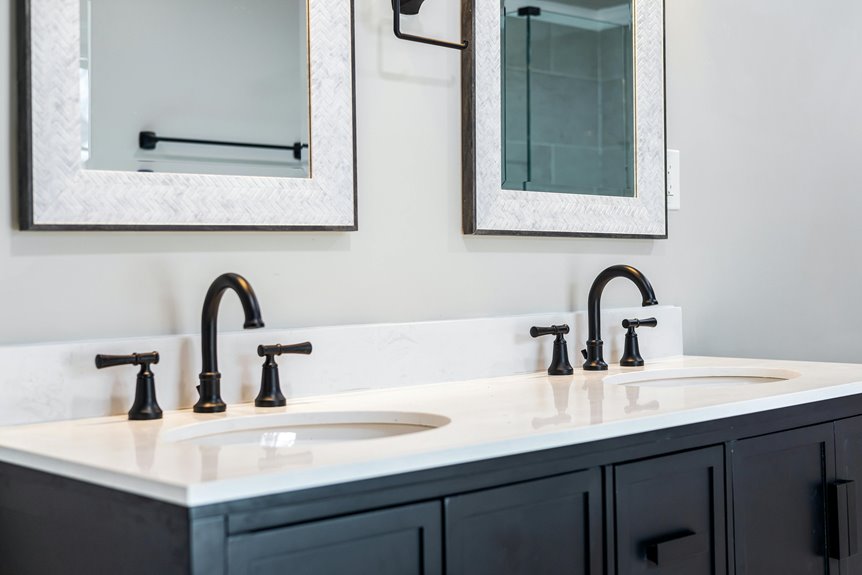
The finishing touches matter. When your vanity’s finish matches your faucet and the cabinet hardware, everything looks like it belongs together rather than thrown together. This means choosing the same metal tone (like brushed nickel or oil-rubbed bronze) across all your fixtures.
Picking the right vanity comes down to three things: how it looks, what it costs, and whether it fits your daily life. Take time to figure out what matters most to you, and you’ll end up with a vanity that actually works for your bathroom.
What a Bathroom Vanity Is and Why It Matters
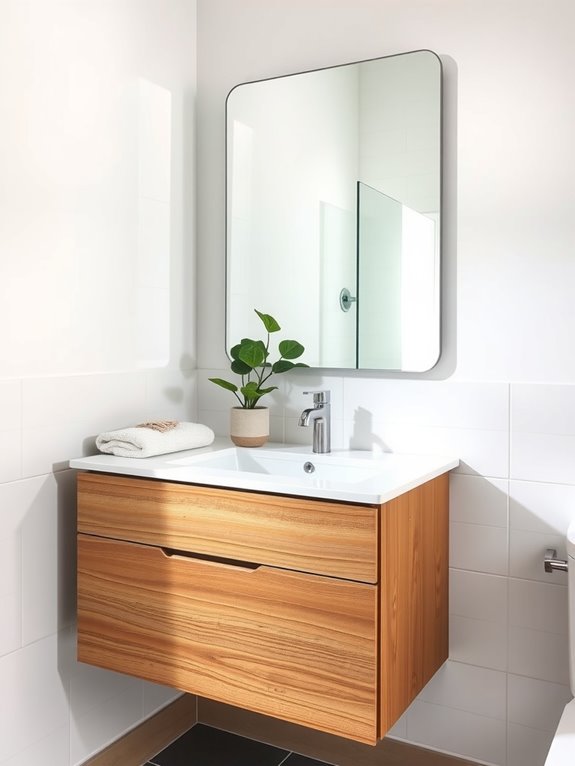
A bathroom vanity might seem like just a fancy sink cabinet, but it’s actually the hardworking centerpiece of your bathroom that pulls together storage, style, and function all in one spot. Think of it as the hub where you start and end your day.
Your vanity combines a base, countertop, sink, and storage into one unified piece that either mounts to your wall or floor, depending on your bathroom layout. You’ll find vanities in all-in-one configurations with everything pre-assembled, or semicustom options where you pick individual pieces. The right vanity doesn’t just look good—it handles the moisture and humidity that bathrooms throw at them daily. When you choose wisely, you’re investing in durability and a bathroom design that actually works for your lifestyle.
Assess Your Bathroom Space: Measurements, Plumbing, and Layout
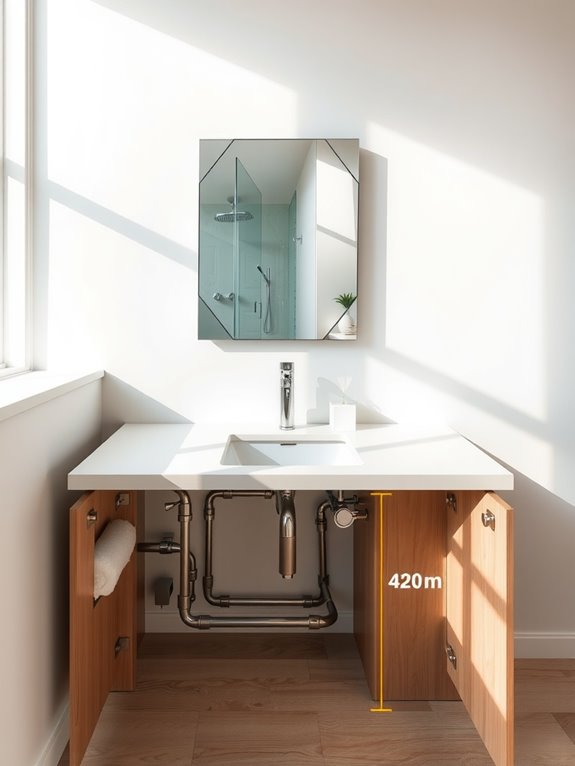
Before you buy that vanity you found online, measure your bathroom to see what actually fits. Check the width, depth, and height of your space so doors and walkways stay clear. You don’t want to discover mid-installation that a drawer won’t open or someone can’t walk past the sink.
Next, figure out where your plumbing sits. Wall-mounted vanities might need new pipe connections, while floor-mounted ones usually connect to existing pipes already in place. Look at your wall layout and picture where everything will go.
Here’s a practical tip: grab a cardboard box and use it as a fake vanity. Position it where you’re thinking about putting the real one, then walk around and check if traffic flows naturally through the bathroom. This takes five minutes and saves you from buying something that blocks your path every morning.
Vanity height matters for comfort. Standard vanities are 30 to 32 inches tall, which works for most people. Comfort height models go up to 36 inches, and they’re worth considering if you’re taller or prefer not to bend as far when washing your hands. Think about who uses the bathroom most and what feels right for your body.
Identify Your Vanity Style and Design Preferences
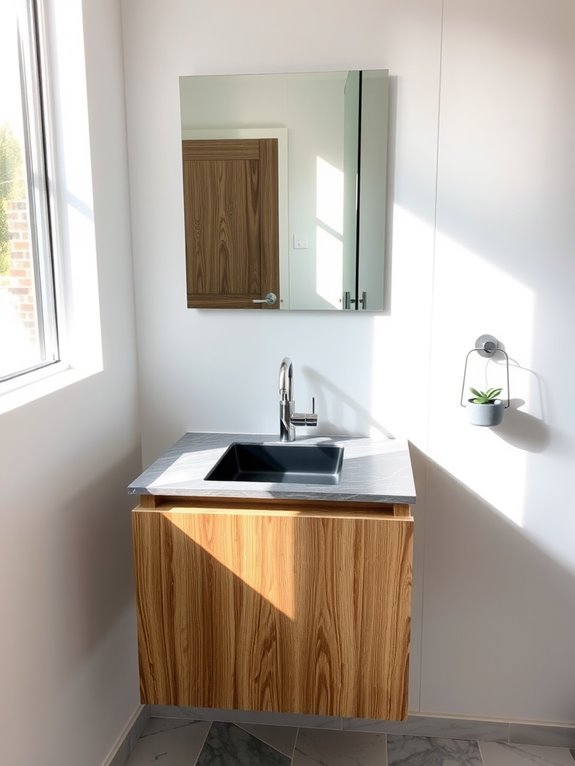
Once you’ve measured your space, it’s time to pick a vanity style that matches your personality. Traditional designs offer timeless appeal with details like raised panel doors and ornate hardware. Transitional pieces strike a balance between classic and modern elements. Contemporary styles go sleek and minimal with clean lines and simple hardware.
Next, think about the finish you want. Crisp whites work well if you like a clean, bright bathroom. Calming grays offer a neutral middle ground that pairs with almost anything. Warm wood tones add coziness to the space. Bold deep hues like navy or charcoal make a statement if you’re feeling adventurous.
The hardware—knobs, pulls, and handles—deserves real thought because these small details matter more than you might expect. A vanity with brushed nickel pulls ($8-15 per pull) coordinating with your faucet and countertop creates a polished look. Brass hardware ($12-20 per pull) adds warmth and pairs nicely with wood finishes. Chrome hardware ($6-12 per pull) keeps things bright and modern. Pick finishes that actually match your other bathroom fixtures rather than mixing too many metals, which can feel scattered.
Design Style Fundamentals
How’d you like your bathroom to feel—bright and airy, or sophisticated and moody? Your vanity style sets the tone for everything. You can choose from Traditional, Transitional, or Contemporary designs that match your home’s personality.
Your finishes matter too. White and Gray create cheerful spaces, while Wood Tones and Deep Hues bring luxury and warmth. Think about what feels right for you.
Cohesive look
Match your vanity finishes with mirrors, faucets, and hardware throughout the room. When everything works together, your bathroom feels intentional rather than like random pieces thrown together.
Storage and space
Wall-mounted vanities save floor space, which is helpful if your bathroom is on the smaller side. Free-standing options give you more storage underneath, so think about what you actually need. A 36-inch wall-mounted vanity typically runs $300–$600, while larger free-standing pieces start around $500 and go up from there depending on materials and features.
Countertop and mounting
These choices affect how your bathroom looks and functions. Different mounting styles change how the room feels proportionally. Pair your vanity choice with other KOHLER pieces like matching faucets and hardware to create a bathroom that genuinely works for you and your daily routine.
Finish And Color Selection
What color and finish speaks to you? Whites and grays create clean, modern spaces, while wood tones bring warmth and tradition. Deep hues like navy or charcoal add sophistication. Your vanity finishes set the entire bathroom’s mood, so pick something you genuinely like looking at every day.
Your hardware—cabinet knobs and pulls—matters more than you’d think. They should coordinate with your faucet and countertop materials for visual harmony. Modern designs pair beautifully with sleek metallic hardware, while traditional spaces work better with ornate, bronze-toned pulls. Transitional styles split the difference between the two.
Mirrors and lighting reflections amplify your color choices, so consider how natural and artificial light hit these surfaces. The way your cabinet doors look changes depending on the time of day. Walk around your bathroom at different times, testing them under various lighting conditions. You’re creating a space you’ll actually use and enjoy every single day, so it’s worth taking your time with this decision.
Hardware And Accessory Coordination
Your vanity’s hardware and accessories are like the jewelry that brings an outfit together. These small details actually make a huge difference in how your whole bathroom feels. When you’re picking out hardware, matching your cabinet knobs and pulls with your faucet and mirror finishes creates that polished look. KOHLER finishes work well together, so you can grab pieces from their collection and know they’ll coordinate.
Start with your main pieces. Cabinet hardware comes in different styles—some people like sleek modern handles while others prefer traditional knobs. Your choice here sets the tone for everything else. Then match your lighting fixtures and medicine cabinet to that same finish. If your faucet is brushed nickel, your towel bars, robe hooks, and shelves should probably be brushed nickel too. It sounds simple, but mixing too many different finishes makes a bathroom feel scattered and random.
Think about what you actually use daily. Towel bars need to be sturdy enough to hold wet towels without sagging. Robe hooks should stick out far enough to grab clothes easily. Medicine cabinets come in different sizes depending on whether you’re storing a few basics or a full routine of products. A small cabinet might run you $40-80, while larger recessed options go higher.
The fun part is that your hardware choices say something about you without being obvious about it. Your selections keep everything working smoothly while also making the space feel like it belongs to you—thoughtful and put together.
Choose Vanity Materials: Countertop, Sink Type, and Configuration
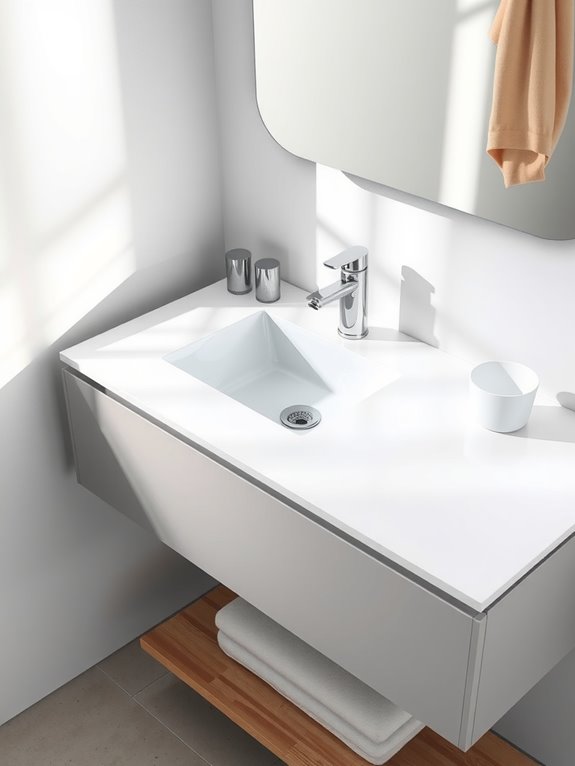
Once you’ve picked your vanity base, the real customization begins with what goes on top. Your countertop material sets the tone for your whole bathroom and affects how much work you’ll put in over time.
Quartz is a solid choice if you want something durable and easy to clean. Brands like Cambria and Silestone run between $50 to $100 per square foot installed, and they resist stains pretty well. Granite and marble look beautiful but need more upkeep—you’ll seal them regularly and wipe up spills quickly to avoid damage. They typically cost $40 to $200 per square foot depending on the stone.
Next comes your sink type, which changes how you use your counter space. Vessel sinks sit on top of the vanity and make a design statement, though they do eat up surface area and can feel less practical in smaller bathrooms. Undermount sinks tuck underneath the counter for a cleaner look and easier wiping, but they cost more to install. Drop-in sinks (the kind that rim the hole) offer a middle ground between these two.
Finally, check that your sink aligns properly with your faucet holes and matches your vanity configuration. A vessel sink needs a tall faucet, while an undermount sink works with standard or wall-mounted options. Spending 10 minutes measuring and matching these details prevents frustration when everything arrives and nothing quite fits together.
Plan Your Storage Needs and Faucet Requirements
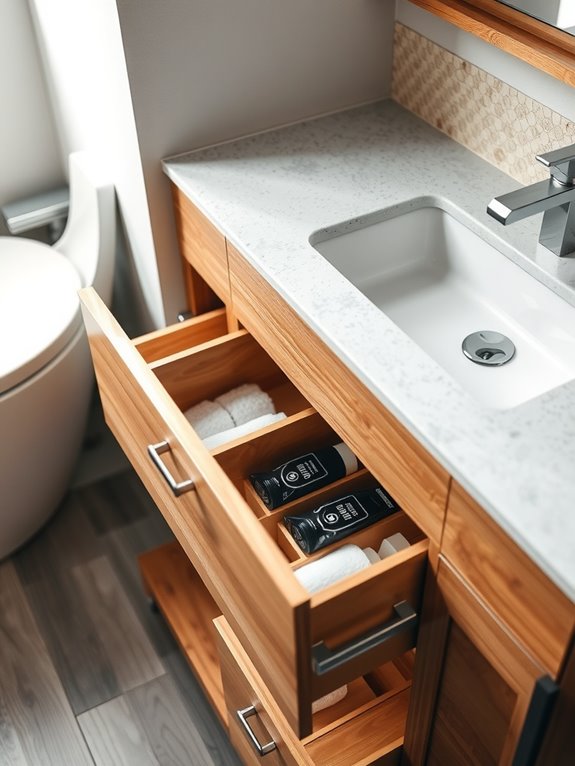
Now that you’ve picked out your countertop and sink, you need to figure out what you’re actually going to keep in your vanity and which faucet makes sense for your bathroom.
Start by making a list of everything you need to store: toiletries, towels, cleaning supplies, and anything else that lives under your sink. This list helps you figure out what kind of storage setup you actually need. Then match those items to the drawers, cabinets, and shelves your vanity offers. The goal is to stay organized without piling stuff all over your counters.
A few storage ideas work really well:
- In-drawer organizers keep small items like hair clips and makeup separated so you can find what you need
- Roll-out trays let you actually reach things hiding in the back of your cabinets instead of just giving up
- Linen towers give you a place to stack towels and cleaning supplies without taking up much counter space
Your sink choice affects storage too. A single sink is straightforward and takes up less space. A double sink needs more plumbing work and takes up more room under the vanity, so you lose some cabinet space. Look at your vanity’s base and make sure it can handle whatever plumbing your sink needs without feeling cramped.
Finally, pick a faucet that works with your setup and actually fits how you and your family use the bathroom. A faucet with good water pressure matters if you wash your hair in the sink, while a low-flow faucet helps if you’re watching your water bill.
Compare Freestanding and Wall-Mounted Options
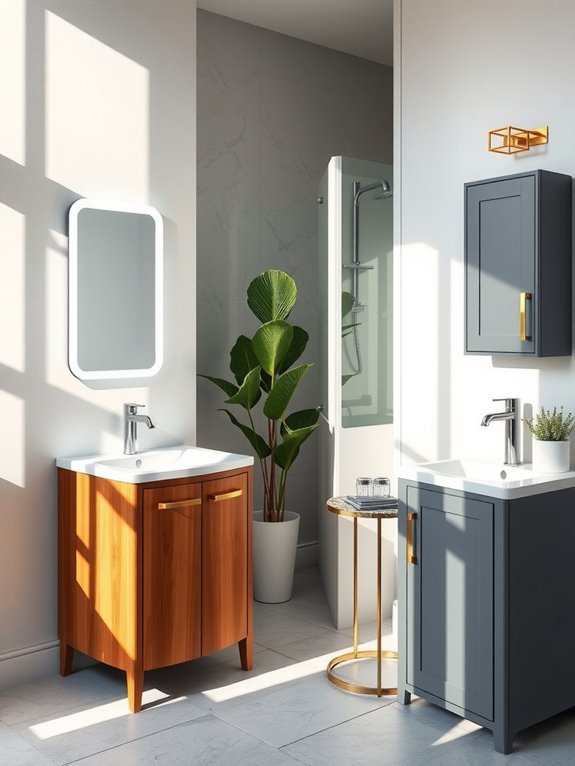
How’d you like your vanity to sit—planted firmly on the ground like a piece of furniture, or hovering above the floor like it’s floating on air?
Freestanding vanities bring classic charm with built-in storage space and decorative legs that create a furniture-like feel. Wall-mounted vanities deliver that sleek, modern look while making rooms feel bigger by showing off your flooring underneath. That visible floor also makes cleaning easier, which matters a lot in smaller bathrooms.
Freestanding vanities offer classic charm with storage, while wall-mounted designs create a sleek, modern look and make bathrooms feel larger.
Storage needs should guide your choice. Freestanding units typically pack more drawers and cabinets for all your stuff. Wall-mounted options work best if you don’t have tons of belongings to store.
Installation is another practical consideration. Freestanding vanities usually line up with your existing plumbing without any fuss. Wall-mounted versions might need your plumber to move pipes around, which costs extra time and money. Think about what your bathroom can handle before you decide.